
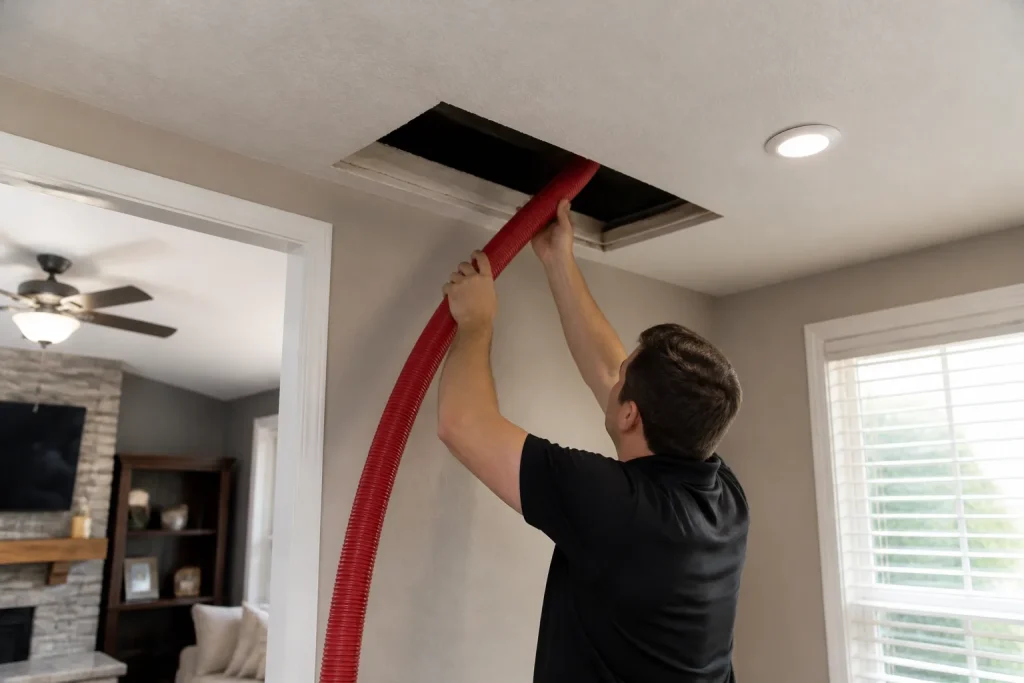
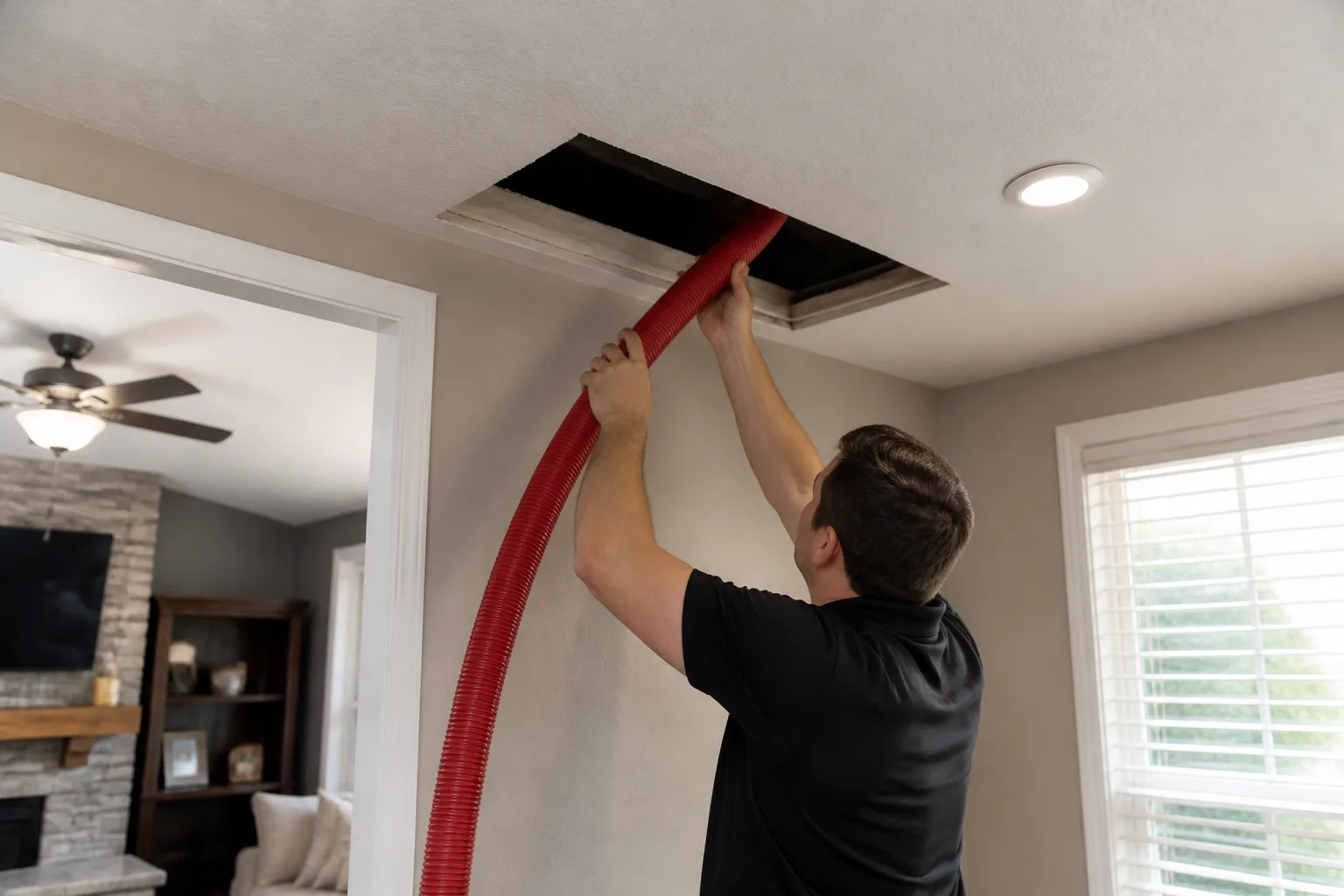
Emergency Air Duct Cleaning Near Me: What South Bend Homeowners Should Do First
If smoke or sewage smell is coming through your vents, turn the system off at the thermostat before you call anyone. Running the fan while you wait for a duct cleaner pushes the contamination into every room in the house. The first step in most duct “emergencies” is a switch, not a phone call. And once the system is quiet, the next step is a camera inspection, not a cleaning truck. Most homeowners in South Bend assume the fix is a cleaning. Often it’s a diagnosis first. If you’d rather have a technician sort it out, call (855) 905-0868.
Key takeaways:
- Shut the HVAC system off for smoke, fire residue, sewage gas, and rodent intrusion. Not for ordinary construction dust.
- Rodent problems are a repair and sealing job before they’re a cleaning job.
- Ask any duct cleaner whether they scope the ducts with a camera before starting. If the answer is no, that’s your answer.
- Professional containment equipment (we use Abatement Technologies) keeps debris from redistributing through the house mid-job.
- Verify response times before you book. “Emergency” in a company’s marketing doesn’t always mean a real opening.
Which duct “emergencies” mean shut the system off?
Smoke and fire residue, sewage gas coming up through the vents, and any sign of rodent activity in the ducts all call for the same immediate move: shut the system down at the thermostat. Construction dust is the exception. If you’ve just had drywall work done and the vents are puffing white dust, you can usually keep the system running with a fresh filter until a cleaning is scheduled. The filter catches most of the load, and shutting the house’s airflow down during a remodel tends to create its own problems.
Here’s how we’d handle each scenario in a South Bend home:
- Smoke or fire residue: Shut the system off. Soot redistributes easily and settles into soft furnishings, and running the blower pushes it further. Keep windows closed so residue doesn’t migrate room to room.
- Sewage gas through vents: Shut the system off. Sewage gas usually points to a plumbing vent problem or a break in the drain system rather than a duct cleaning issue. A plumber may need to be part of the conversation before a duct technician is.
- Rodent intrusion (droppings, nesting material, scratching, a musky smell): Shut the system off. Rodent droppings and nesting material in a duct system are a health concern and a repair job. More on that below.
- Construction dust after a remodel: The system can usually stay on with a new filter installed. Schedule the cleaning once the dust settles.
All four situations get better with a camera inspection first. Skipping it means a technician is cleaning blind into sections that could be collapsed, disconnected, or far more contaminated than a standard visual pass would suggest.
Why rodent intrusion is a repair job before it’s a cleaning job
We’ve seen it repeatedly in South Bend: a homeowner calls because of a musky smell, the ducts get cleaned, the smell goes away for a few weeks, then it comes back. Cleaning without sealing the entry points and removing all the nesting material is a temporary fix. The rodents find the same gap, and the recontamination cycle starts over.
A proper response to rodent intrusion runs in this order:
- Inspect with a camera to find entry points, evidence of nesting, and any sections of duct that have been damaged by animals.
- Seal the entry points so the problem doesn’t repeat. This may include gaps at the exterior, loose connection points, or penetrations through walls and flooring.
- Repair damaged duct sections. Rodents chew through flex duct and sometimes through duct board. Those sections need replacing, not cleaning.
- Clean the system with containment in place. Debris and droppings get captured, not scattered.
- Verify. A post-cleaning register inspection and a filter check confirm the system is actually clean before you resume normal operation.
This is where our repair capability matters. We clean it. If it’s broken, we fix it. A duct cleaner without repair skills will refer you to a second contractor, and the gap between the two visits is another window for recontamination.
What does a camera inspection actually show before cleaning starts?
A camera inspection shows what the ducts actually look like from the inside, and in emergency scenarios it’s the difference between solving a problem and covering one up. The scope runs through the main trunk lines and into branches to spot collapsed sections, disconnected joints, debris piles, pest evidence, and heavy contamination that a standard brush pass wouldn’t clear in one run.
In South Bend homes, the inspection typically reveals one of a few things:
- A single contaminated branch feeding several rooms, rather than whole-system contamination
- Loose joints or disconnected runs where air is leaking into wall cavities instead of reaching registers
- Debris piles close to the air handler that standard cleaning can’t reach
- Evidence tying an odor complaint to the ducts versus another source entirely
That last point is common. A homeowner calls about sewage smell through vents, and the inspection shows the ducts are clean. That’s a useful answer, even if it isn’t the one they expected. It saves them a cleaning they didn’t need and points them at the actual source. Inspecting first costs you a few minutes and often saves you a misdiagnosis.
How do you verify a duct cleaning company can actually respond urgently?
Ask them directly when they can be at your door. Many companies list “emergency” in their marketing, then schedule two or three days out. Worth checking before you commit.
We answer 24/7. Fast dispatch from 7am to 7pm, Sunday through Friday. Sunday work is fine; Saturday we’re closed. A few things to ask any company you call:
- “How soon can someone be here?” A specific answer means something. “We’ll get back to you” doesn’t.
- “Will the technician scope the ducts with a camera before cleaning?” The right answer is yes. Every time.
- “What containment equipment do you use?” A crew with only a shop vac and a brush kit will redistribute dust through the house. Professional crews run HEPA-rated vacuums (we use Nikro) and containment systems (we use Abatement Technologies).
- “Can you handle repairs, or will I need a second contractor?” When the inspection turns up damaged ductwork, you want one visit to resolve it. Not two.
- “Is the estimate free?” It should be.
If a company can’t answer these plainly, keep calling. Our technicians have up to experience and can walk you through exactly what they’ll find before they arrive. That’s the conversation you want.
What to check after the cleaning is done
Emergency cleanings aren’t complete until you’ve confirmed the system is actually clean. Three checks matter most:
- Register inspection. Pull the supply registers in the worst-affected rooms and look inside. No debris, no odor, no loose material. The technician should also spot-check the return.
- Air quality check. The smell test matters. Within a few hours of the cleaning, the air in the house should smell neutral. A faint equipment odor is normal; persistent sewage or smoke is not, and it means something else needs attention.
- HVAC filter replacement. Install a fresh filter immediately after a cleaning. Cleaning dislodges fine debris that settles in the filter, and running the system with the old filter reintroduces it.
After those three checks pass, run the system normally for a day and note any changes in smell or airflow. If your home already has a Honeywell or Aprilaire system, this is the moment to make sure it’s doing its job. Your Honeywell or Aprilaire system is only as good as the ducts behind it, and premium filtration works best on clean ductwork.
When to call a pro
If you smell smoke, sewage, or animal musk through your vents, shut the system off and call a professional. Those aren’t a filter swap and a vacuum situation. If you’ve just had construction work done and the dust is settling, you can usually wait on a scheduled cleaning. Between the two ends of that range there’s a lot of room for judgment, and a camera inspection is what resolves it. Call (855) 905-0868 and we’ll tell you what we think the next step is.
Related services in South Bend: If you’re booking air duct cleaning after a fire, remodel, or pest issue, ask about a pre-cleaning inspection. If your clothes dryer has been taking longer than usual and lint is piling up, dryer vent cleaning addresses that fire risk directly. And when you want the wider overview of the services our team offers in and around the area, that starts with Duct Cleaning South Bend.
The Bottom Line
Duct emergencies are usually a diagnosis before they’re a cleaning. Shut the system off for smoke, sewage, or rodents. Keep it running with a new filter for construction dust. Demand a camera inspection before anyone starts cleaning. And confirm the crew has containment equipment, repair capability, and a real opening in their schedule.
If you’re in South Bend and need help, Duct Cleaning South Bend offers free estimates. Call (855) 905-0868. We answer 24/7. Fast dispatch from 7am to 7pm, Sunday through Friday. We clean it. If it’s broken, we fix it.
Frequently Asked Questions
Yes. Turn the system off at the thermostat. Running the blower while smoke or soot is present in the ducts pushes residue into every room and into soft furnishings. Keep it off until a technician inspects the system and confirms it’s safe to run again.
Response depends on scheduling, but call (855) 905-0868 and we’ll tell you when we can be there. We answer 24/7. Fast dispatch from 7am to 7pm, Sunday through Friday. Sunday work is available; Saturday we’re closed. A call outside dispatch hours is booked into the next opening, Sunday through Friday, 7am to 7pm. The visit itself is a repair-plus-cleaning job, not just a cleaning, so budget for that.
Often both. Cleaning clears debris; repair addresses collapsed runs, disconnected joints, and chewed sections that cleaning can’t fix. A camera inspection tells you which you’re dealing with. We handle both in one visit, which saves the second call and the recontamination window between visits.
Pricing is set per job by the written estimate after an inspection, never per-vent. Some companies quote a teaser rate by phone and it grows once they’re on site. We don’t operate that way: you get a written estimate before anything runs, and the written estimate sets the final price. Call (855) 905-0868 for an exact quote; estimates are free.
Written by the team at Duct Cleaning South Bend.
Need Air Duct Cleaning Help?
Call Duct Cleaning South Bend - licensed & insured, here with fast help in South Bend.
(855) 905-0868