
Last updated November 16, 2026
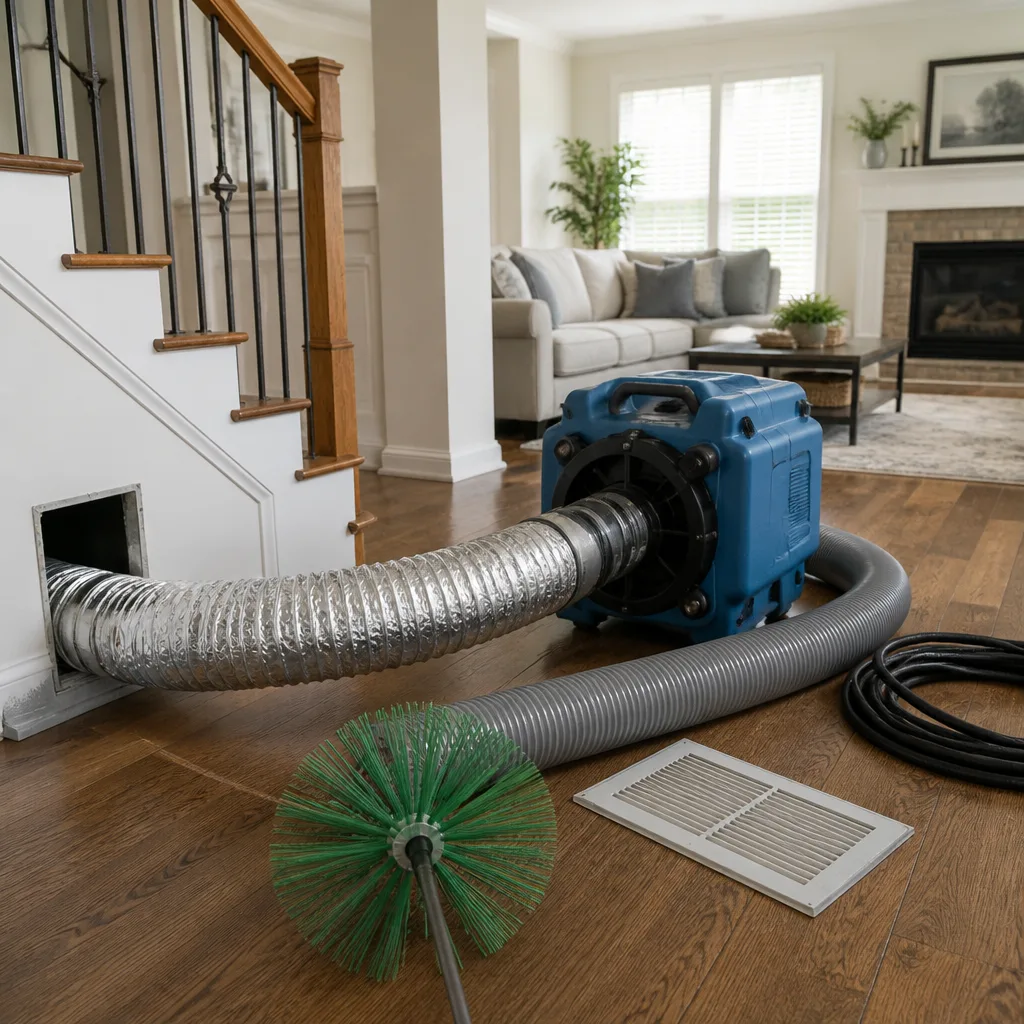 Whole-home duct cleaning
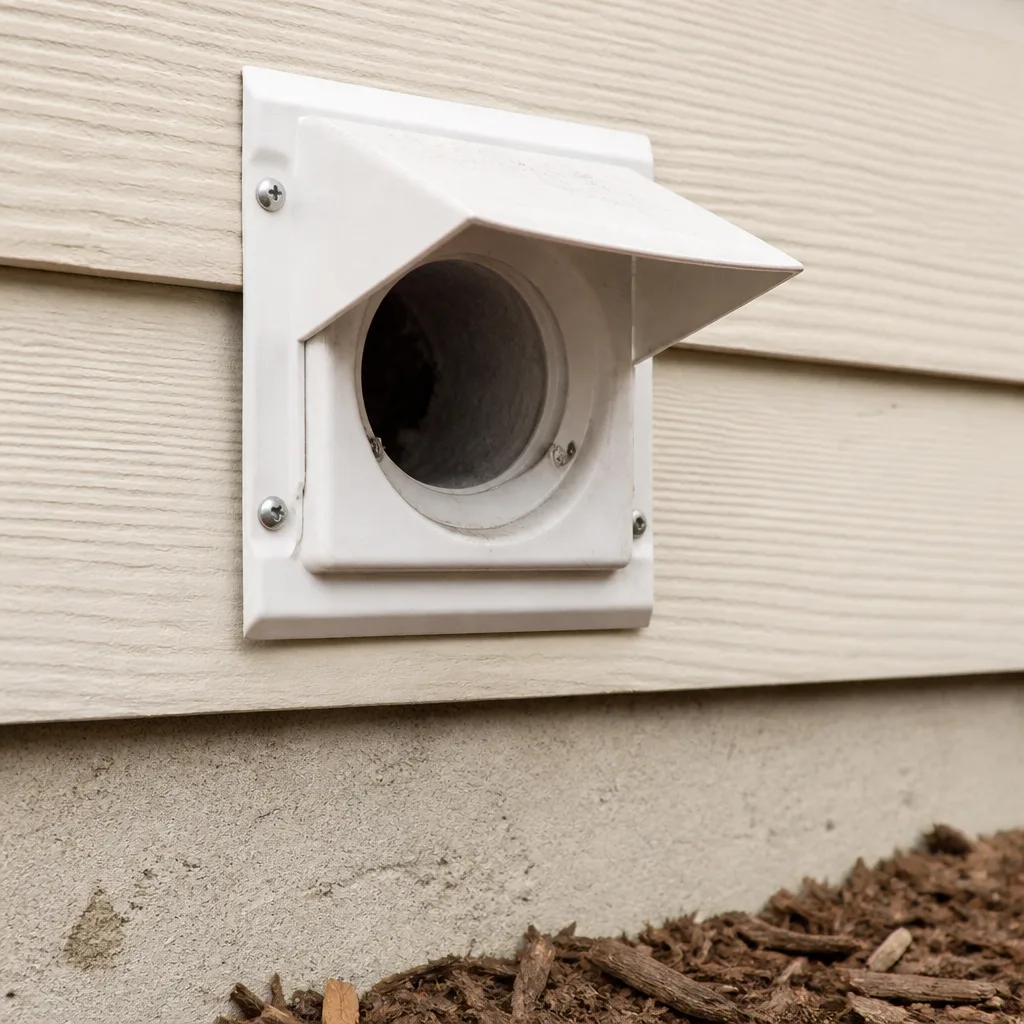 Dryer vent cleaning
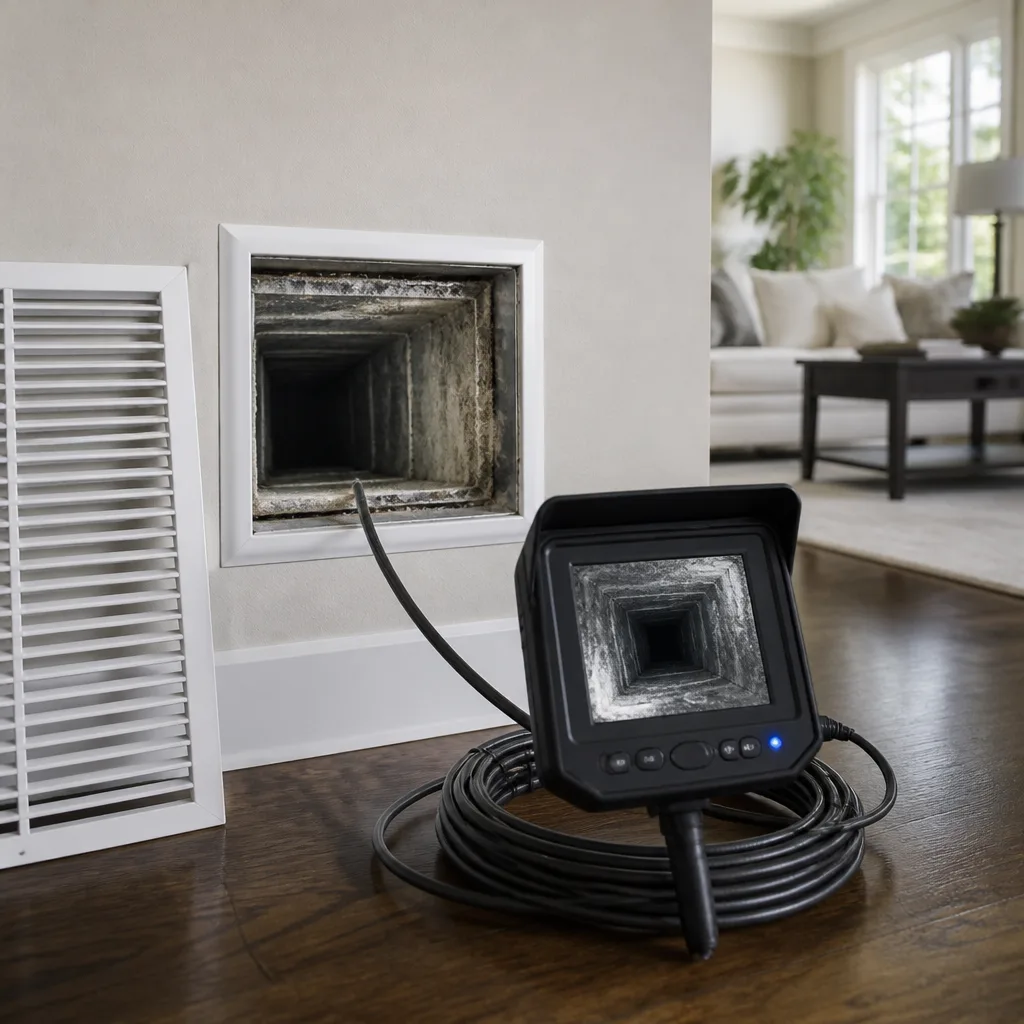 Camera inspection
 Sanitizing & deodorizing
Whole-system duct and dryer vent check with before-and-after photos - you see exactly what came out of your vents
That "$99 whole-house special" is a bait ad - the real number appears once they are in your hallway, or the "clean" is a shop-vac at the register. We photograph the inside of your ducts before and after instead.
Air Duct Cleaning Warning Signs: A South Bend Homeowner’s Reference Guide
Dust on your registers could mean dirty ducts, an oversized system short-cycling, a collapsed filter bypass, or a return leak pulling attic air. Four different causes, four different fixes. The problem with most warning-sign lists is that they stop at the symptom: “you have dust, so clean your ducts.” That advice sends plenty of South Bend homeowners to pay for a cleaning that doesn’t solve the actual problem, and it sends just as many to ignore a real duct defect because the symptom looked ordinary. This guide does something different. For each warning sign, we explain the mechanical reason it appears, so you can tell a duct problem from an HVAC problem from a filtration problem. You’ll finish knowing what to look at, what it means, and when the answer is a cleaning versus a repair versus a call to your HVAC tech.
Quick Answer
The core warning signs of a real duct problem are: dust that reappears at specific registers within days, a musty smell that only appears when the blower runs, rooms that stay uneven no matter what the thermostat says, allergy symptoms that track with HVAC operation, and visible damage or disconnected joints on ducts you can reach. The critical detail is timing and location. Dust everywhere in the house points to filtration or equipment. Dust at two registers points to a duct issue. A smell that’s constant is a moisture source; a smell that starts when the system starts is a duct or coil problem. If more than two of these signs show up together, it’s worth having the system looked at by someone who can tell the difference.
Styles & brands we work with
- Whole-home duct cleaning
- Dryer vent cleaning
- Camera inspection
- Sanitizing & deodorizing
Table of Contents
- Dust at Your Registers: Reading the Pattern
- Musty Odor: Locating the Source Before You Treat It
- Uneven Room Temperatures: Blockage, Damper, or Leak?
- Allergy Symptoms That Track With Your HVAC
- Visible Damage as a Diagnostic Proxy
- Dryer Vent Warning Signs You Shouldn’t Ignore
- When the Problem Isn’t the Ducts
- What a Proper Duct Cleaning Job Actually Involves
Dust at Your Registers: Reading the Pattern
Dust is the most reported warning sign and the least diagnostic on its own. Every home has dust, and every HVAC system cycles air through a filter that catches some of it and lets some of it pass. What separates normal dust from a duct problem is the pattern: where the dust lands, how fast it comes back, and whether the system’s runtime correlates with it.
Here’s how to think about it. If dust accumulates evenly across furniture, shelves, and floor surfaces throughout the house, that’s ambient household dust. It’s driven by fabric fibers, foot traffic, pets, and outdoor air infiltration, and a duct cleaning won’t stop it. If dust accumulates in a visible plume pattern at specific registers, appears streaked on the ceiling near a supply vent, or settles noticeably heavier in one or two rooms, you’re looking at a supply-side or return-side issue.
- Dust at one or two registers, none at the rest: that branch of the ductwork is likely loose, poorly sealed, or pulling air from an unfiltered space. Common with duct joints in a crawlspace or basement.
- Dust streaked in a line from a register: usually a supply leak near the boot or a poorly seated boot-to-drywall joint, pushing unfiltered air into the room.
- Dust at every register with an unusually fast return after cleaning: a filter bypass (air moving around the filter instead of through it) or a return duct that’s pulling attic or crawlspace air.
- Dust that appears heavier on humid weeks: often a sign the system is short-cycling, which doesn’t dry the air properly and lets particulate settle out. That’s an equipment or sizing issue, not a duct issue.
We run into this distinction constantly in South Bend, where a lot of housing stock includes original duct layouts that have been added onto or retrofitted. A branch that made sense for the original furnace often doesn’t serve the current system well. Before anyone quotes you a cleaning, they should be able to tell you which pattern they’re seeing and why, because the cleaning procedure and the repair scope are different depending on the answer. If the problem is a duct defect, the fix is air duct cleaning combined with repair, not one without the other.
Musty Odor: Locating the Source Before You Treat It
A musty smell is the warning sign that most often gets misdiagnosed, because “smells musty” can come from four different places and each one has a different fix. The mechanical cause of a musty odor is always the same: microbial growth feeding on moisture. The question is where that moisture lives, and that location dictates whether it’s an HVAC call, a duct call, or a plumbing call.
The four likely locations
- Condensate drain pan: the pan under the evaporator coil collects water. If the drain line is slow, clogged, or the pan doesn’t slope correctly, standing water sits and grows growth. The smell comes from the air handler closet and only when the system runs. Fix: clear the drain, clean the pan. That’s an HVAC tech’s job.
- Evaporator coil: a dirty coil holds moisture and dust together and becomes a growth site. The smell is strongest in the first minute of a cooling cycle. Fix: coil cleaning, also an HVAC call.
- Duct liner: insulated flex duct or interior liner that has gotten wet, usually from condensation or a nearby leak, holds moisture and odor. The smell gets pushed into every room that branch serves. Fix: replace the affected section. That’s a duct repair.
- Duct interior, especially the return: a return duct that runs through a humid crawlspace or basement can pull moisture and odor into the system continuously. Fix: seal and insulate the return, then clean.
The key test is timing. Walk into the room before the system kicks on. If the smell is already there, it’s ambient moisture in the space, likely a basement humidity issue. If the smell only appears when the blower starts, it’s coming through the ducts and the source is somewhere in the system. If it’s worst in the first minute of a cycle and then fades, that points to the coil or pan.
Get the location right before anyone treats it. A cleaning without fixing a wet liner will just move the odor around. If the growth is inside the ductwork itself, professional containment matters: this is why we work with duct cleaning in South Bend performed with Abatement Technologies containment equipment, so what’s loosened is captured rather than blown through your house.
Uneven Room Temperatures: Blockage, Damper, or Leak?
One room runs two or three degrees warmer or cooler than the rest of the house. That’s a duct symptom, but it’s usually misdiagnosed as a thermostat problem or an equipment capacity problem. Before anyone recommends a bigger furnace or a smart thermostat, three duct-side questions need answers.
Question 1: Is the branch blocked?
Follow the branch from the supply register back to where it leaves the trunk. If it’s flex duct, check that it isn’t crushed, kinked, or pinched against a joist. A crushed flex run chokes airflow in a way that looks exactly like an equipment problem on a load calculation. Flex duct that has sagged, being routed around a corner is the common culprit.
Question 2: Is a damper closed or malfunctioning?
Manual balancing dampers are usually near the trunk takeoff. If you find one, check its position. A damper that was closed for a season and never reopened is one of the most common “why is this room hot” answers. An automatic zone damper that has failed in the closed position is a different repair.
Question 3: Is the duct leaking?
A leak in a branch run doesn’t always show up as lost airflow. In a conditioned space, a leaking supply duct loses air into the wall or ceiling assembly instead of the room. In a basement, you can often feel it by running your hand along the accessible runs while the blower runs. A dusty streak at the seam is the visual clue. Leaks in the accessible runs often predict leaks in the inaccessible ones.
The distinction matters for who you call. A blocked flex run or a closed damper is a duct-side fix. A failed automatic damper is a controls fix. A leaky branch is a duct repair. In our experience across South Bend homes, especially older ones with retrofitted runs, uneven temperatures are duct problems far more often than equipment problems, and a repair to the affected run costs less than the equipment upgrade homeowners are usually steered toward.
Allergy Symptoms That Track With Your HVAC
“My allergies are worse when I’m at home” is a signal, but only under specific conditions. If allergy symptoms are present all the time, or worsen with outdoor seasonal changes, you’re mostly dealing with ambient pollen and the indoor environment in general. If symptoms reliably worsen when the system runs, or improve when you leave the house and return when you come back, that points to the air the ducts distribute.
We’re careful about how we frame this, because a duct cleaning is not a medical treatment and we aren’t a health agency. What we can say from a mechanical side is: a duct system with dust accumulation, microbial growth, or leaks pulling unfiltered air into the supply is distributing more particulate into every room it serves. Whether that triggers symptoms is individual. Whether the ducts are contributing is measurable by inspection.
- Timing test: note symptoms on a day the system runs heavily versus a day it’s off. Note both to see the difference.
- Room pattern test: if symptoms are worst in the bedrooms during sleeping hours (when the system runs continuously in most homes), that pattern points toward the supply side.
- Filter test: change the filter to a fresh MERV-rated media filter and see if symptoms change in two weeks. If they don’t move at all, filtration isn’t the lever.
- Humidity test: a South Bend basement in summer can hold enough moisture to keep indoor humidity above what most systems are set to remove. High ambient humidity alone will make a home feel stuffy and affect breathing. That’s a whole-home humidity issue, not a duct cleaning fix.
If symptoms track with HVAC operation, the next step is an inspection that looks at the return side, the supply side, the coil, the drain pan, and the accessible ductwork. If any of those sections are damaged, replace or repair before cleaning. That’s the one-call approach: we clean it and if it’s broken, we fix it. For households dealing with a premium air quality system such as a Honeywell or Aprilaire unit, those systems work best when the ducts they feed are sound.
Visible Damage as a Diagnostic Proxy
If you can see your ductwork in a basement, crawlspace, or attic, you have an advantage most homeowners don’t think to use. The accessible sections are a diagnostic proxy for what you can’t see. Duct systems are usually installed in one consistent style, using one consistent material, and the failure modes in one section tend to appear in others.
What to look at on accessible runs
- Joint integrity: look at the takeoff from the trunk and every seam. Loose, gappy joints that were sealed with mastic or foil tape and have since failed mean the inaccessible joints are likely in similar shape.
- Insulation condition: torn, sagging, or missing insulation on accessible runs usually indicates torn insulation further along. In South Bend’s humid summers, uninsulated runs sweat, and wet insulation is a growth site.
- Material type and age: duct board that’s been cut and folded in the field and sealed with mastic tends to fail at seams as it ages. Flex duct tends to sag and crush. Knowing the material tells you what’s failing elsewhere.
- Support and routing: runs that sag between hangers pull loose at joints. That same install quality likely shows up in the sections you can’t reach.
- Debris inside accessible boots and boxes: gently look into the boot or supply box where you can see. Debris there, especially construction debris, drywall dust, or pest evidence, predicts more of the same upstream.
This is the point where the shop-vac approach shows its limits. A crew that cleans the registers and leaves without inspecting the accessible runs has skipped the diagnostic step. Our process uses Rotobrush agitation systems that go into the duct proper and a Nikro HEPA-rated vacuum to capture the debris, with Abatement Technologies containment keeping it controlled through the whole job. The same inspection finds the damaged sections, which is why we offer duct repair as a core service. Otherwise, the deficiencies get noted on a report and referred out.
Dryer Vent Warning Signs You Shouldn’t Ignore
Dryer vents are the one duct in the home where the warning signs carry a fire-prevention weight. Lint is fuel. It accumulates at every bend in the vent, at the transition from the dryer to the wall, and at the exterior hood. A restricted vent also makes the dryer work harder, which extends dry times and stresses the appliance.
The signs that a dryer vent needs attention:
- Clothes that come out hot and damp at the end of a cycle, or a cycle that no longer dries a load in one pass.
- The exterior vent hood flap that doesn’t open fully or opens weakly.
- Lint visible around the dryer-to-wall connection or behind the dryer.
- A dryer that gets noticeably hotter on the cabinet than it used to.
- Any vent run that’s crushed, kinked, or routed with too many bends between the dryer and the outside wall.
In South Bend, the pattern we see most is a vent run that was acceptable for an original laundry location and then got added onto when the dryer was moved or the laundry was reconfigured. Every additional bend adds restriction. If you’ve ever had a dryer that ran a full cycle and left clothes damp, the vent is the first thing to check. This is why we treat dryer vent cleaning as a dedicated service rather than an add-on afterthought. It’s a fire-prevention job.
When the Problem Isn’t the Ducts
Plenty of the calls we get should end without a duct cleaning. Being honest about that is the only way a homeowner can trust the recommendation when cleaning actually is the answer. Here are the situations where the symptom points somewhere else.
- Dust throughout the house, filter loaded fast: a filter bypass or an undersized filter. Fix the filter housing, not the ducts.
- System short-cycling in summer: oversized equipment cooling too fast without removing humidity, or a refrigerant problem. Equipment side, not duct side.
- Persistent musty smell with no HVAC correlation: a basement moisture issue. Fix the moisture source: dehumidification, grading, or waterproofing. A duct cleaning won’t help.
- One room hot, thermostat reads fine: sometimes it is the thermostat sensor or the thermostat location (in a hallway that’s cooled and heated by the same room it’s reading). Check that first.
- Allergy symptoms that don’t correlate with HVAC runtime: ambient sources. Filtration, pets, outdoor pollen, indoor humidity. Duct cleaning won’t move those.
- Static shocks, dry air, dust that won’t settle: humidity control, especially in winter. Consider a whole-home humidifier on your Honeywell or Aprilaire system if you have one.
When we inspect a South Bend home and the answer is “your ducts are fine, here’s the actual problem,” we tell the homeowner that. A cleaning on a sound system is a cost with no return. A repair on a leaky branch is a cost that fixes the symptom. The distinction is the whole point of the inspection.
What a Proper Duct Cleaning Job Actually Involves
Since the warning signs on this page lead to a cleaning or a repair, it helps to know what a proper job looks like so you know when a quote is describing something real versus something cheap. This is the step-by-step we work through.
- Inspection first. Before any equipment goes in, the technician checks the coil, pan, filter housing, accessible ductwork, and register boots. The findings determine scope.
- Containment set up. Abatement Technologies containment equipment keeps debris and contaminants captured during the job instead of loosened into the living space. This is the step that separates a professional job from a shop-vac job.
- Source vacuum connected. A Nikro HEPA-rated vacuum pulls air from the system at high volume while the agitation begins. This is why the ducts don’t blow back into the house.
- Agitation through every branch. Rotobrush agitation systems travel through each branch to loosen debris from the duct walls.
- Protective setup throughout. Guardsman-grade protective products go down over surfaces and materials in the work area. A shop-vac crew usually skips this.
- Register and boot cleaning. The boots and grilles get attention too, not just the duct runs.
- Repair of deficiencies found. Loose joints, torn insulation, crushed flex runs, and failed connections get repaired before the job closes. This is where our Air Duct Repair service comes in, because otherwise the homeowner has to schedule a second appointment with a different contractor.
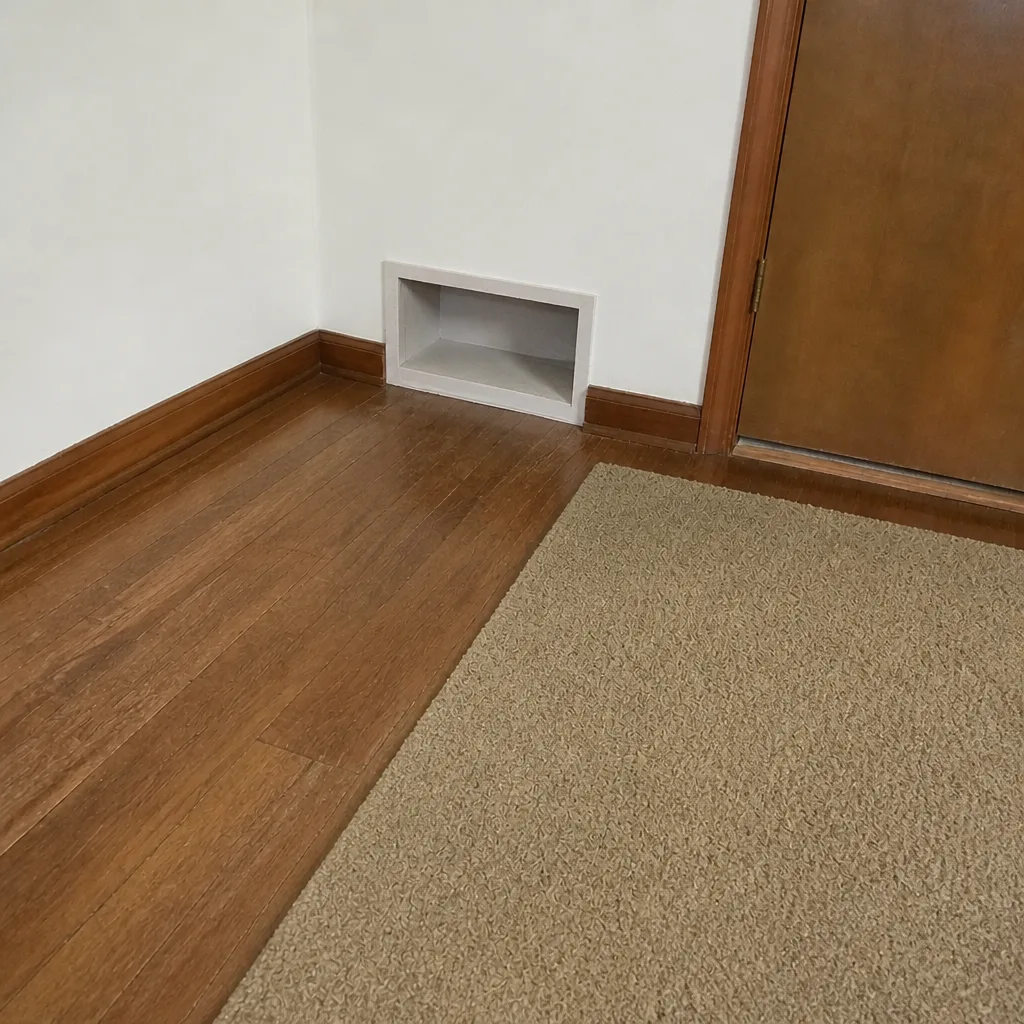
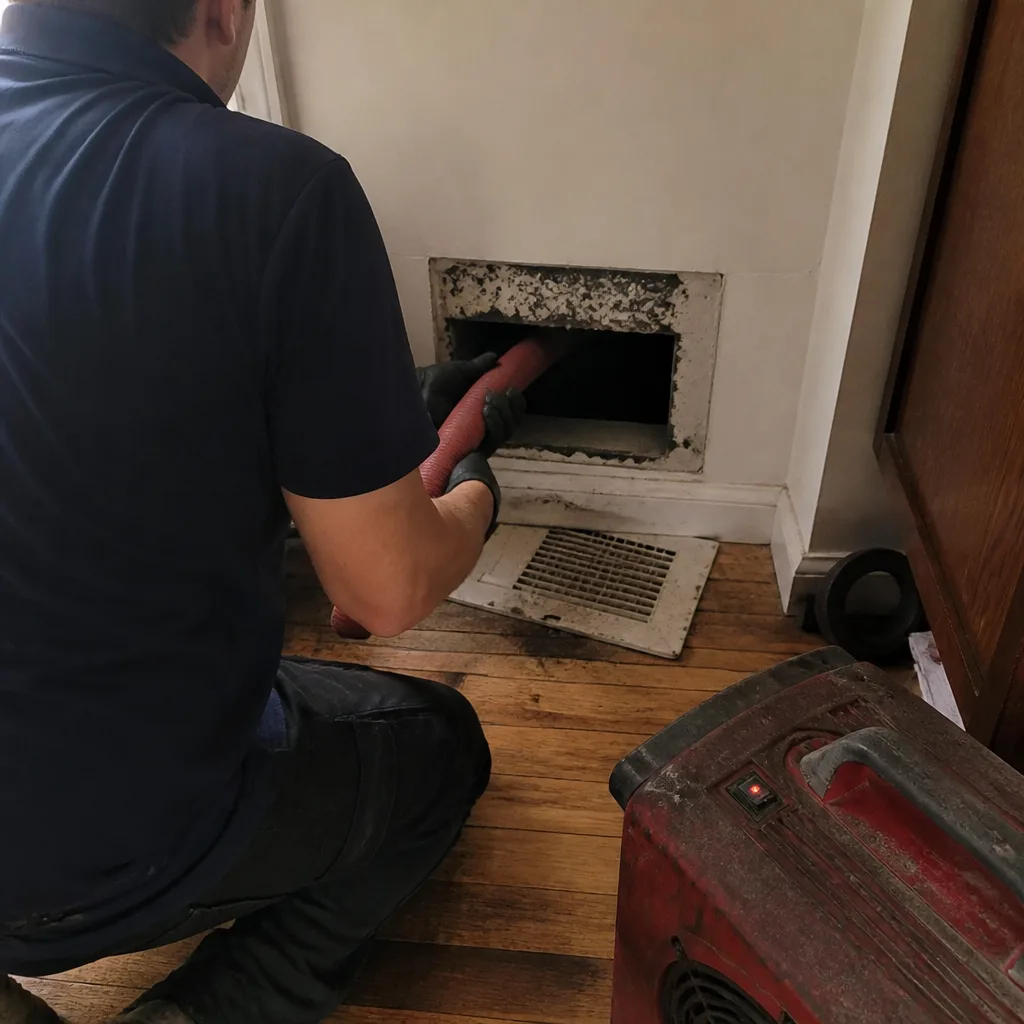
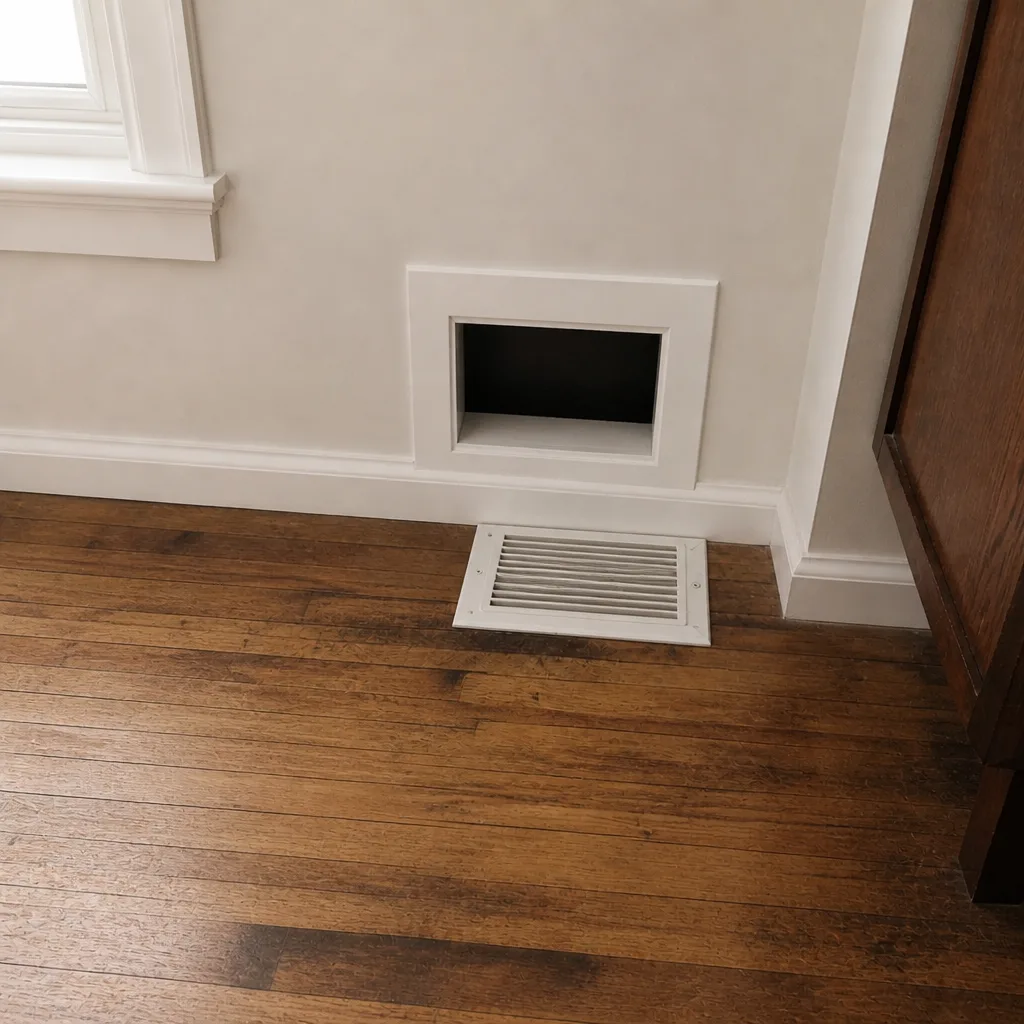
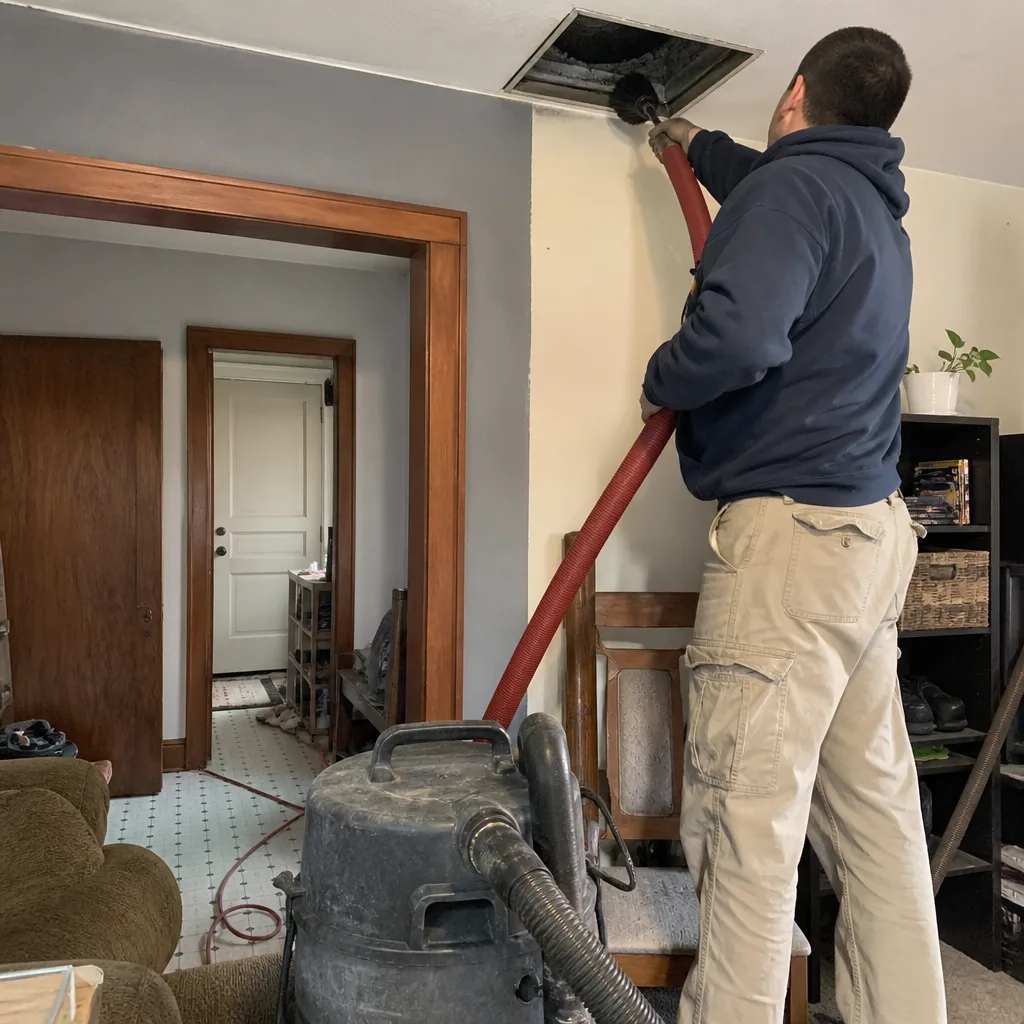
- Before-and-after photos. You see the condition of your own ducts before and after. If you don’t have them, you don’t know what was actually cleaned.
The scope varies by home. A one-story ranch with a simple trunk-and-branch layout is a different job from a two-story with a finished basement and a retrofitted laundry. Both are estimable before work starts, and both should come with one flat price per system agreed before any equipment is set up.
Common Mistakes to Avoid
- Booking on the phone price alone. The low number in an ad is rarely the invoice total. Ask what the flat price per system is before work starts and whether it changes based on what the technician finds.
- Assuming a cheap quote means a cheaper cleaning. A shop vac and a brush kit is not the same process as a Rotobrush and Nikro HEPA system with containment. Some quotes are cheaper because less is happening.
- Paying per vent. Per-vent pricing rewards the company for counting vents and obscures the actual work. Whole-system flat pricing keeps the scope honest.
- Cleaning without inspecting first. A cleaning on a system with a crushed flex run or a failed joint wastes the cleaning cost. The repair should happen before or during, not after a second call.
- Ignoring the accessible ductwork when you have eyes on it. Basement and crawlspace runs in South Bend homes are visible for a reason. Look at them, and ask the technician what they recommend based on what they see.
- Treating dryer vents as an add-on. Lint accumulation is a fire-safety issue, not a cosmetic one. If the dryer has been taking longer to dry for months, that’s the warning sign.
- Assuming dust is always a duct problem. Ambient dust, filter bypass, short-cycling equipment, and duct defects all present with dust. A proper inspection tells you which one you’re dealing with.
See the difference
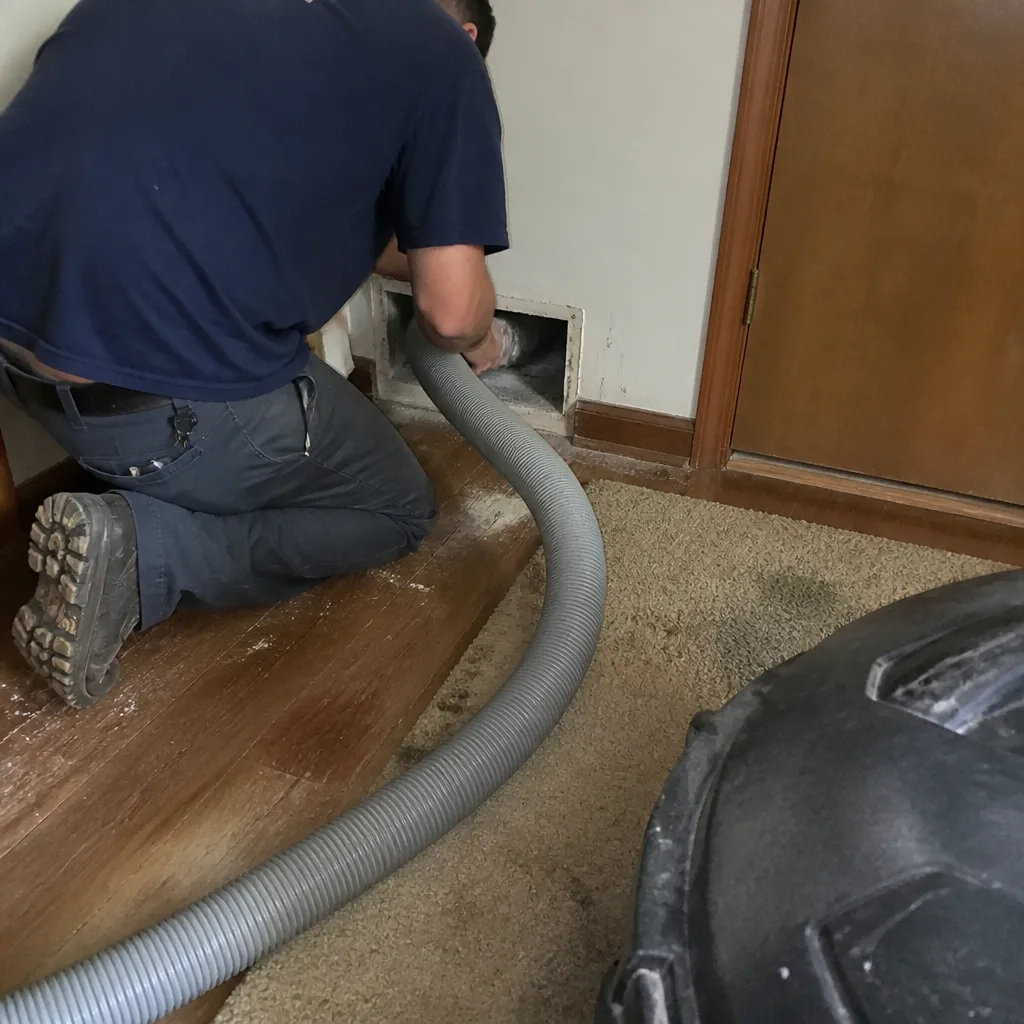 Before
 After
 Before
 After
 Before
 After
When to Call a Professional
Call a professional when two or more of the warning signs on this page coexist, when a musty smell only appears while the system runs, when visible damage on accessible runs suggests more elsewhere, or when your dryer vent is showing restriction signs. Call us sooner if you’re a new homeowner in a house you didn’t have inspected, or if you have a Honeywell or Aprilaire system and you don’t know what the ductwork behind it looks like. Our technicians have up to experience with duct systems, and we can tell you whether the answer is cleaning, repair, or something else entirely. Duct Cleaning South Bend offers free estimates in South Bend. Call (855) 905-0868. We answer 24/7. Fast dispatch from 7am to 7pm, Sunday through Friday.
Frequently Asked Questions
Duct cleaning is priced per system, not per vent, and the flat price is set by a written estimate after an inspection. Costs vary based on the number of branches, the system layout, and whether repair work is needed. The number you should care about is the flat price per system agreed before work starts. Call (855) 905-0868 and we’ll give you an estimate for your specific system.
Because they’re describing a different job. A shop-vac and a brush kit is not the same equipment as a Rotobrush agitation system, a Nikro HEPA vacuum, and Abatement Technologies containment. Cheaper quotes often skip containment, skip the register boots, skip the inspection, and skip protective setup. A per-vent price that only counts supply vents also leaves the return side untouched. Call (855) 905-0868 for a whole-system estimate and ask what equipment is included.
Before-and-after photos of your own ducts. That’s the standard to ask for, and if a company can’t show them, you don’t have evidence of the work. The inspection report should also document any deficiencies found and what was done about them. Call (855) 905-0868 and we’ll walk you through what you’ll receive on the day of the job.
There’s no universal schedule; the answer depends on the system, the filtration, the home, and any pest or moisture history. The practical test is to check the warning signs: if dust is reappearing at specific registers, mustard smells appear with the blower, or the accessible runs show damage, that’s your signal. A reactive approach beats a fixed calendar in most homes. Call (855) 905-0868 for an inspection and an honest read on whether cleaning is needed now.
Humid summers are the main factor. A South Bend basement that holds moisture through July and August is a growth-friendly environment for the duct liner and the coil. Homes with a conditioned crawlspace or basement need their return-side ductwork looked at more carefully than a home with a sealed mechanical room. Summer and fall inspection is a reasonable pattern. Call (855) 905-0868 if you want us to look at yours.
Yes. Duct repair is a core service, not a referral. Loose joints, torn insulation, crushed flex runs, and failed connections get repaired in the same visit as the cleaning. That’s the whole point: one call covers it, rather than sending you to a second contractor. Call (855) 905-0868 if you’ve already been told your ducts have damage.
The Bottom Line
Every warning sign on this page has a mechanical cause, and knowing the mechanism is what lets you tell a duct problem from an HVAC problem from a filtration problem. Dust at specific registers is a branch issue. Musty smell that starts with the blower is inside the system. Uneven rooms are usually a blockage, damper, or leak. Allergy symptoms only count as a duct signal if they track with runtime. Visible damage on accessible runs predicts what’s hiding in the inaccessible ones. South Bend homes, especially older ones with retrofitted runs, are prone to all five. Get the diagnosis right before anyone quotes a cleaning, ask for a flat price per system, and ask for before-and-after photos.
Contact
If you’ve read this guide and one or more warning signs fits your home, the next step is an inspection that tells you what’s actually happening. Our technicians have up to experience with duct systems, we use the same professional-grade equipment on every eligible job, and we’ll tell you honestly if the answer is cleaning, repair, or something else. Call Duct Cleaning South Bend at (855) 905-0868 for a free estimate. We answer 24/7. Fast dispatch from 7am to 7pm, Sunday through Friday.
Written by the team at Duct Cleaning South Bend.