
Last updated November 16, 2026
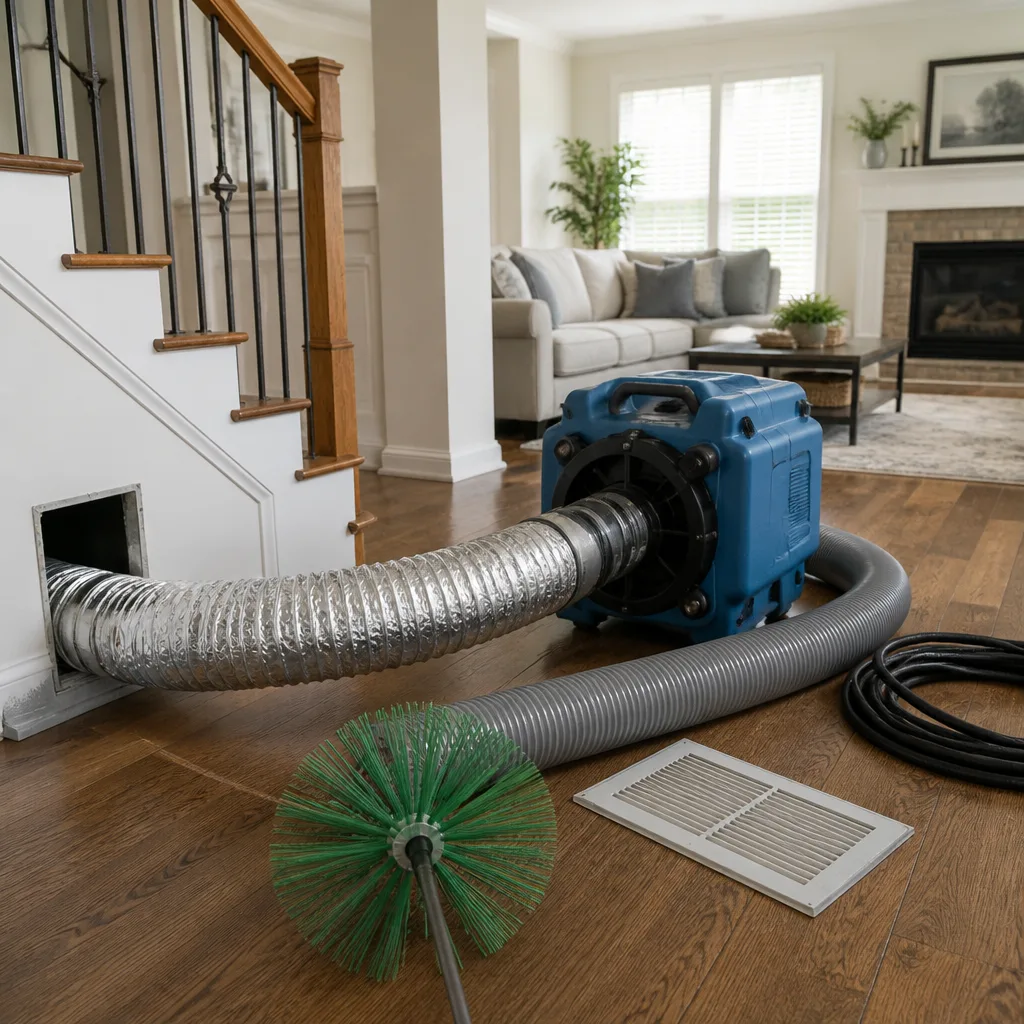 Whole-home duct cleaning
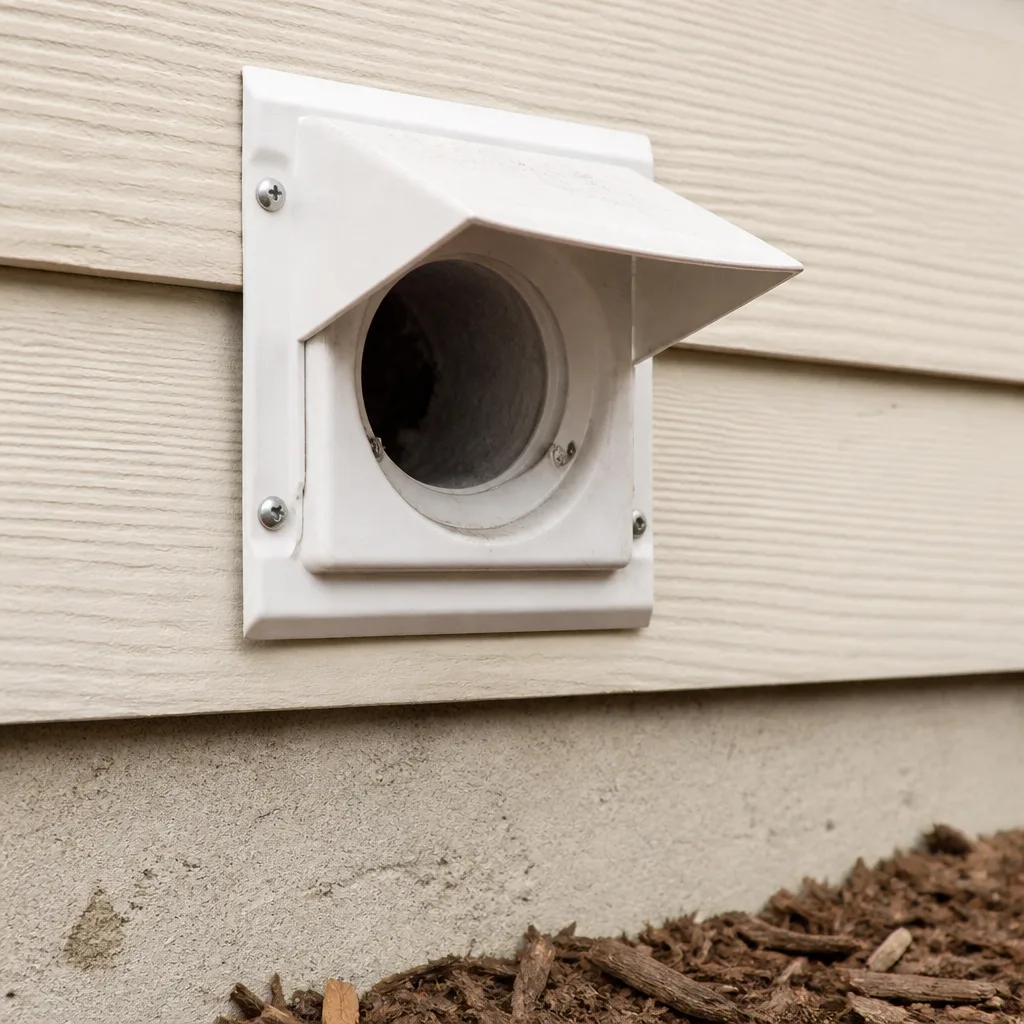 Dryer vent cleaning
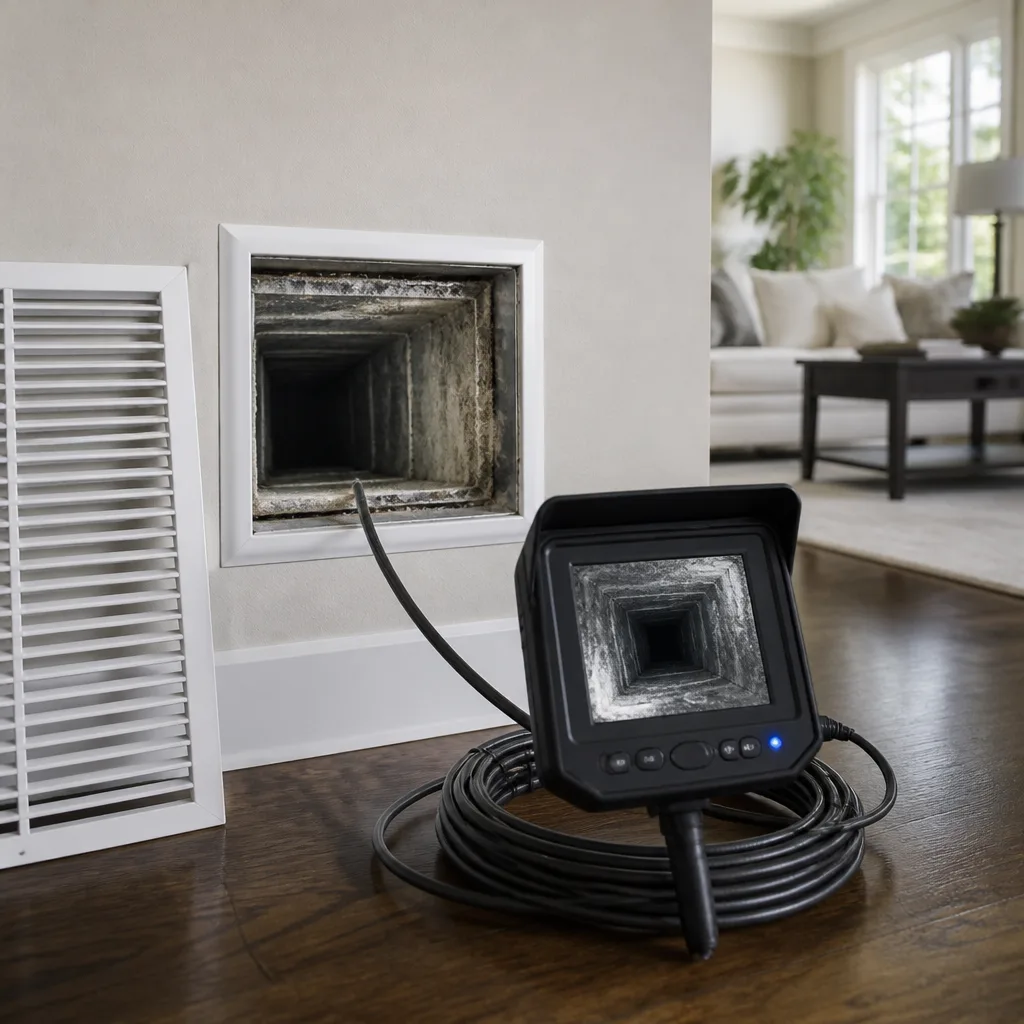 Camera inspection
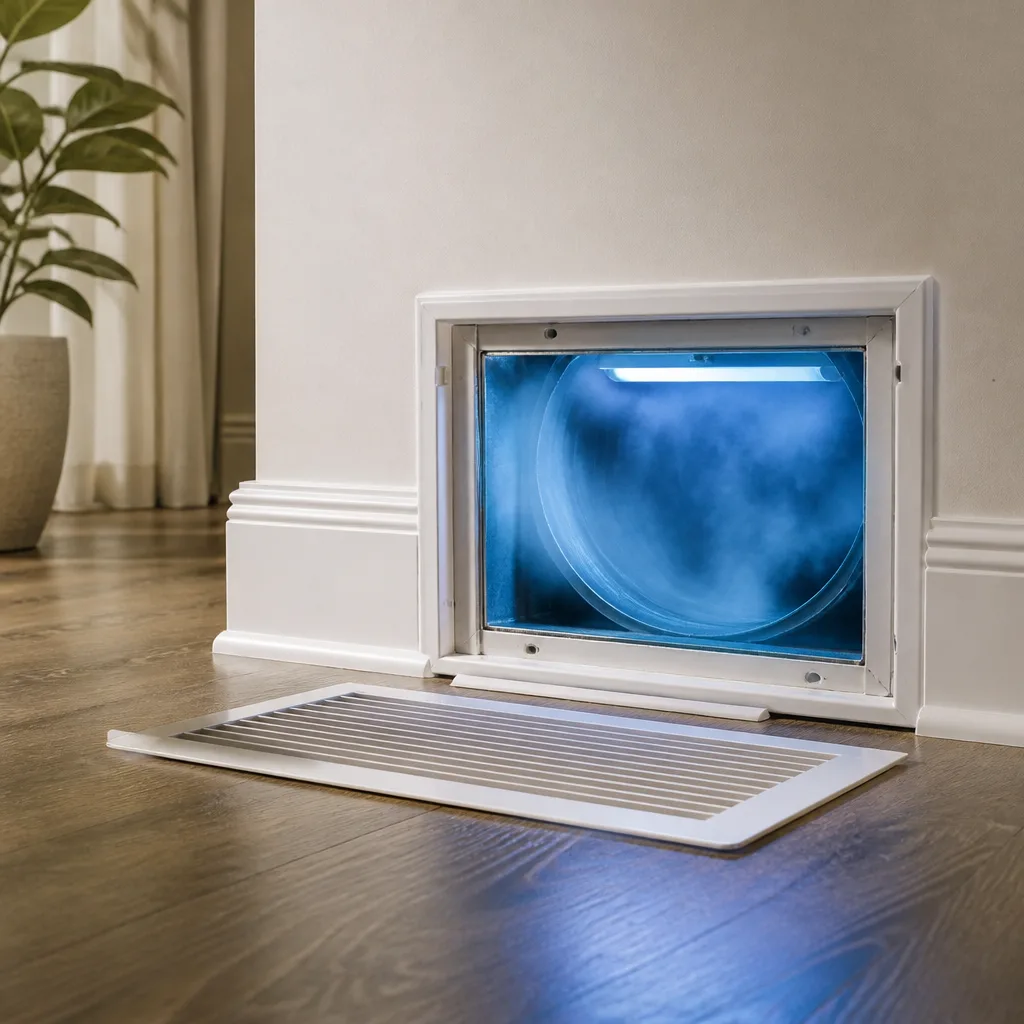 Sanitizing & deodorizing
Whole-system duct and dryer vent check with before-and-after photos - you see exactly what came out of your vents
That "$99 whole-house special" is a bait ad - the real number appears once they are in your hallway, or the "clean" is a shop-vac at the register. We photograph the inside of your ducts before and after instead.
The Complete Guide to Air Duct Cleaning in South Bend
Most articles about duct cleaning tell you the same five things: it removes dust, it helps allergies, you should do it every few years, ask for a quote, and make sure they clean the air handler. That’s fine as far as it goes, but it doesn’t tell you what a technician is actually doing in your basement or crawlspace for three hours, or why two crews with the same job description can produce completely different results. The average South Bend home has more than 30 linear feet of ductwork the homeowner has never seen, and most of it sits in unconditioned space where temperature swings do quiet damage year after year. Understanding the process, tool by tool and zone by zone, is what separates a homeowner who gets real results from one who pays for a surface wipe.
Quick Answer
Professional air duct cleaning in South Bend means agitating the full interior surface of every supply and return line with rotary equipment, extracting the loosened debris under negative pressure, cleaning the air handler cabinet itself, and then verifying airflow and sealing any gaps or disconnected joints the process exposes. The tools matter, but so does the order of operations and whether the crew treats the air handler and return side as part of the job rather than an afterthought. A properly done clean takes hours, not minutes, and includes before-and-after photos of your own ducts.
Styles & brands we work with
- Whole-home duct cleaning
- Dryer vent cleaning
- Camera inspection
- Sanitizing & deodorizing
Table of Contents
- What Actually Happens During a Professional Duct Cleaning
- Why South Bend’s Climate and Housing Stock Change the Job
- What a Rotobrush System Does That a Brush and Vacuum Can’t
- Supply Ducts, Return Ducts, and the Air Handler: Why All Three Matter
- Duct Repair During the Clean: Gaps, Joints, and Liner Deterioration
- Post-Cleaning Verification: Airflow, Visuals, and Filter Timing
- Dryer Vent Cleaning: The Other Duct in Your House
- Common Mistakes to Avoid
What Actually Happens During a Professional Duct Cleaning
A real duct cleaning is a sequence, not a single action. If a crew shows up, runs a hose into a few registers, and leaves inside an hour, they cleaned the openings and not the duct. Here is the order a professional visit follows, and you can ask any company to describe this before they arrive.
- Assessment. We check the system layout, count supply and return runs, look for access problems, and identify anything that suggests damage rather than just dirt. A system with disconnected joints in a crawlspace will not clean properly until those joints are addressed.
- Containment setup. Abatement Technologies containment equipment and negative-pressure setup go in before any agitation starts. This is the step that keeps loosened debris from drifting into your living space. It is also the step that takes time, and the step that cheap crews skip.
- Register and grille removal. Registers come off so the duct interior can be reached directly. Guardsman-grade protective products go down over floors and nearby surfaces before equipment goes in.
- Agitation, run by run. A rotary tool with a whip or brush head travels the length of each duct, contacting the full interior circumference. This is where a Rotobrush system earns its keep, and we’ll get into why below.
- HEPA extraction. Nikro HEPA-rated vacuum equipment pulls the loosened material into a sealed collection system. Agitation without extraction just redistributes.
- Air handler cabinet. The blower compartment and evaporator coil area get cleaned and inspected. This is the most-skipped zone in the trade.
- Inspection and repair. Any gaps, disconnected joints, or failing liner found along the way get documented and, where the customer approves, corrected on the same visit.
- Reassembly and verification. Registers go back on, airflow gets checked, and you get before-and-after photos of your own system.
That’s what you’re paying for. If you call duct cleaning South Bend and the crew can’t walk you through these steps, ask why.
Why South Bend’s Climate and Housing Stock Change the Job
South Bend sits in a freeze-thaw climate, and that matters inside your ductwork more than most homeowners realize. Winters here push the system through long heating cycles, and summers run it hard on cooling. Every one of those cycles moves air through ducts that often run through unconditioned attic, basement, or crawlspace space. Temperature swings on the outside of the duct create condensation on the inside during the shoulder seasons. That moisture doesn’t flood anything, but it does soften dust into a sticky film that adheres to duct walls. A dry brush pass skates right over that film. Rotary contact agitation breaks it up.
Housing stock is the other half of the story. A large share of South Bend homes date to before 1980, and older duct systems were often built with materials and connections that have been quietly degrading for decades. We routinely find:
- Duct board with failing internal liner that sheds fibers into the airstream
- Flex duct runs that sag, kink, or pull loose at the collar
- Sheet metal joints sealed with tape that dried out and fell away years ago
- Returns drawing air from crawlspaces or garages rather than the living space
None of that is unusual in South Bend. It is what older housing does. The point is that a cleaning on a system with these conditions needs to include a look at the ducts themselves, not just the dirt inside them. South Bend’s housing mix is why repair capability belongs on the same truck as the cleaning equipment. If your ducts are failing, a clean system is a temporary condition.
What a Rotobrush System Does That a Brush and Vacuum Can’t
The difference comes down to contact. A brush-and-vacuum setup pushes a static brush down the duct and relies on airflow to carry debris back. That works on loose dust sitting on the bottom of a horizontal run. It does almost nothing to material bonded to the sides and top of the duct, which in a South Bend home is where most of the buildup lives after years of moisture cycles.
A Rotobrush system uses a rotating head on a flexible shaft. The head spins against the interior wall as it travels, so the agitation is mechanical and continuous rather than a single pass with a fixed brush. Rotary contact breaks the bond between debris and duct wall instead of just disturbing the top layer.
Why does contact matter that much? Consider what accumulates in a return duct over time. Household dust, pet hair, cooking residue, and lint all migrate into the return side first, and they don’t sit in a neat pile. They adhere, layer, and dry. A surface-only pass knocks the top off and leaves the rest. A rotary pass contacts the wall and lifts the whole layer so the HEPA vacuum behind it can capture it.
This is the same logic that makes commercial and industrial duct cleaning effective. Professional-grade equipment isn’t marketing language; it’s the difference between a tool designed for continuous contact work and a consumer-grade substitute built for occasional light duty. When we set up on a South Bend system, the Rotobrush does the agitation and the Nikro does the capture, and the pair has to work together or neither one produces a clean duct.
If you want the full picture of what our air duct cleaning visit includes, that page walks through the equipment and process in more detail.
Supply Ducts, Return Ducts, and the Air Handler: Why All Three Matter
Your duct system has three distinct zones, and they get dirty in different ways. A crew that cleans one or two and calls it done has left the job half finished.
Supply ducts
These carry conditioned air from the furnace or air handler to each room. They’re under positive pressure, which means small leaks push air out rather than pulling contaminants in. Supply ducts tend to accumulate less debris than returns, but they’re also where you’ll see evidence of liner deterioration and where the airstream deposits fine particulate at the far ends of long runs.
Return ducts
Returns pull air back to the system, and they run under negative pressure. That means every gap, every loose joint, and every unsealed penetration in a return duct draws air in from wherever it’s passing through. In South Bend homes, returns often run through basements and crawlspaces. A return duct with a failed joint in a crawlspace is pulling crawlspace air into your living space and depositing whatever comes with it along the inside of the duct. Returns are almost always the dirtiest part of the system, and they’re the part cheap crews clean least.
The air handler cabinet
The blower compartment and the evaporator coil sit inside the air handler. Air passes through this cabinet before it goes anywhere else. If the cabinet interior is coated with debris, the system is blowing that material back into the ducts you just cleaned. Cleaning the cabinet isn’t an optional add-on. It’s the difference between a clean system and a clean-looking one. When we work around a Honeywell or Aprilaire system, we’re also mindful that premium filtration and ventilation components sit downstream of this cabinet. Your filtration system is only as good as the ducts behind it, and cleaning the cabinet without disturbing or damaging those components takes care.
All three zones get cleaned on the same visit, in sequence, with containment in place throughout. That’s the baseline.
Duct Repair During the Clean: Gaps, Joints, and Liner Deterioration
Here is where most cleaning-only companies hit a wall. They find a problem, and they either ignore it or tell you to call someone else. That’s not a knock on their skill; it’s a limitation of what they’re set up to do. Cleaning and repair are different trades that happen to work on the same system.
We clean it. If it’s broken, we fix it. When the agitation pass reveals a disconnected flex run at a collar, a sheet metal joint that lost its seal, or duct board with failing internal liner, that finding gets documented and, with your approval, corrected before we leave. Repairing the duct after cleaning it means the system is sealed and working when we’re done, not clean and leaking.
What we commonly find in South Bend homes, and what repair involves:
- Disconnected or slipped joints. Flex duct pulled off a collar, or a sheet metal connection that worked loose. Resealed and reconnected.
- Gaps at penetrations. Where ducts pass through framing, wall cavities, or floor assemblies without a seal. These draw air from unintended spaces, especially on the return side.
- Liner deterioration. Internal duct board lining that has broken down and is shedding fibers. Depending on severity, the affected section gets repaired or replaced.
- Sagging or kinked flex runs. Flex duct that’s crushed, kinked, or sagging restricts airflow and creates a low spot where debris settles. Re-routed or replaced.
Finding a problem during the cleaning doesn’t mean you need a second contractor visit or a second round of disruption. One call covers it, and the system goes back together better than it came apart. Our South Bend repair work happens on the same visit as the cleaning for exactly this reason.
Post-Cleaning Verification: Airflow, Visuals, and Filter Timing
How do you know the job was actually done? Not by how tidy the technician’s shirt is, and not by a verbal assurance. Verification is a specific set of checks, and you’re entitled to see the results.
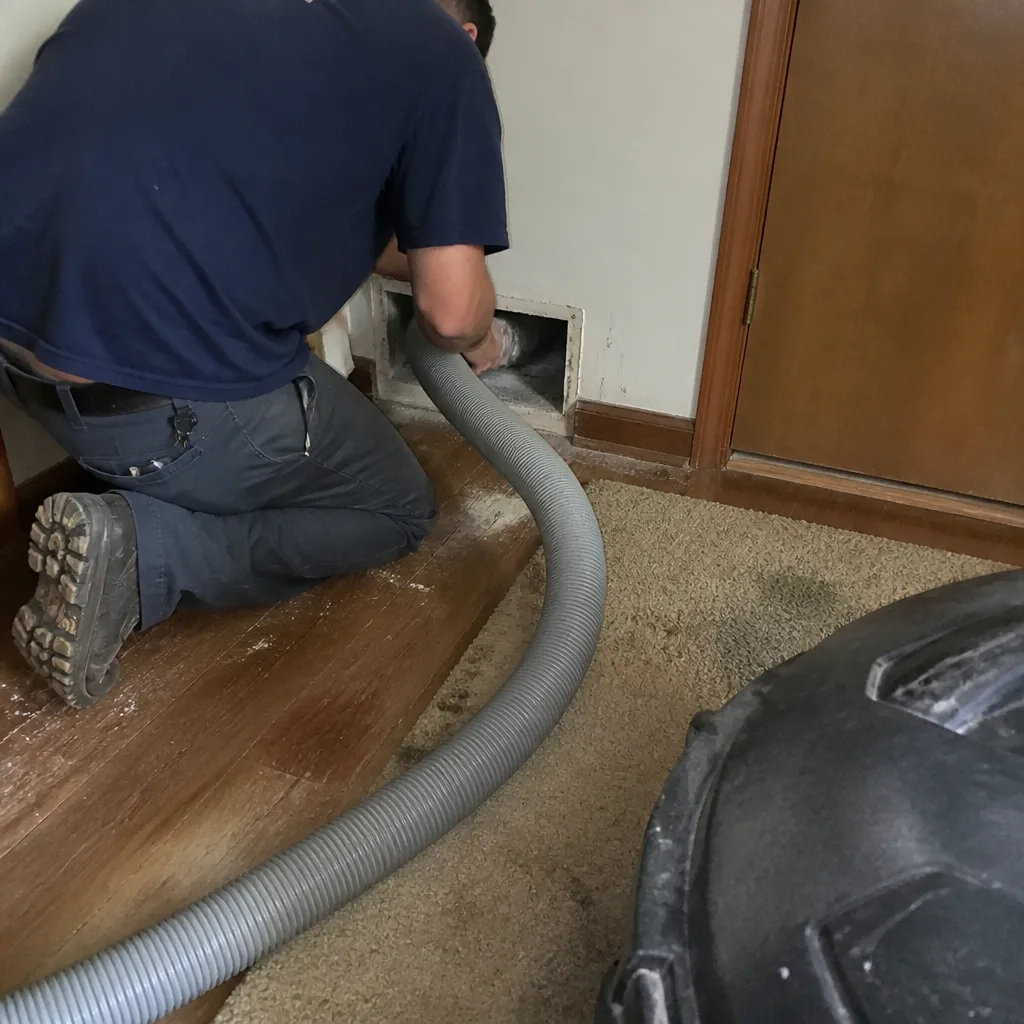
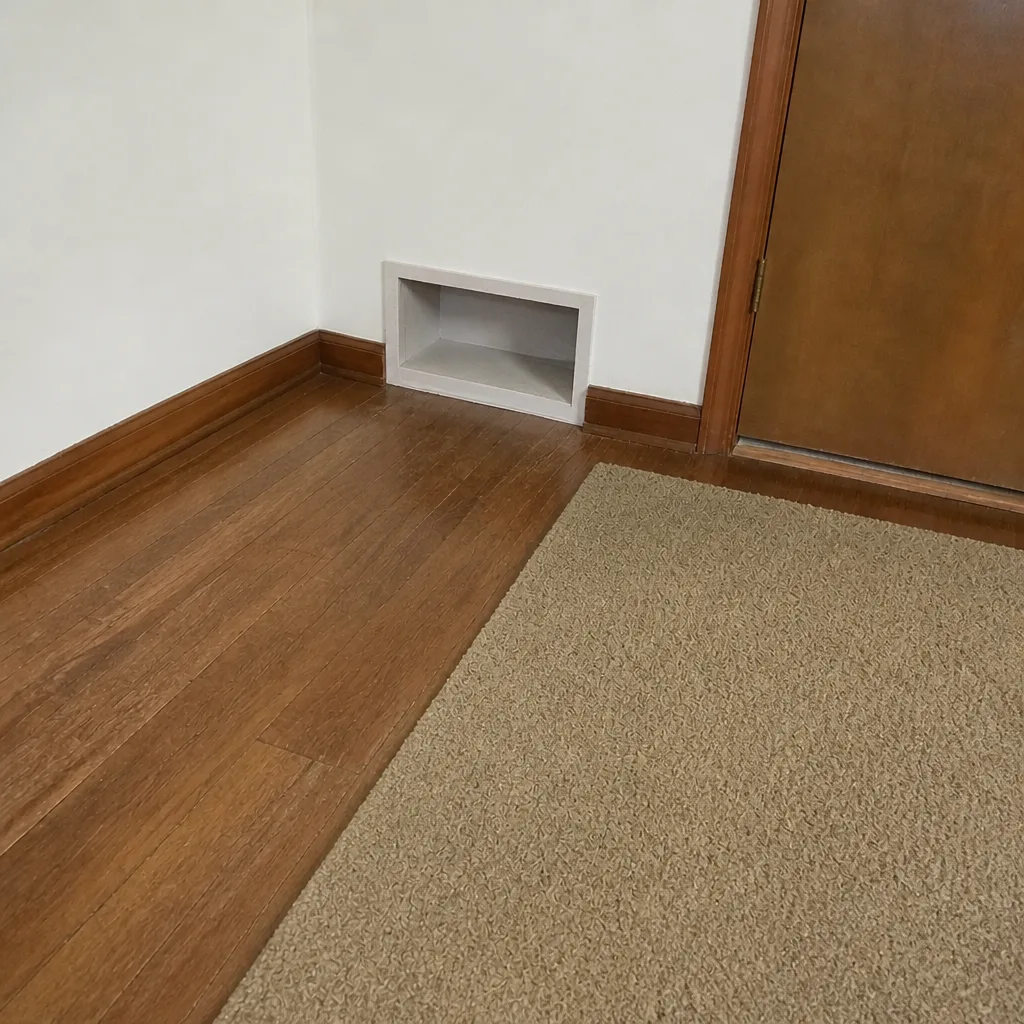
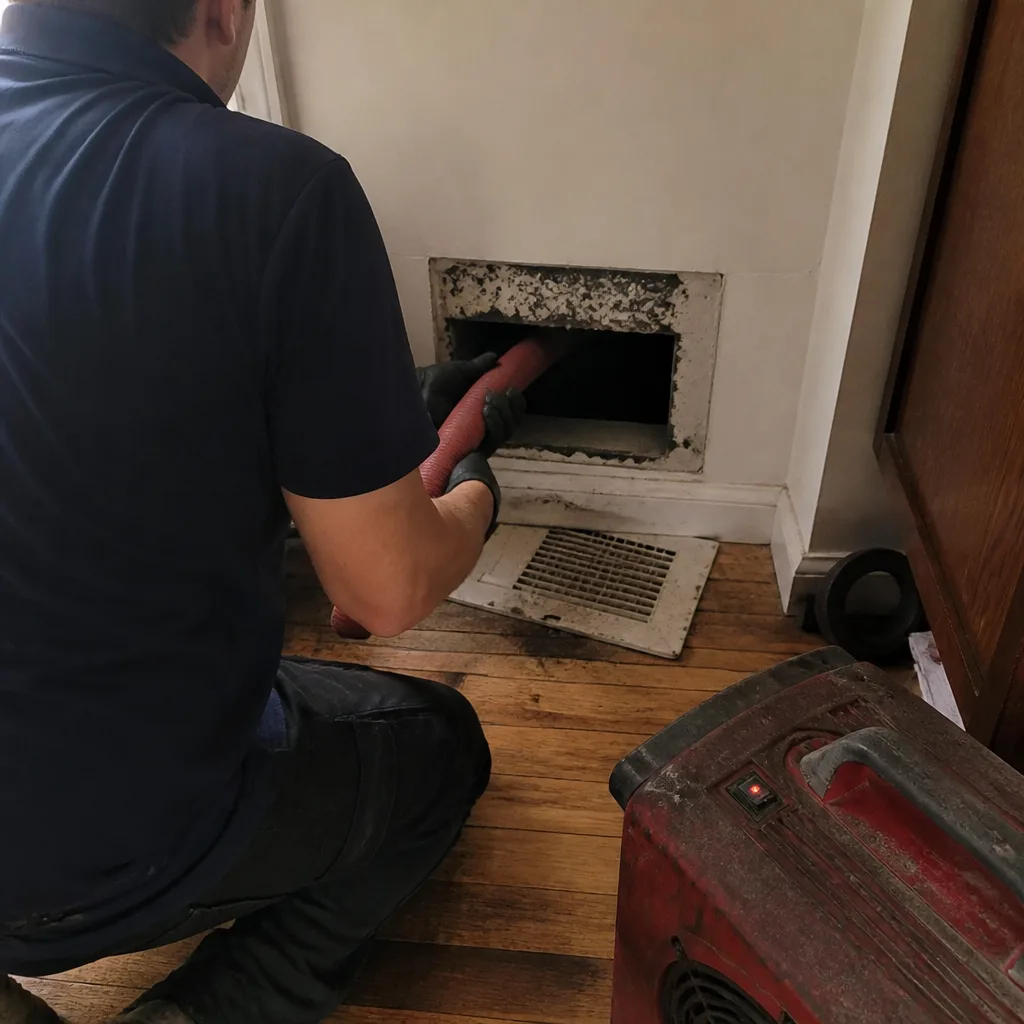
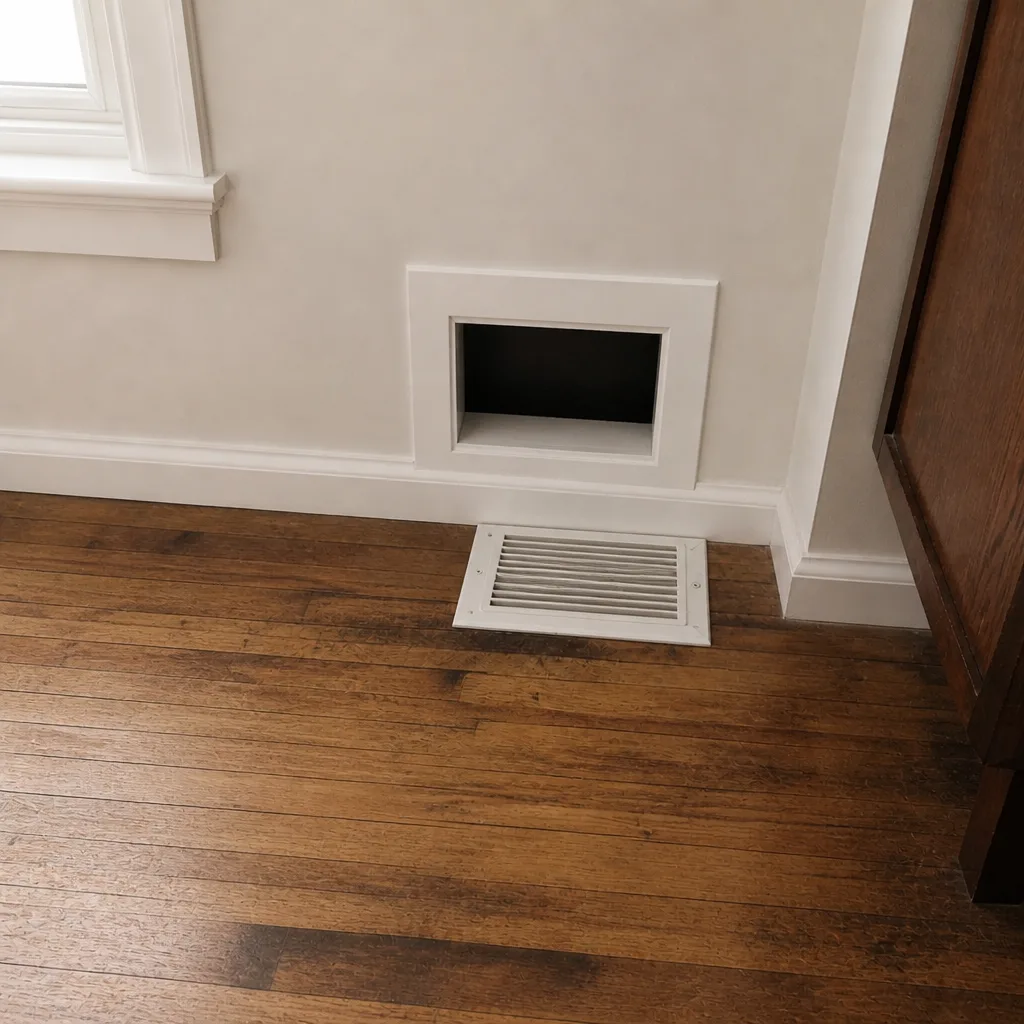
- Visual inspection of each run. Access points allow direct inspection of duct interiors. Before-and-after photos of your own ducts are the most credible evidence available, and we provide them on every job because a homeowner shouldn’t have to take it on faith.
- Airflow balance check. Registers get tested after cleaning to confirm each room is receiving adequate airflow and that nothing got dislodged or kinked during the process. If a run was repaired, this step confirms the fix.
- Filter review. A clean system needs a clean filter, and the filter should go in after cleaning, not before. Check the filter a week or two after service. During that window, a small amount of residual fine particulate is normal as the system settles. If the filter loads up heavily in that first week, that’s worth a call.
- Go-forward filter timing. Filter change intervals depend on filter type, household size, pets, and how hard the system runs. A basic 1-inch filter needs changing more often than a high-MERV media cabinet filter. Your technician should recommend an interval based on your specific setup, not a generic number.
- Documentation of any repairs. If joints were sealed or sections were replaced, you should know what changed and where.
This verification step is where the professional equipment stack pays off. When debris is genuinely captured rather than redistributed, the system runs cleaner from the moment the crew packs up. When it’s just loosened and left, you’ll know within a week, because the dust comes right back out of the registers.
Dryer Vent Cleaning: The Other Duct in Your House
There’s a second duct in most South Bend homes that gets ignored entirely, and it carries lint, heat, and moisture out of the dryer. Dryer vent cleaning is a distinct service with a distinct purpose. It isn’t an upsell tacked onto a duct cleaning invoice. It’s fire prevention and appliance efficiency.
Lint is highly combustible, and a clogged vent traps it in the line where heat builds. That’s the mechanism behind dryer fires. We treat vent cleaning as the fire-safety service it is, done with the same professional-grade extraction equipment we use on HVAC ducts. It takes minutes to add to a scheduled visit, and there’s no reason to have it done separately if we’re already on-site.
Signs a dryer vent needs attention:
- Clothes take longer than one cycle to dry
- The dryer cabinet or the wall behind it feels hot to the touch during operation
- The outside vent flap doesn’t open fully or has visible lint caked around it
- You can’t remember the last time the vent was cleaned
Our dryer vent cleaning page covers the process and what to expect. It’s worth a look if your dryer has been running longer than it used to.
Common Mistakes to Avoid
- Taking a per-vent quote. Per-vent pricing rewards speed over thoroughness. The crew gets paid by the register, not by the result. Ask for a flat price for the whole system, agreed before work starts, and get it in writing.
- Skipping the air handler cabinet. A crew that cleans the ducts but leaves the blower compartment and coil caked in debris has cleaned the pipes and left the source of the problem. Ask explicitly whether the cabinet is included.
- Not asking about containment. Agitation without Abatement Technologies-style containment and HEPA extraction just moves debris around. Ask how debris is captured during the job, not just loosened.
- Accepting a shop-vac setup. Consumer-grade vacuums don’t have the airflow or the filtration to pull material from a 30-foot duct run. Rotobrush and Nikro equipment is professional grade for a reason.
- Ignoring what the cleaning reveals. A disconnected joint in a South Bend crawlspace doesn’t fix itself. If the crew finds damage and can’t repair it, you’re now looking at two contractors for one system.
- Replacing a filter before cleaning. A brand-new filter goes in after the ducts are clean. Putting one in first just gives the extraction step a fresh filter to load up.
- Trusting assurances over photos. You can’t see inside your ducts. Ask for before-and-after documentation of your own system. A company that can’t provide it is asking you to take them on faith.
See the difference
 Before
 After
 Before
 After
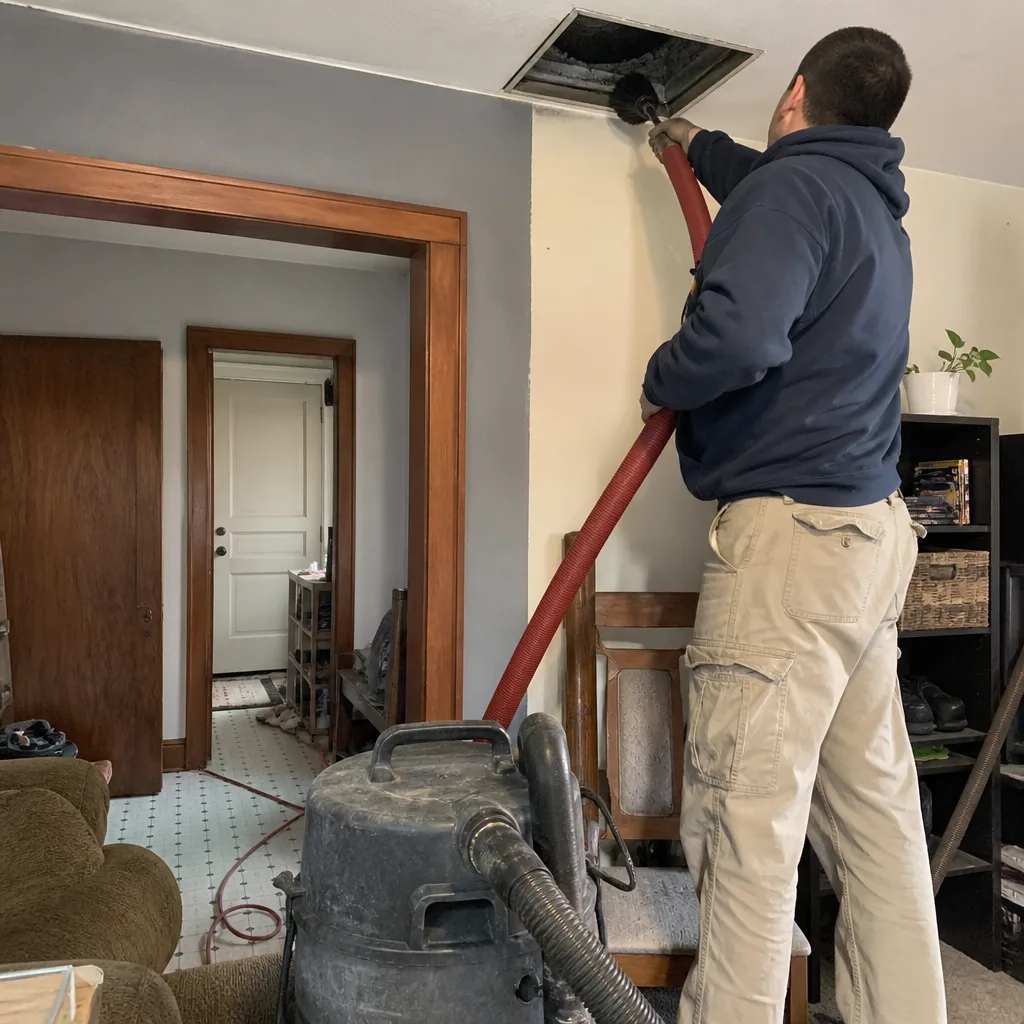 Before
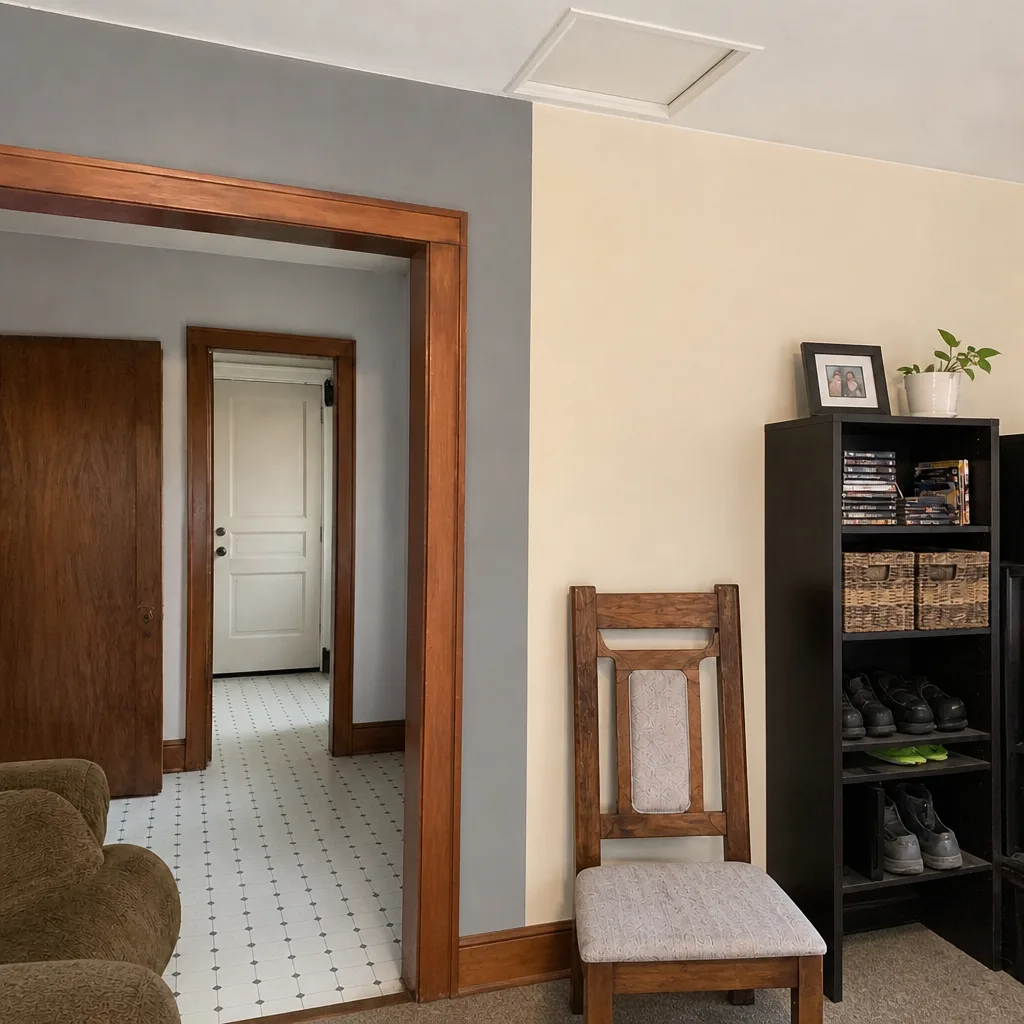 After
When to Call a Professional
Call a professional when the signs are specific. Visible dust blowing from registers after the system starts, an unexplained spike in allergy symptoms tied to heating or cooling season, a recent move into an older South Bend home where you don’t know the service history, or visible debris around the return grilles. Call if the system was cleaned years ago and never since; the climate here cycles HVAC systems hard. Call if a technician repairing something else flagged the ducts, or if your dryer vent has never been cleaned. Call if you’ve invested in premium filtration like a Honeywell or Aprilaire system and need the ducts behind it to actually be clean. Duct Cleaning South Bend offers free estimates in South Bend. Call (855) 905-0868 and we’ll talk through whether cleaning makes sense for your system.
Frequently Asked Questions
Duct cleaning is priced per system, not per vent, and the final price is set by a written estimate after we look at your layout. Homes with more runs, more zones, or significant repair needs will estimate higher than a simple single-system home. The reason we don’t publish a coupon number is that per-vent pricing is the industry’s bait-and-switch mechanism; the honest way to price the work is whole-system after inspection. Call (855) 905-0868 for a free estimate.
A proper clean on a typical South Bend home runs a few hours, depending on system size, access, and whether repairs come up mid-job. Anyone quoting a total time under about ninety minutes is likely skipping containment setup or the air handler cabinet. Ask upfront what’s included.
For some homes it’s unnecessary; for others it’s overdue. Homes with pets, allergy sufferers, recent major renovations, or decades of unknown service history usually benefit. Homes where the ducts were serviced recently with documentation may not need it yet. The scam is not duct cleaning itself. It’s a low teaser price that becomes a far larger invoice once the technician is on-site. Get a flat price per system in writing beforehand, and you’ve removed the scam vector. Call (855) 905-0868. We answer 24/7.
There’s no universal interval, but South Bend’s freeze-thaw climate and older housing stock tend to compress the schedule compared to milder climates. Homes with pets, allergy sufferers, or heavy system use often benefit from an inspection sooner. Annual or biennial inspection is reasonable, and cleaning is done when the inspection says it’s needed. Call (855) 905-0868 for an assessment.
Yes, dryer vent cleaning is one of our three core services, and it can be scheduled on the same visit as duct cleaning. It’s a fire-safety service, not a cosmetic add-on. If your dryer is taking longer than it used to, that’s the signal. Call (855) 905-0868 among our South Bend service offerings and we’ll coordinate both.
We document it and, with your approval, repair it before leaving. Duct repair is one of our core services, so you don’t need a second contractor visit. Call (855) 905-0868. We answer 24/7. Fast dispatch from 7am to 7pm, Sunday through Friday.
The Bottom Line
Duct cleaning in South Bend is a process, not a coupon. The climate here cycles systems through constant heating and cooling, and a good chunk of the local housing stock has ductwork old enough to have real problems waiting. A proper job means containment, rotary agitation with professional-grade equipment, HEPA extraction, the air handler cabinet, repair capability on the same visit, and before-and-after photos of your own ducts. Get a flat price per system in writing before work begins. Expect hours, not minutes. And if a company can’t tell you what they’ll do in each zone, ask why. Our technicians have up to experience with this equipment stack and these systems.
Call (855) 905-0868 for a free estimate on air duct cleaning, dryer vent cleaning, or air duct repair. We answer 24/7. Fast dispatch from 7am to 7pm, Sunday through Friday.
Written by the team at Duct Cleaning South Bend.