
Last updated November 16, 2026
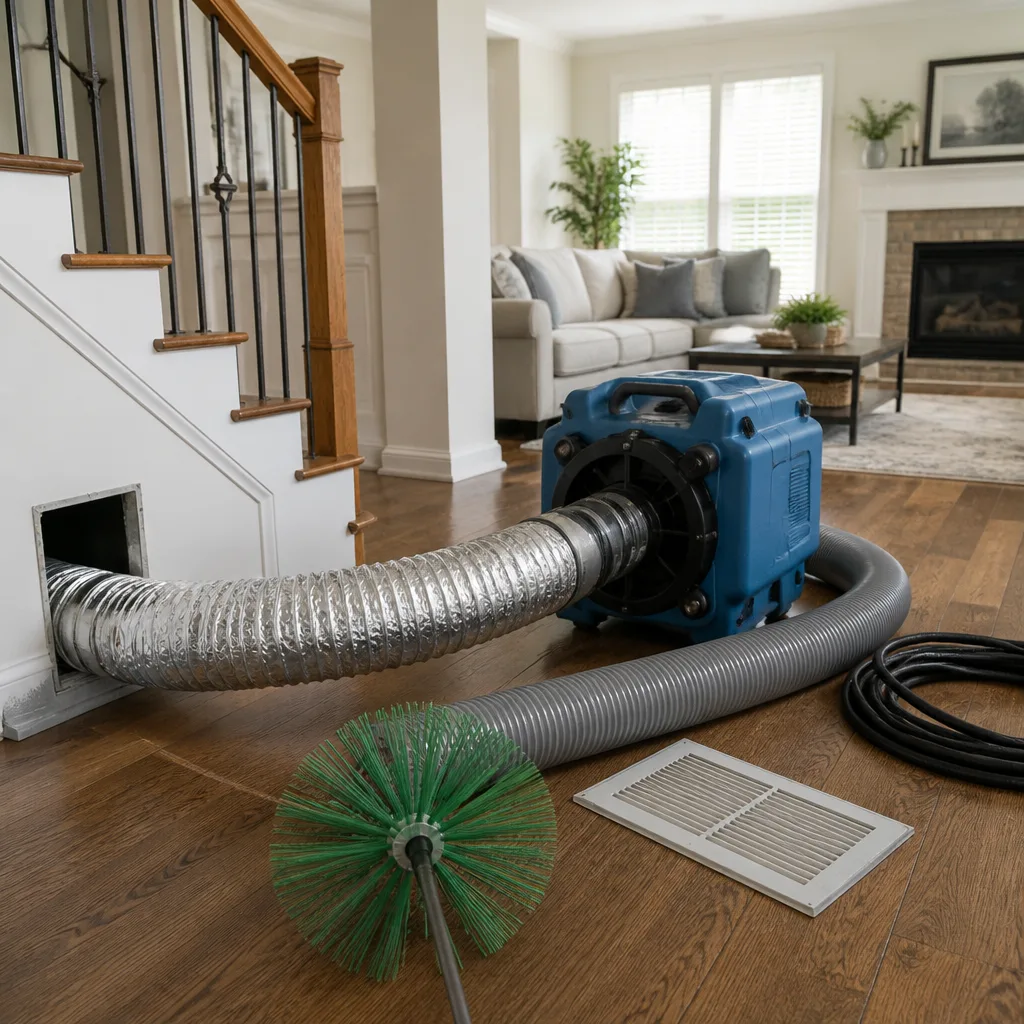 Whole-home duct cleaning
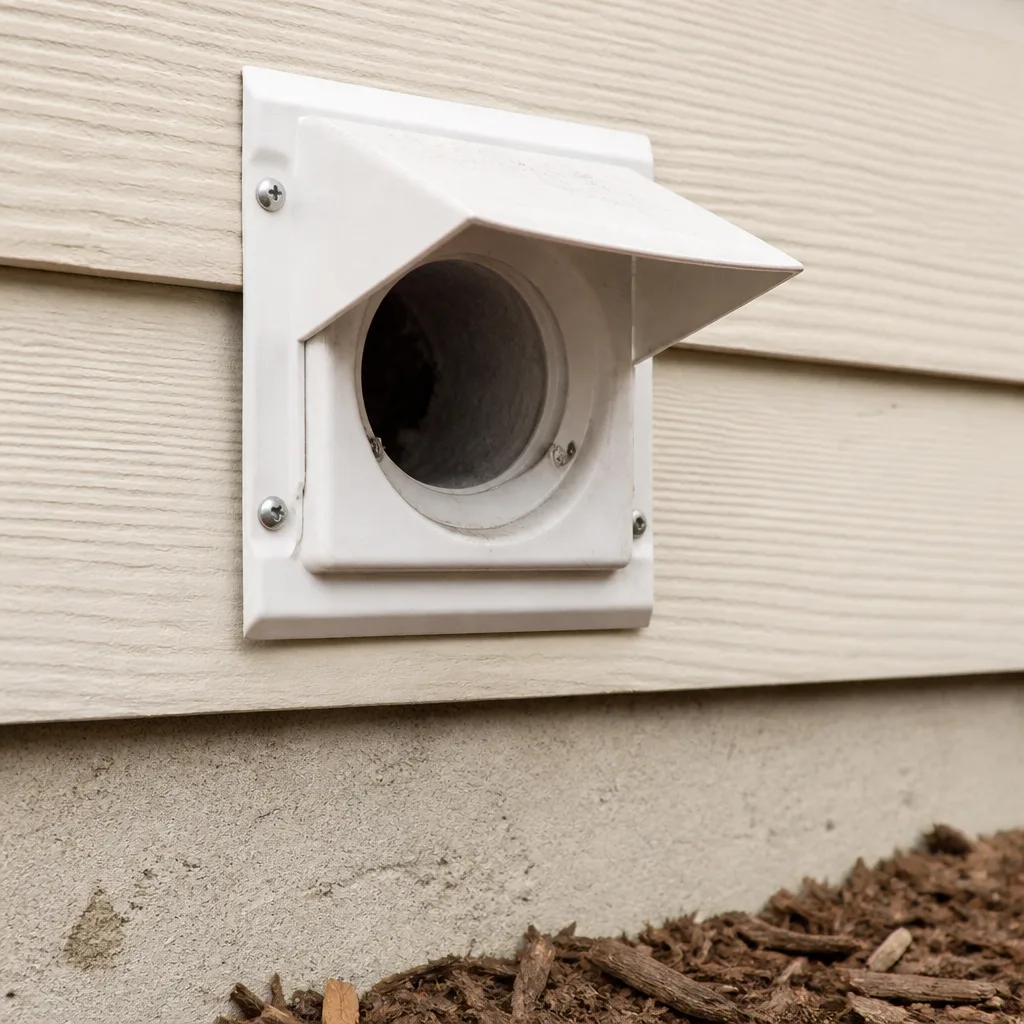 Dryer vent cleaning
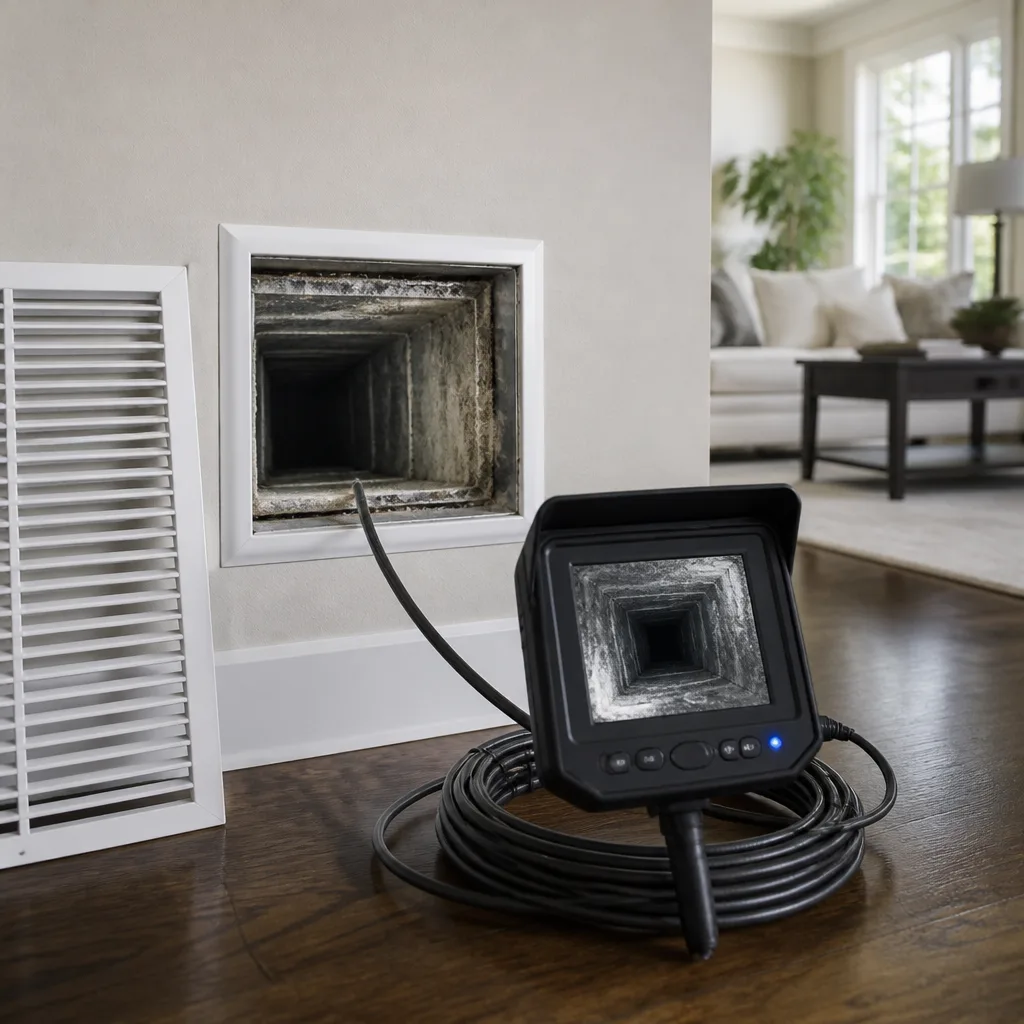 Camera inspection
 Sanitizing & deodorizing
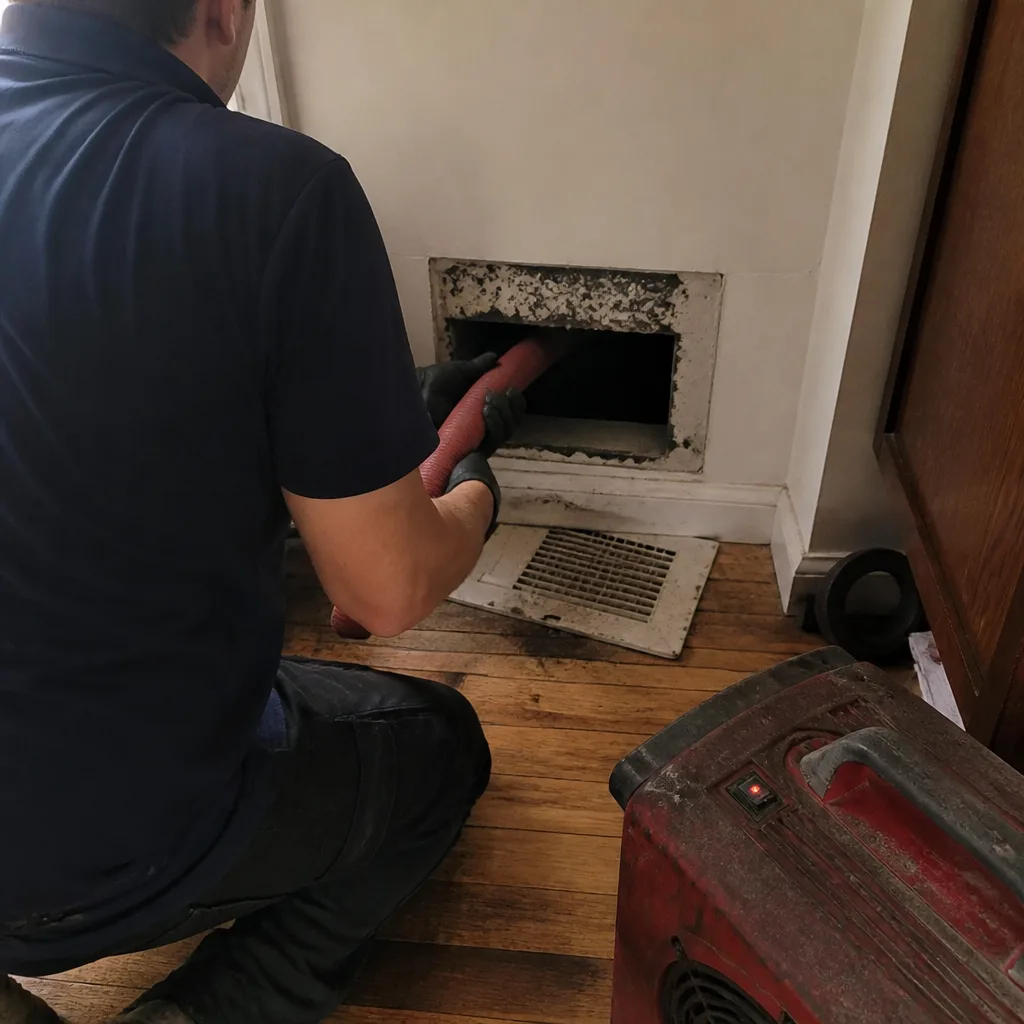
Whole-system duct and dryer vent check with before-and-after photos - you see exactly what came out of your vents
That "$99 whole-house special" is a bait ad - the real number appears once they are in your hallway, or the "clean" is a shop-vac at the register. We photograph the inside of your ducts before and after instead.
How to Hire an Air Duct Cleaning Contractor in South Bend: A Step-by-Step Guide
In Indiana, nothing stops someone from buying a shop vac, printing business cards, and calling themselves a duct cleaning company. That’s the uncomfortable truth behind this guide. There’s no statewide licensing board that checks whether the person in your basement knows what negative air pressure means, or whether their vacuum is rated to hold the debris it’s pulling out of your system. So the hiring decision falls on you, and it comes down to questions most homeowners don’t know to ask. This guide walks you through exactly what to ask, how to read a quote, what warning signs to watch for in the South Bend market, and what you should expect to receive when the job is done.
Quick Answer
To hire an air duct cleaning contractor in South Bend, verify the equipment first: ask what agitation system they use, what CFM rating their negative air machine carries, and whether the vacuum unit has HEPA filtration. Then confirm the provider is a NADCA member, read the quote for line items rather than a flat rate, and insist on before-and-after documentation of your own ducts. A legitimate contractor will answer every one of those questions without hesitation.
Styles & brands we work with
- Whole-home duct cleaning
- Dryer vent cleaning
- Camera inspection
- Sanitizing & deodorizing
Table of Contents
- Why Hiring a Duct Cleaner in South Bend Is Harder Than It Looks
- The Equipment Questions That Separate Real Contractors From Pretenders
- How to Read a Duct Cleaning Quote
- Why NADCA Membership Matters
- Red Flags Specific to the South Bend Market
- What a Legitimate Contractor Should Give You After the Job
- Cleaning vs. Repair: Knowing Which You Actually Need
- A Step-by-Step Hiring Process
Why Hiring a Duct Cleaner in South Bend Is Harder Than It Looks
Most trades have a gate. Electricians get licensed. Plumbers get licensed. HVAC technicians who handle refrigerant get certified. Duct cleaning, in most states including Indiana, has no such barrier. Anyone with a phone number and a vehicle can advertise duct cleaning services in South Bend and show up at your door.
That’s not a knock on the trade. It’s a warning that the label “duct cleaning company” tells you almost nothing on its own. Two businesses can carry the same description and operate at completely different levels of capability. One runs a negative air machine pulling thousands of cubic feet per minute through HEPA filtration while an agitation tool works the duct walls. The other shows up with a portable wet/dry vac and a brush on a flexible rod.
Both will hand you a bill. Both may show you a photo of dust. Only one has actually removed the accumulated debris from your system rather than loosened it into the air you breathe.
What makes South Bend’s housing stock a factor
South Bend has a lot of older homes, and older homes have ductwork that’s often been modified, sealed with tape that failed years ago, or connected to a system that’s had multiple furnace replacements over the decades. That’s normal for a city with this much pre-war and mid-century housing. It also means the condition of the ducts matters as much as the cleaning itself. A crew that only cleans will leave gaps, disconnected runs, and damaged flex duct exactly where they found them.
If your home has a premium filter or ventilation system, the stakes go up again. A Honeywell or Aprilaire system is only as good as the ducts behind it. High-end filtration pushing air through leaky, contaminated ductwork is a waste of the investment, and it takes a technician who knows those systems to service them without causing damage.
The Equipment Questions That Separate Real Contractors From Pretenders
This is the section to screenshot and bring to the phone call. Equipment is the single most reliable indicator of what kind of operation you’re dealing with, because quality equipment costs real money and requires real training to run. Anyone can claim to be thorough. The tool list is harder to fake.
1. What agitation system do you use?
Agitation is what actually dislodges debris stuck to the duct walls. Ask specifically what tool does this. A credible answer names a system designed for the purpose, like Rotobrush. A vague answer (“we use brushes”) isn’t good enough. Push for the brand and the type.
2. What’s the CFM rating on your negative air machine?
The negative air machine is the vacuum pulling debris out of the system while it’s being agitated. Its capacity is measured in cubic feet per minute. Ask for the number. A machine that can’t move enough air won’t capture what the agitation tool loosens, which means debris ends up settling back in the ducts or blowing into the living space.
3. Does the vacuum unit have HEPA filtration?
HEPA-rated filtration on the collection unit means fine particulates are trapped, not exhausted back into your home. Nikro makes HEPA-rated equipment used in commercial and industrial settings. If the contractor can’t explain their filtration setup, that’s your answer.
4. Do you use containment equipment?
Containment is the difference between a controlled job and a mess with a bow on it. Abatement Technologies makes containment equipment designed to keep debris and contaminants captured during the work rather than redistributed through the house. Ask what they use to contain the work area.
5. How do you protect my floors, furniture, and surfaces?
This sounds minor until a technician drags equipment across hardwood or scuffs a wall. Professional operations use protective products like Guardsman-grade covers to safeguard surrounding surfaces. It’s a small signal that the contractor treats your home like someone’s home, not a job site.
How to Read a Duct Cleaning Quote
A quote is a window into how the contractor thinks about the job. The line items tell you what they plan to actually do. A single flat number with no breakdown usually means a single flat pass through the system, which is not the same as a thorough cleaning.
Here’s what to look for in a professional quote:
- System-level pricing, not per-vent pricing. Your duct system is a system. Pricing per vent incentivizes the contractor to count as many vents as possible while doing less work at each one. A whole-system price reflects a whole-system job.
- Named equipment. A professional quote or intake conversation should mention the agitation and vacuum equipment being used. Some contractors include it in writing, and all of them should be able to tell you verbally.
- Defined scope. Which runs are being cleaned? Supply and return? Are there areas the contractor won’t reach (inaccessible runs, finished basement chases)? A good quote says so up front.
- Findings provision. A legitimate provider will note that if they discover disconnected ducts, damaged flex, or failed seals during the cleaning, they’ll document it and discuss repair options. That’s a sign they’re paying attention, not just running a brush.
- Clear total. One number, agreed before work starts, with nothing added on later for “extra vents” you didn’t know were being counted.
What a bare-bones quote usually means
If a quote is a low flat number with no detail, treat it as a description of the minimum. You’ll get a surface pass. The agitation will be light or nonexistent, the negative air machine may be undersized, and the “documentation” may be a photo of a vent cover. The price is low because the work is thin.
We price per system, not per vent, and the number is agreed before we start. That’s how a fair quote should work.
Why NADCA Membership Matters
The National Air Duct Cleaners Association (NADCA) is the trade body that sets standards for this industry. Membership isn’t a license, and it doesn’t replace your own due diligence, but it does mean something concrete: the contractor has committed to a written standard of practice for how duct cleaning is performed, has access to the association’s technical guidance, and is accountable to a body that can revoke membership.
What NADCA membership actually requires in practice:
- Adherence to a defined cleaning standard. The association publishes a standard for what “clean” means in a duct system, which gives contractors a benchmark to work against rather than an improvised definition.
- Source removal as the method. The standard emphasizes removing contaminants from the system, not sealing them in or masking them with fogging products.
- Ongoing technical education. Members are expected to stay current on equipment and methods, which matters in a trade where the tooling keeps improving.
- Ethical practice guidelines. Members agree to standards around quoting, advertising, and how they represent what the service does. That’s the piece most relevant to you as a homeowner, because it’s the piece that keeps a contractor from advertising a teaser price and handing you a bigger invoice after the work starts.
Ask directly: “Are you a NADCA member?” A contractor who is will tell you without hedging. A contractor who isn’t may talk around the question. Either answer is useful information.
Red Flags Specific to the South Bend Market
Most warning signs in this trade are universal, but a few show up more in this market than others. Here’s what to watch for when you’re comparing providers around South Bend.
Door-to-door solicitation, especially after storms
After a major weather event in the area, it’s common to see an uptick in door-to-door duct cleaning offers. The pitch often leans on the idea that debris or moisture got into the system. Be skeptical. A contractor who shows up unannounced and offers a “today-only” rate is usually running a sales operation, not a cleaning operation. Legitimate providers don’t need to knock on doors.
Unusually low quotes with per-vent add-ons
The oldest trick in the trade: quote a very low base price, arrive on site, then explain that the base price covers a small number of vents and each additional vent is extra. The final bill can easily be several times the quoted number. Any quote that’s structured per vent is a red flag, full stop.
No equipment questions answered
If you ask what agitation system and vacuum they use and get a vague answer, that’s a signal. A contractor who invests in professional-grade equipment is proud to name it. A contractor running consumer-grade tools has nothing to name.
Pressure to bundle services you didn’t ask for
Offers to “throw in” services you didn’t request, or upselling heavily on the phone before anyone has seen your system, tend to be a sign of a sales-driven operation. We quote per job by written estimate, and we don’t add services to a job you booked for a different reason.
What a Legitimate Contractor Should Give You After the Job
When the work is done, you shouldn’t just get a bill. A thorough job produces information about the current condition of your duct system, and that information is genuinely valuable whether you plan another cleaning or not.
Here’s what you should expect:
- Before-and-after photos of your own ducts. Not stock images, not screenshots from a brochure. Photos of the specific system in your house, at the same locations, showing the change.
- A written summary of what was found. Disconnected runs, damaged flex duct, failing tape or mastic seals, areas of heavy accumulation. A professional documents this and walks you through it.
- A clear statement of what was cleaned and what wasn’t. If parts of the system were inaccessible, you should know which ones and why.
- Repair recommendations, with options. If the contractor found something, they should explain it. That includes whether the issue is urgent, what the options are, and what it would cost. If the contractor can also do the repair, they can handle it directly.
- Clean job site. Floors covered, surfaces protected, everything put back where it was, and no debris trail from the front door to the basement.
If you get none of these, you got a service call. If you get all of them, you got a professional job.
Cleaning vs. Repair: Knowing Which You Actually Need
A lot of homeowners book a cleaning when what they actually have is a repair problem. The two get conflated because they’re usually described as the same service, but they’re different and they should be handled together.
Cleaning removes accumulated debris from the inside of the duct. Repair addresses the structure of the duct: disconnected joints, crushed or torn flex runs, broken boots, failed seals at the register or plenum. Cleaning a system with structural problems is a temporary fix at best. Dust gets back in almost immediately through the same gaps that let it in the first time.
Signs you may need repair, not just cleaning
- Visible dust trails near registers or ceiling vents
- Uneven heating or cooling room to room, especially in older South Bend homes with long runs
- Flex duct visible in the basement or attic with kinks or collapsed sections
- Tape or mastic that’s dried and peeling at the joints
- New dust accumulation on surfaces shortly after a recent cleaning
We clean it. If it’s broken, we fix it. That’s why we offer duct repair as a core service. A contractor who only cleans will either refer you out or ignore the problem. One call covers the cleaning and the repair if you need both, and you don’t have to schedule a second visit with a different company for the fixes.
If you’ve got premium air quality equipment in your home, like a Honeywell or Aprilaire system, this matters even more. Those systems are designed to work with a sealed, clean duct network. Leaky ducts undercut the whole investment, and it takes a technician familiar with those systems to repair around them properly.
A Step-by-Step Hiring Process
Here’s the sequence we’d recommend if you’re starting from scratch. It’s not complicated, but doing it in order saves time and keeps you from booking the wrong contractor.
- Write down your system details. How many supply vents, how many returns, whether there’s a separate system for an addition or a finished basement, and what filtration equipment is on the furnace. Have this ready before you call anyone.
- Ask about equipment first. Before you discuss price, ask about agitation, negative air capacity, HEPA filtration, and containment. If those answers aren’t solid, there’s no reason to continue.
- Confirm NADCA membership. Ask directly. It’s a yes or no, and both answers are informative.
- Request a written quote, per system, not per vent. A quote in writing is your protection. Verbal quotes shift. Written quotes anchor.
- Compare quotes on scope, not just number. Look at what’s included. A quote that’s slightly higher but covers whole-system cleaning, equipment disclosure, and findings documentation is usually the better deal in practice.
- Ask what you’ll get after the job. Before-and-after photos of your ducts, a written summary, and repair recommendations if they find something. Get that confirmed before the work starts.
- Book the job with the provider you trust. If any step in this sequence felt off, go to the next provider. There’s no shortage of contractors advertising duct cleaning in South Bend, and the ones who can answer these questions cleanly are the ones worth booking.
If you’re combining duct cleaning with dryer vent cleaning, ask whether both can be handled in the same visit. It’s often the practical choice, and it’s safer than putting off the dryer vent for another season. Dryer vent cleaning is a fire-prevention service, not a cosmetic add-on, so it’s worth scheduling with the same attention you’d give the ducts themselves.
Common Mistakes to Avoid
- Booking based on price alone. The cheapest quote in South Bend is usually the lightest pass. Look at what’s included before you look at the number, and remember that a $99 teaser price is not a quote for a whole-system cleaning.
- Accepting per-vent pricing. Per-vent pricing creates an incentive to do less work at each vent and add more vents to the bill. Insist on a whole-system number.
- Skipping the equipment questions. This is the single most important conversation in the whole process. If the contractor can’t tell you what agitation system and vacuum they use, keep looking.
- Falling for post-storm door-to-door pitches. Door-to-door duct cleaning after a weather event is a red flag. So is any “today only” rate.
- Not asking about repair capability. If the contractor only cleans, finding a problem mid-job leaves you with a documented issue and no fix. Ask up front whether they handle repair as well.
- Skipping the after-the-job documentation request. Before-and-after photos of your own ducts are your proof the work happened. Ask for them before you book, not after.
- Ignoring a premium filtration system. If you have a Honeywell or Aprilaire system, make sure the contractor is familiar with it. Those systems require care around them, and not every duct cleaner is prepared for that.
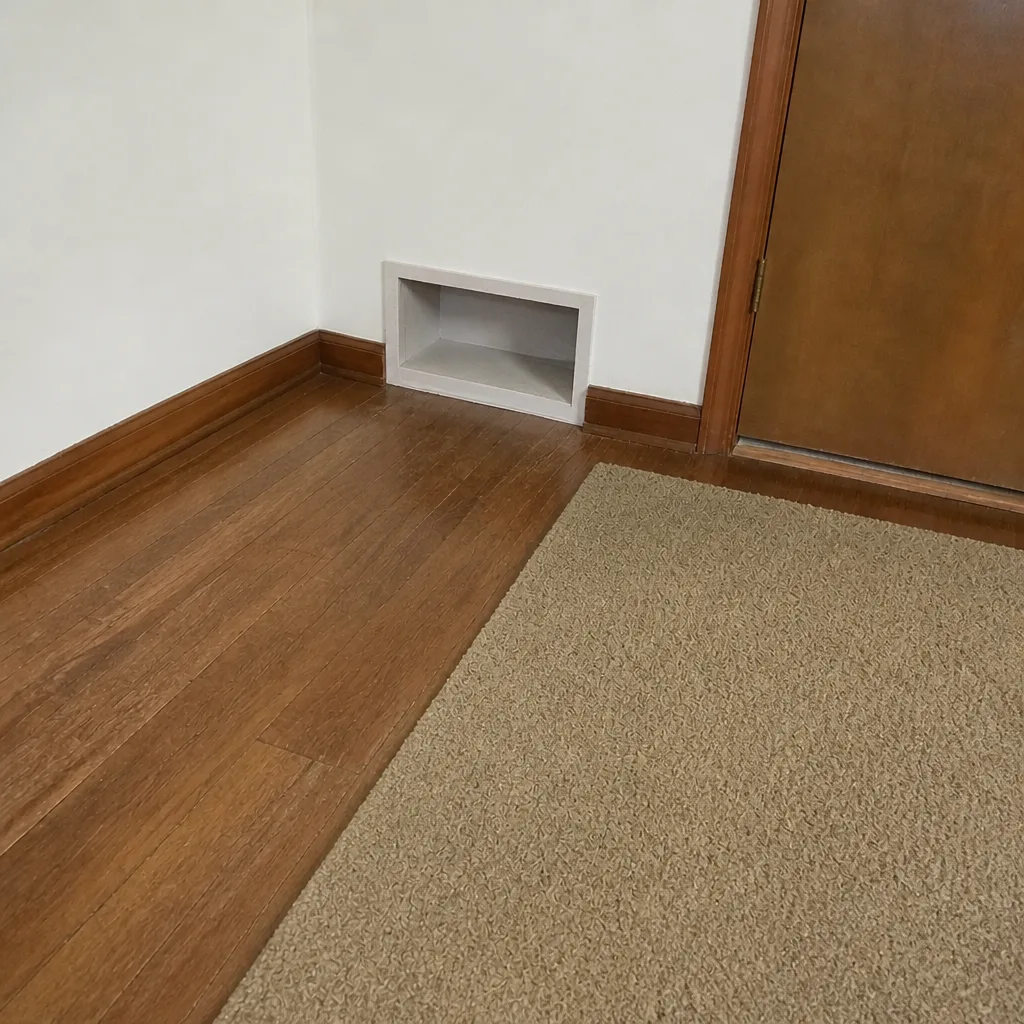
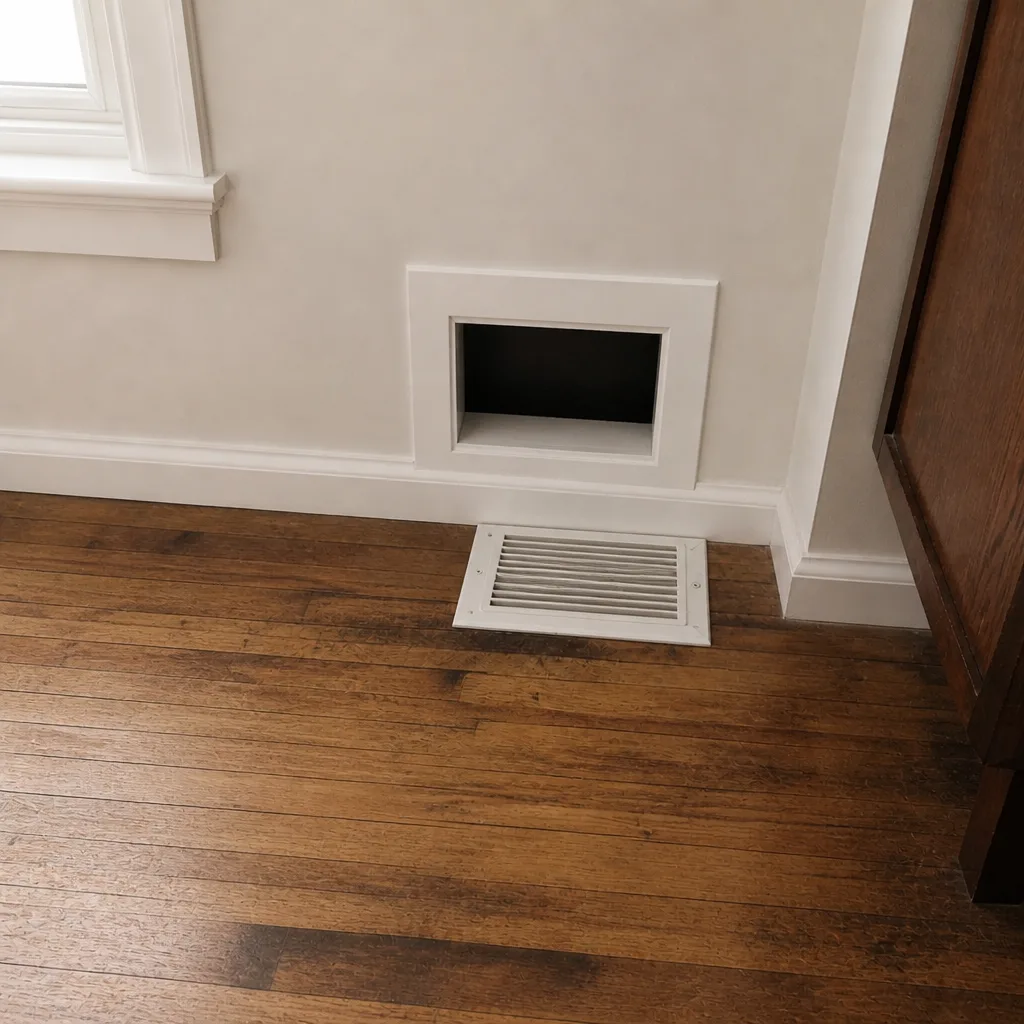
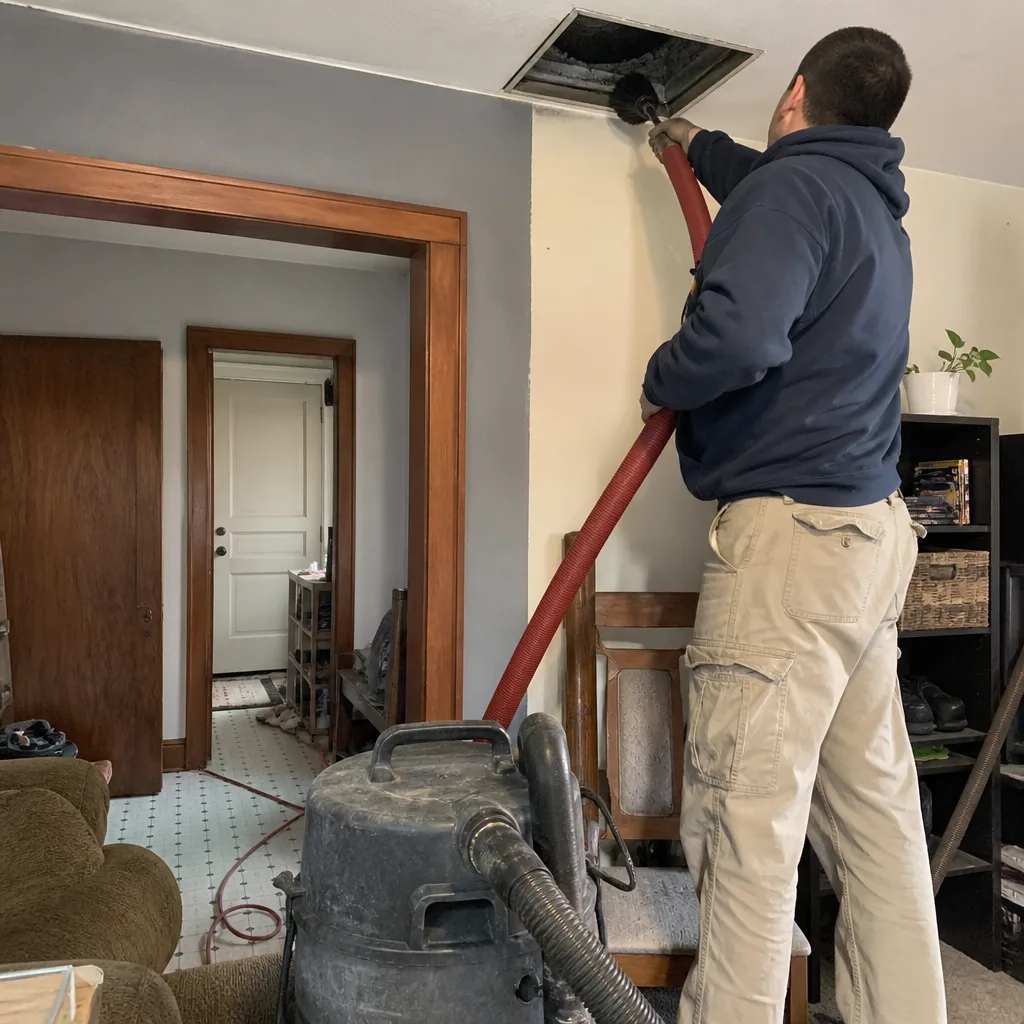
See the difference
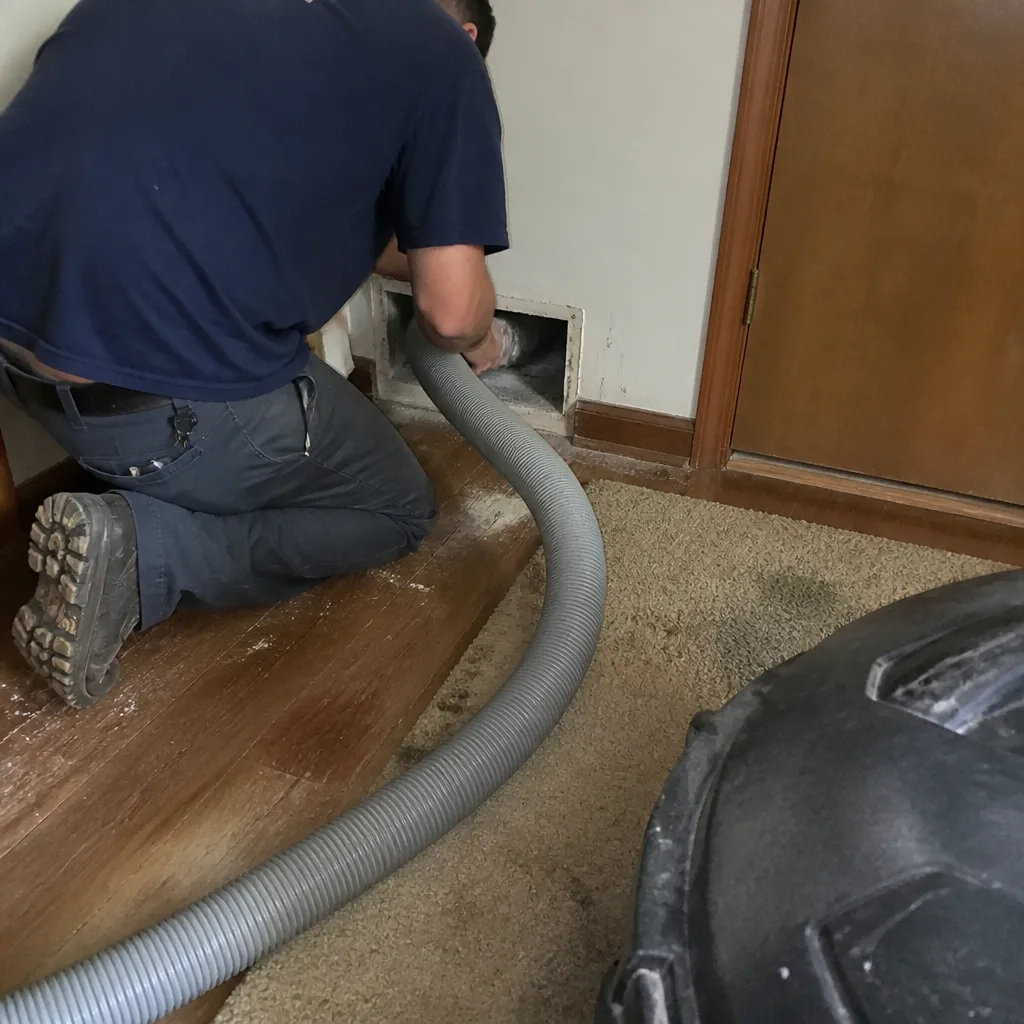 Before
 After
 Before
 After
 Before
 After
When to Call a Professional
You should call a professional for air duct cleaning if you’re seeing visible dust accumulation at registers, if family members are noticing more dust or respiratory irritation indoors, if you’ve recently moved into an older South Bend home and want a clean baseline, or if your system hadn’t been cleaned before you got there. Call for dryer vent cleaning if your dryer is taking longer to dry clothes, if the exterior vent flap doesn’t open fully during the cycle, or if you can’t remember the last time it was cleared. Call for duct repair if you’ve found disconnected runs, damaged flex duct, or a run so deteriorated it’s likely leaking. And if a recent inspection flagged anything about the duct system, call before the season changes.
Duct Cleaning South Bend offers free estimates in South Bend. Call (855) 905-0868 for a written, per-system estimate, and we’ll answer the equipment questions first.
Frequently Asked Questions
Duct cleaning here is priced per system by written estimate, not per vent, and the total reflects the number of systems, accessibility, and system condition. We don’t quote teaser rates or per-vent prices because those structures hide the real cost. Call (855) 905-0868 for an exact quote. Estimates are free, and the written number is what you pay.
No. Indiana doesn’t require a specific license to perform duct cleaning, which is exactly why the equipment and process questions in this guide carry so much weight. NADCA membership is a voluntary commitment, not a legal requirement, but it’s a useful signal that the contractor follows a defined standard. Your due diligence is the gate.
Cheap quotes usually describe a lighter job: smaller vacuum, no agitation, no containment, and often a per-vent structure that grows the bill on site. Professional equipment costs money, and a contractor who’s using Rotobrush, Nikro, and Abatement Technologies equipment is running a real operation with real overhead. The lower quote isn’t a bargain; it’s a description of less work. Call (855) 905-0868 if you’d like to see what a per-system estimate looks like in writing.
You ask for before-and-after photos of your own ducts, taken at the same locations, plus a written summary of what was found and cleaned. A professional contractor documents the job. If a contractor can’t provide that, that’s your answer about whether the work was done. We document every job we do in South Bend.
Yes. Repair is a core service, not a referral. If the technician finds disconnected runs, damaged flex duct, or failing seals during cleaning, the repair can typically be handled in the same visit. That’s one call to fix both issues rather than a cleaning phone call and a separate repair phone call. Call (855) 905-0868 to talk through your situation.
Not necessarily, but scheduling both together is often the practical choice if both are due. Dryer vent cleaning is a fire-safety service with a real reason behind it: lint accumulates in the vent and reduces appliance efficiency while increasing fire risk. If you’re booking one, it’s worth asking whether the other is due. Call (855) 905-0868 and we’ll talk through the timing.
The Bottom Line
Hiring a duct cleaning contractor in South Bend comes down to asking the right questions before you book. Equipment first: agitation system, negative air capacity, HEPA filtration, containment. Credentials second: NADCA membership, and what it actually requires. Quote third: per system, not per vent, with defined scope. Documentation fourth: before-and-after photos and a summary of findings. Repair capability fifth: whether the contractor can fix what they find, or leaves you with a list and no next step. Get those five pieces right and you’ll be dealing with a professional operation. Duct Cleaning South Bend runs professional-grade equipment, handles cleaning and repair in one visit, and prices every job per system by written estimate.
Call (855) 905-0868 for a free estimate. We answer 24/7. Fast dispatch from 7am to 7pm, Sunday through Friday. Estimates are free, the price is set per system by the written estimate, and any repair found during the job gets discussed before anything is added. If you’ve been putting off duct cleaning in South Bend because you weren’t sure who to call, start here and bring the questions from this guide to the conversation. If you’ve been searching for a straight answer about South Bend duct work, you’ve got one.
Written by the team at Duct Cleaning South Bend.