
Last updated November 16, 2026
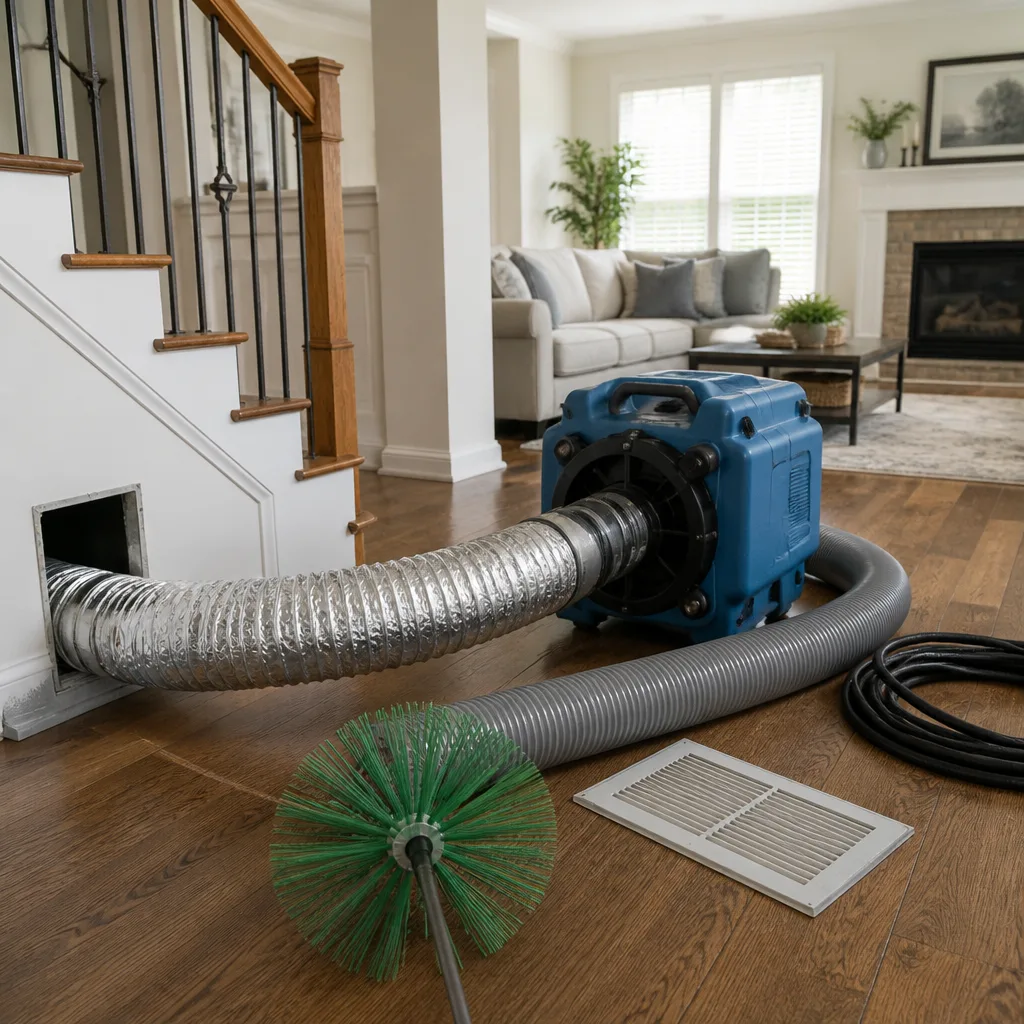 Whole-home duct cleaning
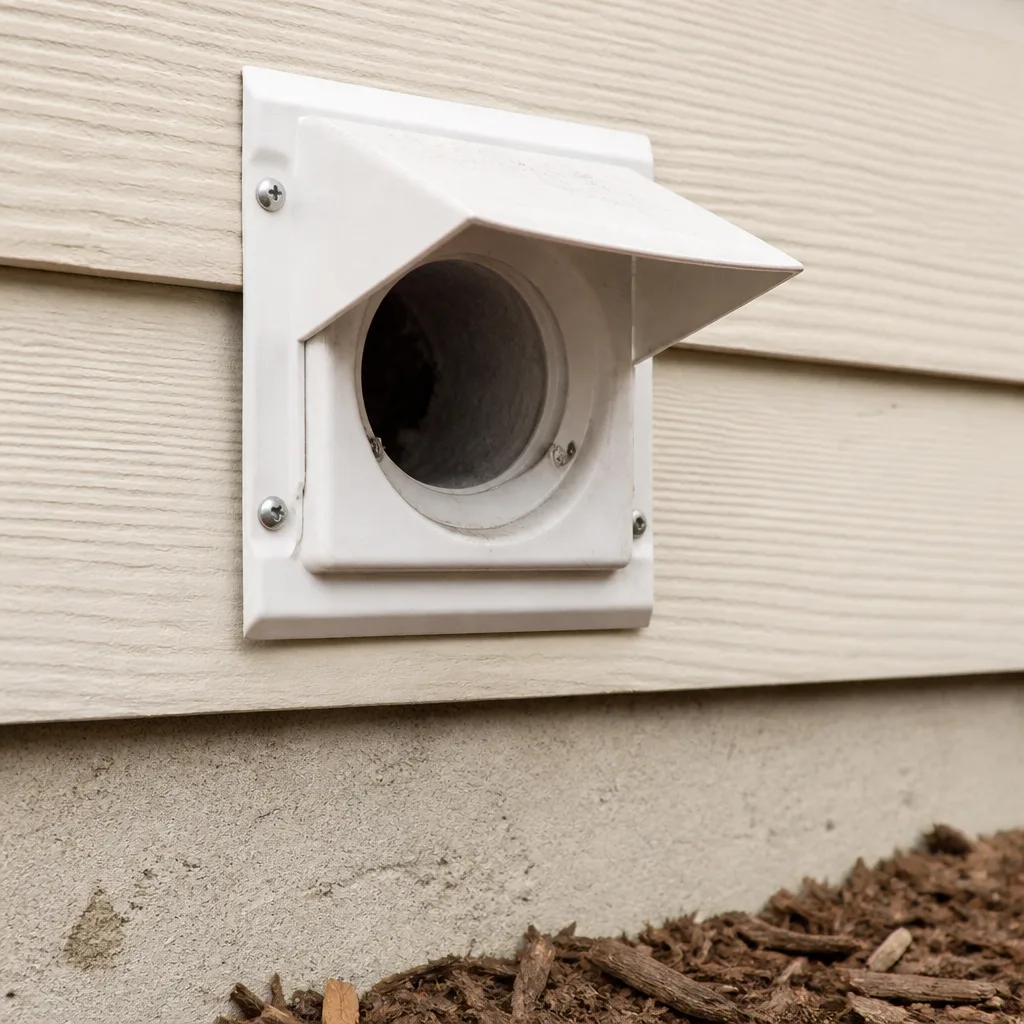 Dryer vent cleaning
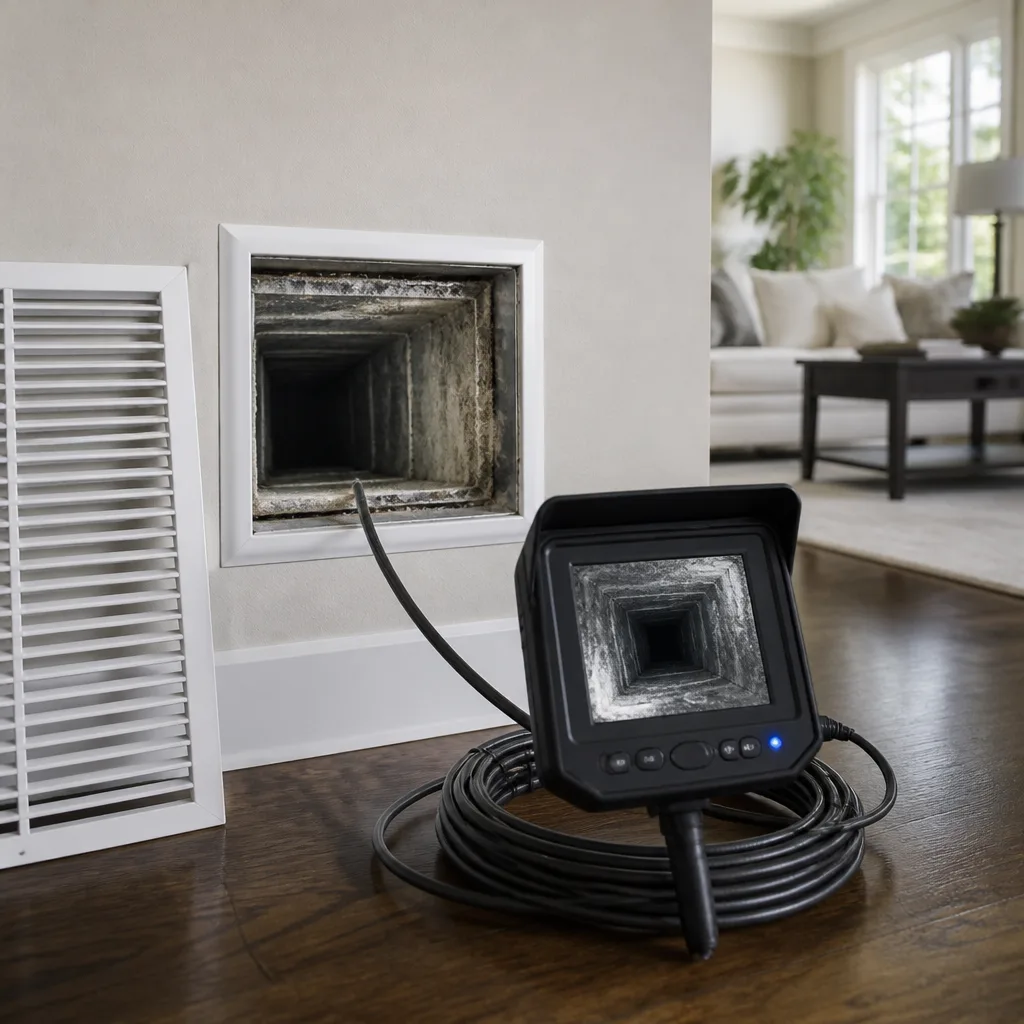 Camera inspection
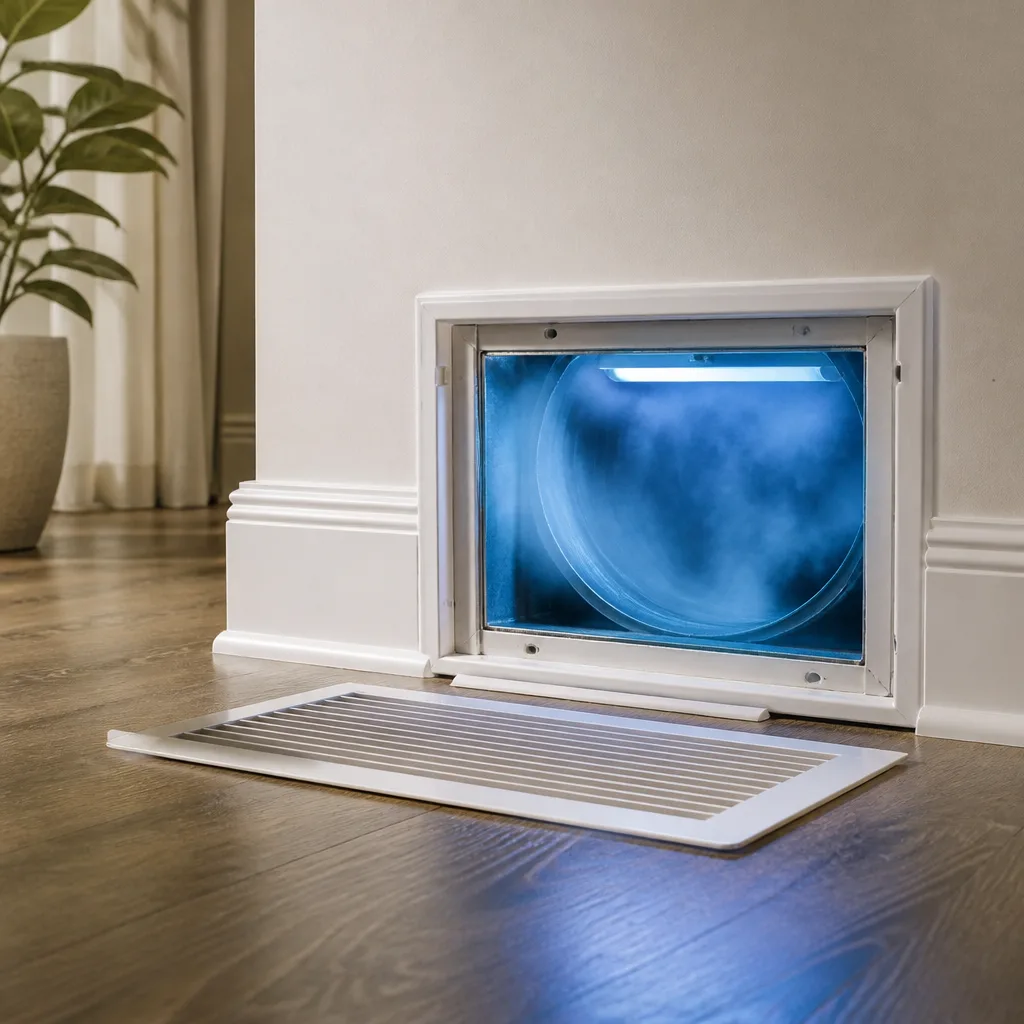 Sanitizing & deodorizing
Whole-system duct and dryer vent check with before-and-after photos - you see exactly what came out of your vents
That "$99 whole-house special" is a bait ad - the real number appears once they are in your hallway, or the "clean" is a shop-vac at the register. We photograph the inside of your ducts before and after instead.
DIY vs Professional Air Duct Cleaning: The South Bend Homeowner’s Decision Guide
A $40 dryer vent brush kit and a shop vac will clean the first 18 inches of your supply register. That’s roughly 2% of your duct system’s interior surface area. The other 98% sits behind bends, up in trunk lines, and inside branch runs that no consumer tool can reach, and it’s the part that actually affects what you breathe. This guide draws the line between where DIY helps and where it stops being useful, explains why South Bend’s older housing stock makes that line fall sooner than you’d expect, and gives you a clear way to decide which side of it your home sits on.
Quick Answer
DIY air duct cleaning works for register-level upkeep between professional cleanings, but it can’t reach the contamination zones that affect indoor air quality. For South Bend homes with mixed sheet metal and flex ductwork, a professional cleaning with rotary agitation and HEPA vacuum equipment is the only way to genuinely clear the system. Attempting a full DIY clean with consumer tools usually loosens debris without capturing it, which can make air quality worse before it gets better.
Styles & brands we work with
- Whole-home duct cleaning
- Dryer vent cleaning
- Camera inspection
- Sanitizing & deodorizing
Table of Contents
- What You Can Actually Reach (and What You Can’t)
- Duct Geometry: The Deciding Factor
- What DIY Cleaning Disturbs Without Capturing
- Why South Bend Housing Is Poor DIY Territory
- When DIY Makes Sense: Register-Level Maintenance
- Measuring ROI: Filters, Allergies, and Efficiency
- Dryer Vent Cleaning: A Different DIY Question
- Common Mistakes to Avoid
- When to Call a Professional
- Frequently Asked Questions
What You Can Actually Reach (and What You Can’t)
Consumer duct cleaning tools reach a narrow slice of your system. Understanding that slice is the whole game. Here’s the honest breakdown of what a homeowner with a shop vac, a brush, and a register removal tool can touch compared to what requires professional equipment.
What a homeowner can reach:
- The supply register face and the first 12 to 18 inches of duct behind it
- The return grille surface and a short straight run behind it, if it’s sheet metal
- Loose dust and debris sitting on top of visible duct surfaces
- The filter slot and the filter itself
What requires flexible rotary equipment:
- Trunk lines and main supply plenums, often 20 to 40 feet of duct run
- Every branch run that turns off a trunk line
- The interior of flex duct, which can’t be brushed with a rigid tool without tearing the liner
- Coils, the blower compartment, and the transitions where ducts connect to the air handler
- Settled debris on the bottom of horizontal runs that gravity has packed down over years
The equipment matters here. Rotobrush agitation systems use a flexible rotary whip and brush head that travel through duct interiors, and Nikro HEPA-rated vacuums hold negative pressure on the system while that agitation happens. That’s the professional-grade kit used in commercial and industrial settings, not the shop vac in your garage. When we clean ducts in South Bend, the reach difference isn’t incremental. It’s most of the system.
Duct Geometry: The Deciding Factor
Whether DIY is even worth attempting depends more on how your ducts are shaped than on how motivated you are. Sharp turns, long runs, and transitions between duct materials create dead zones where debris settles and stays. Consumer tools can’t navigate them.
Think about what a supply run actually looks like. Air leaves the air handler, travels through a main trunk, turns 90 degrees into a branch, drops through a boot, and exits a register in a bedroom. The register end is a straight shot you can reach. The trunk and the turn are not. Neither is the boot, where the duct narrows and airflow slows and debris collects.
Three geometry factors decide whether DIY has any chance:
- Number of turns. Every 90-degree elbow is a debris trap and a point where a rigid brush stops.
- Duct material mix. Sheet metal tolerates brushing; flex duct does not. A flexible rotary brush is designed for this; a hand brush is not.
- Run length. Runs longer than about 10 feet from the register put waste deeper than a consumer wand can reach.
Homes with short, straight, all-metal runs are the easiest to work on. Homes with long runs, multiple turns, and a mix of metal and flex are the hardest. Most of the older housing in South Bend falls into the second category, which is why we treat duct geometry as the first question on every estimate, not an afterthought.
What DIY Cleaning Disturbs Without Capturing
Here’s the part that makes DIY risky for anyone with a specific concern about air quality. Loose debris sitting in a duct is mostly at rest. Agitate it without capturing it and it becomes airborne. Then the blower sends it wherever the air was going anyway: your living room, your bedroom, your child’s room.
A shop vac placed at a register pulls some of that debris, but it can’t hold the system under negative pressure. The professional approach is containment-first. Abatement Technologies containment equipment captures and controls debris during the job, so loosened material goes into the vacuum, not back into the airstream. That’s the difference between cleaning and stirring.
Three things go wrong when debris is disturbed without real capture:
- Aerosolization. Fine particulate lifts into the air and settles across the home over the following days.
- Recirculation. The air handler keeps running during the job, so disturbed material cycles straight through the system.
- Register-face redistribution. Dust that gets pushed back out of the register lands on walls, furniture, and floors.
If your reason for cleaning is allergy symptoms, pet dander, or a recent move into an older home, the “disturb without capture” failure mode is the one to avoid. A shop vac and a hand brush don’t capture. They agitate. Professional-grade equipment with HEPA filtration and built-in containment does both, in that order.
Why South Bend Housing Is Poor DIY Territory
South Bend has a deep stock of older homes, and older homes tend to have ducting that’s been added to, extended, and retrofitted over time. That matters for a DIY decision because the resulting systems are rarely uniform. A typical older South Bend house might have sheet metal main trunks that were original to the home and flex branch runs added during a later HVAC replacement. Each material wants a different tool, and neither material tolerates the wrong one.
Three specific problems show up in South Bend homes more than in newer construction:
- Mixed materials. Sheet metal mains paired with flex branch runs mean a rigid brush can clean one section and tear the other.
- Retrofit routing. Ducts that were snaked through existing wall and floor cavities take circuitous paths, with more turns and tighter clearances than ductwork designed for the house from the start.
- Unsealed and deteriorating sections. Older duct systems often have joints that have worked loose over time and flex runs where the liner has started to fail. Those are exactly the spots where DIY agitation causes more problems than it solves.
That last point is why we treat duct repair as part of the service rather than a separate job. When we find a deteriorating section during a cleaning, we can address it in the same visit. A homeowner with a shop vac finds the same deteriorating section and has no path forward except a second contractor. When it’s time to bring in professional equipment, scheduling duct cleaning in South Bend is one call, and it covers both cleaning and repair.
When DIY Makes Sense: Register-Level Maintenance
DIY has a real role. It’s just narrower than most homeowners assume. Register-level maintenance between professional cleanings is the sweet spot: it reduces visible dust at supply and return grilles and keeps the outside of the system tidy.
Here’s a simple step-by-step for the register-level upkeep that’s genuinely useful:
- Turn off the HVAC system. No blower running during maintenance.
- Remove and hand-wash the register covers. Grille faces collect visible dust; a wet cloth and a mild cleaner handle them safely.
- Vacuum the first few inches behind the register with a crevice tool. Stay shallow; don’t force anything deeper.
- Wipe the return grille and replace the filter. A clean filter keeps downstream surfaces cleaner.
- Note anything that looks wet, torn, or loose inside the duct, then stop and get an assessment.
What this maintenance does: keeps the visible surfaces of the system clean and gives you a routine for checking for problems.
What it does not do: clean the trunk lines, branch runs, coils, or the air handler. It’s maintenance, not cleaning. Treating register-level upkeep as a substitute for a full professional cleaning is where DIY gets homeowners into trouble. Doing it between professional cleanings is where it earns its place.
Measuring ROI: Filters, Allergies, and Efficiency
Comparing DIY to professional cleaning on cost alone misses the point. The real question is what each one delivers for the money. A few outcomes are measurable, and they’re worth tracking whether you clean yourself or hire it out.
Filter replacement frequency. The dirtiest air in a home passes through the filter first. In a heavily contaminated system, filters load up quickly and need replacing more often. A clean system lets filters do their job longer. Track your filter change dates for a few months and you’ll have real data on how fast the system is loading up.
Allergy symptom correlation. If your household has allergy sufferers, note symptoms for a month before and after a cleaning. We can’t promise medical outcomes, and we don’t, but many homeowners with allergy concerns find a before-and-after comparison of symptom frequency useful when deciding whether to maintain a schedule.
System efficiency. Debris on the blower wheel, coils, and duct interior forces the system to work harder to move the same air. A clean system runs closer to spec. If you notice rooms that never quite feel comfortable, that’s a signal worth investigating.
On the premium end, Honeywell and Aprilaire systems are designed to deliver high-grade filtration and ventilation. We’re certified to work on and around both. But the ducts behind the filter are only as good as their condition; premium filtration upstream of a contaminated duct system isn’t giving you premium performance. If you’ve already invested in a higher-end air quality system, DIY duct cleaning isn’t the right ROI match. Professional cleaning with proper equipment is.
Dryer Vent Cleaning: A Different DIY Question
Dryer vent cleaning deserves its own treatment because the failure mode is different. A restricted duct system affects air quality. A restricted dryer vent affects fire safety and appliance efficiency, and the consequence of getting it wrong is a fire risk, not a dust problem. That changes the calculation. Dryer vent cleaning in South Bend is a dedicated service for that reason, not a throw-in afterthought.
The same reach problem applies. The lint trap catches some lint, but the long flexible run between the dryer and the exterior vent catches the rest, and that’s where a DIY brush kit struggles if the run has any turns. Rigid brush kits do reach straight-line runs. They don’t handle elbows well, and they don’t reach fully through long runs.
The steps that actually matter for dryer vent safety:
- Check the exterior vent flap. It should open freely when the dryer runs and close when it stops.
- Remove visible lint from the trap and from the first few inches of the duct behind the dryer.
- Note how dry a load takes. If times have gotten longer, the run is restricted.
- Look for crushed or pinched flex duct behind the dryer. That’s a common problem in South Bend homes where the dryer was pushed back against the wall.
If any of those tests points to a restricted run, professional cleaning with a rotary tool is safer. Homeowners who clean their vents themselves sometimes cause crushed flex transitions without realizing it, and once crushed, airflow is permanently restricted until it’s repaired. That’s why we handle dryer vent cleaning and air duct repair as part of the same service footprint: “we clean it; if it’s broken, we fix it” is a cleaner promise than referring out.
See the difference
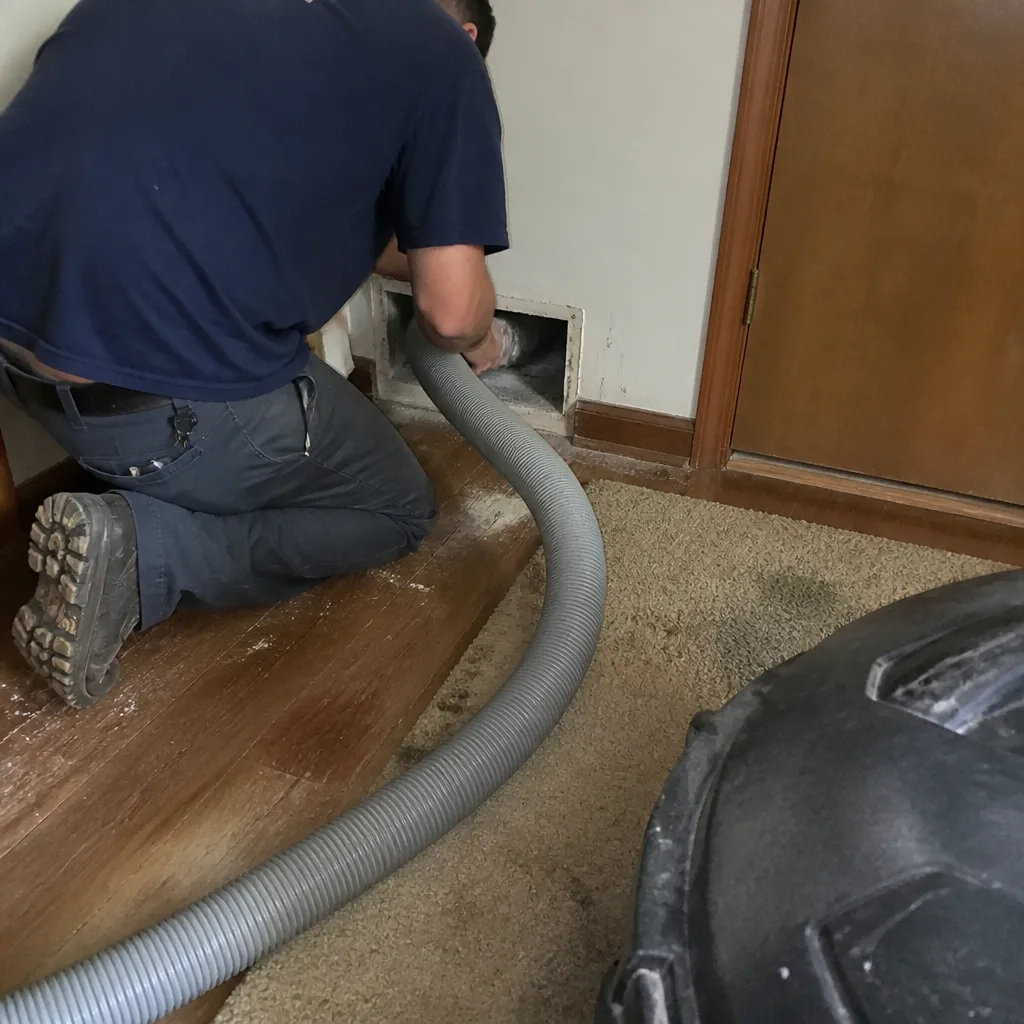 Before
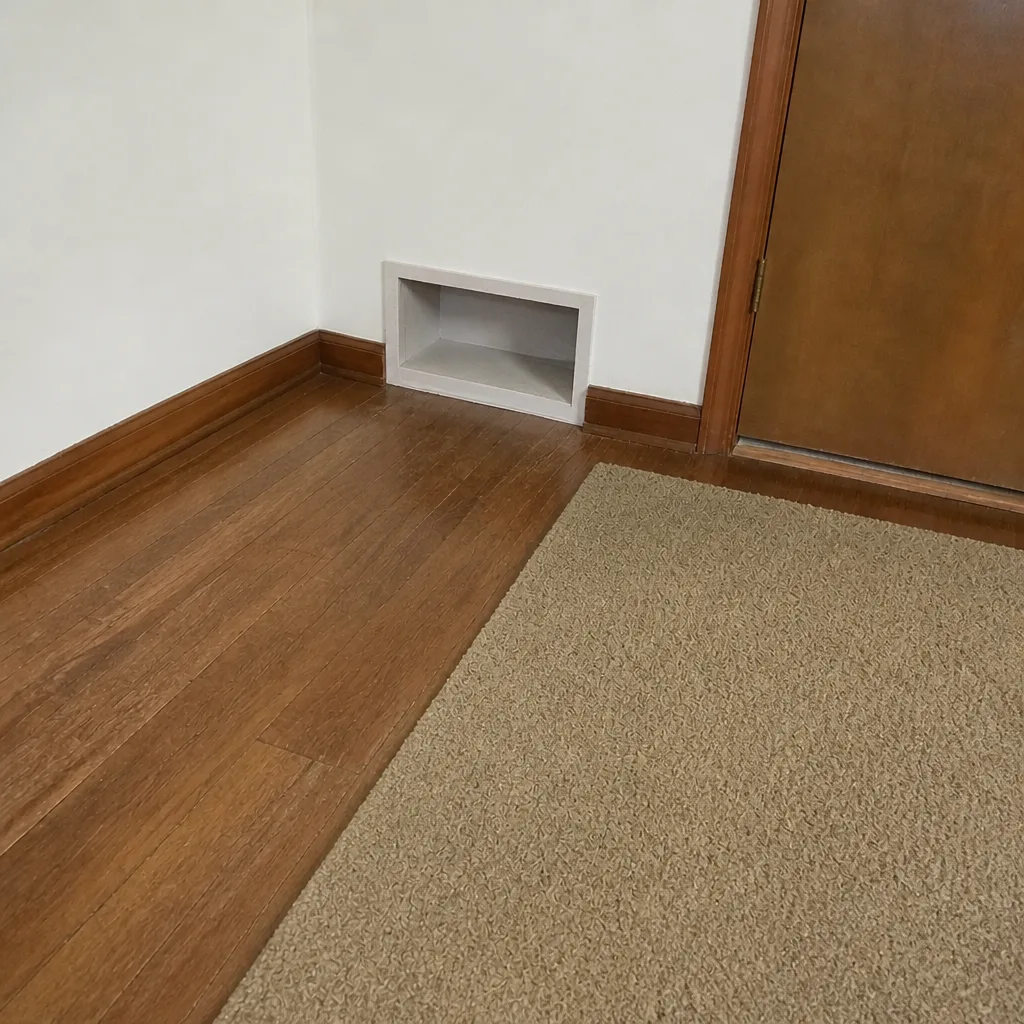 After
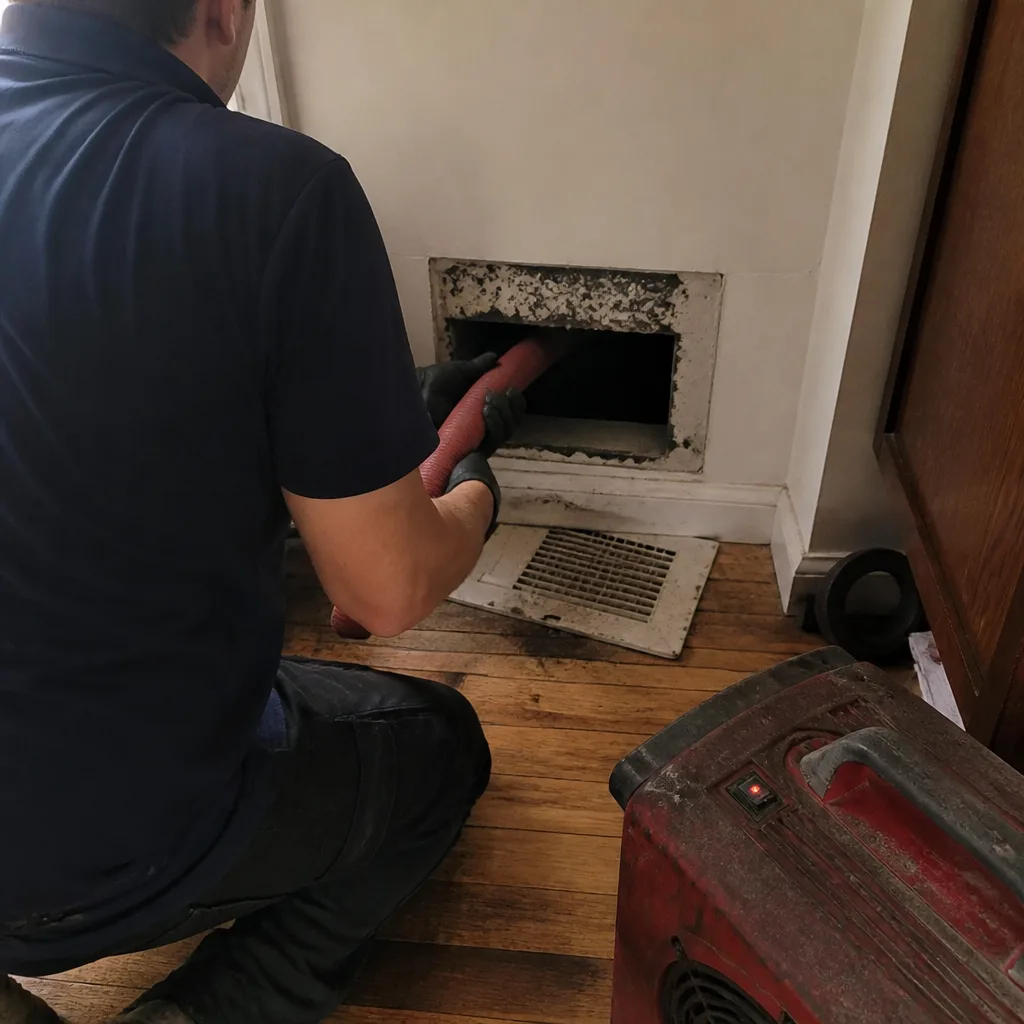 Before
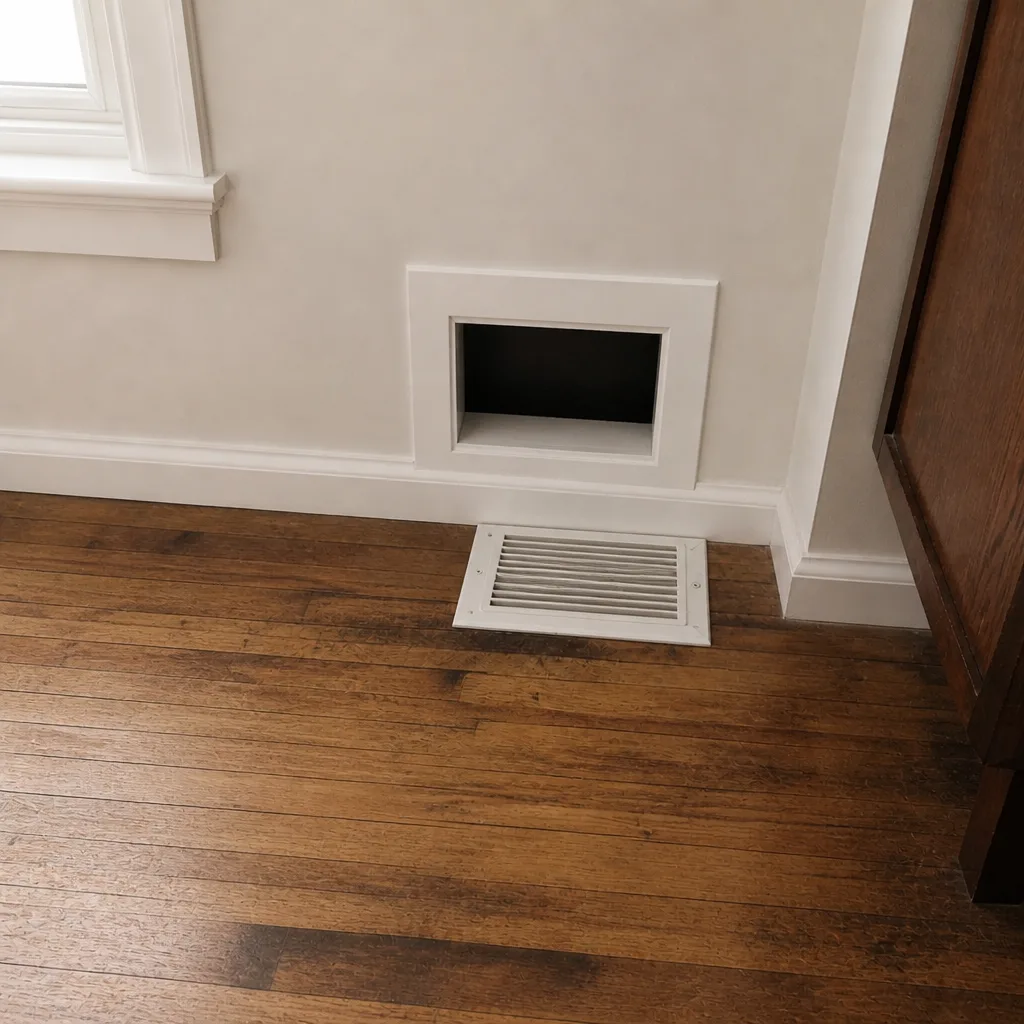 After
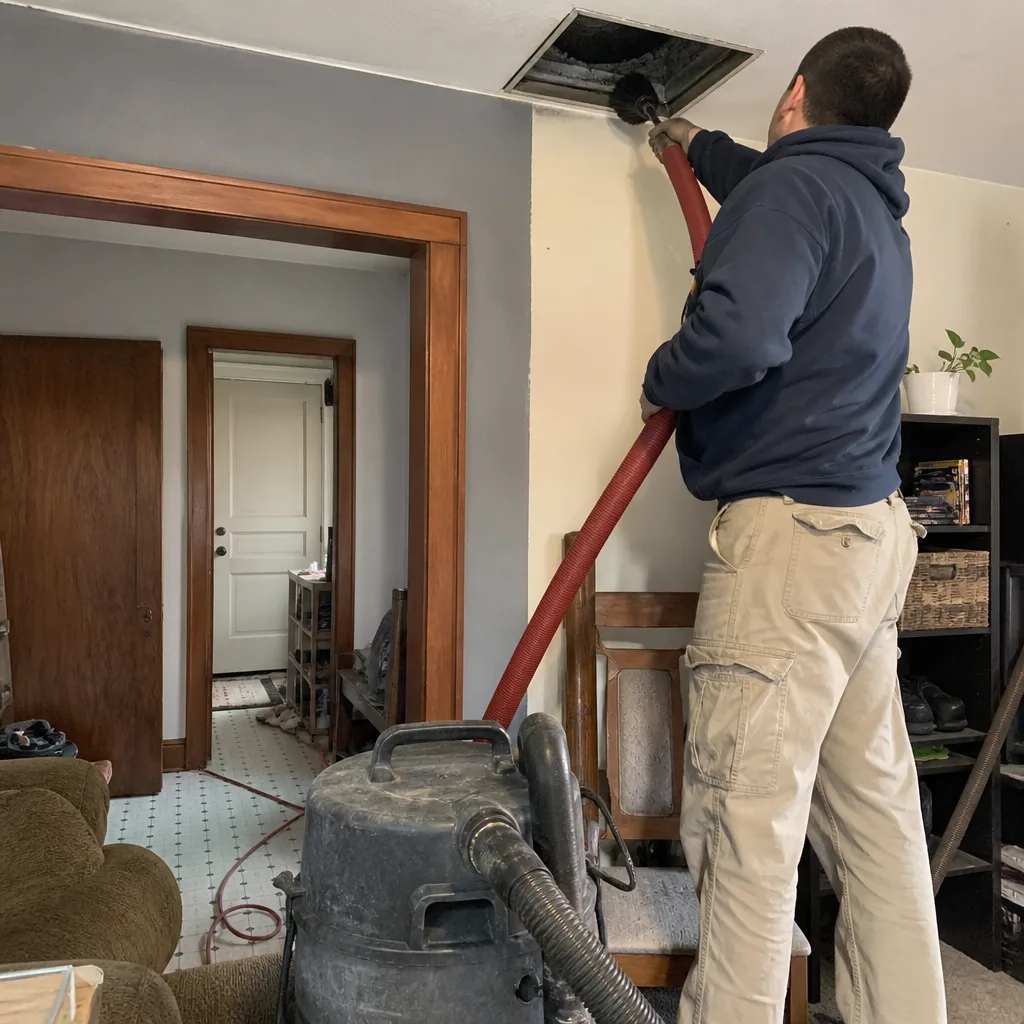 Before
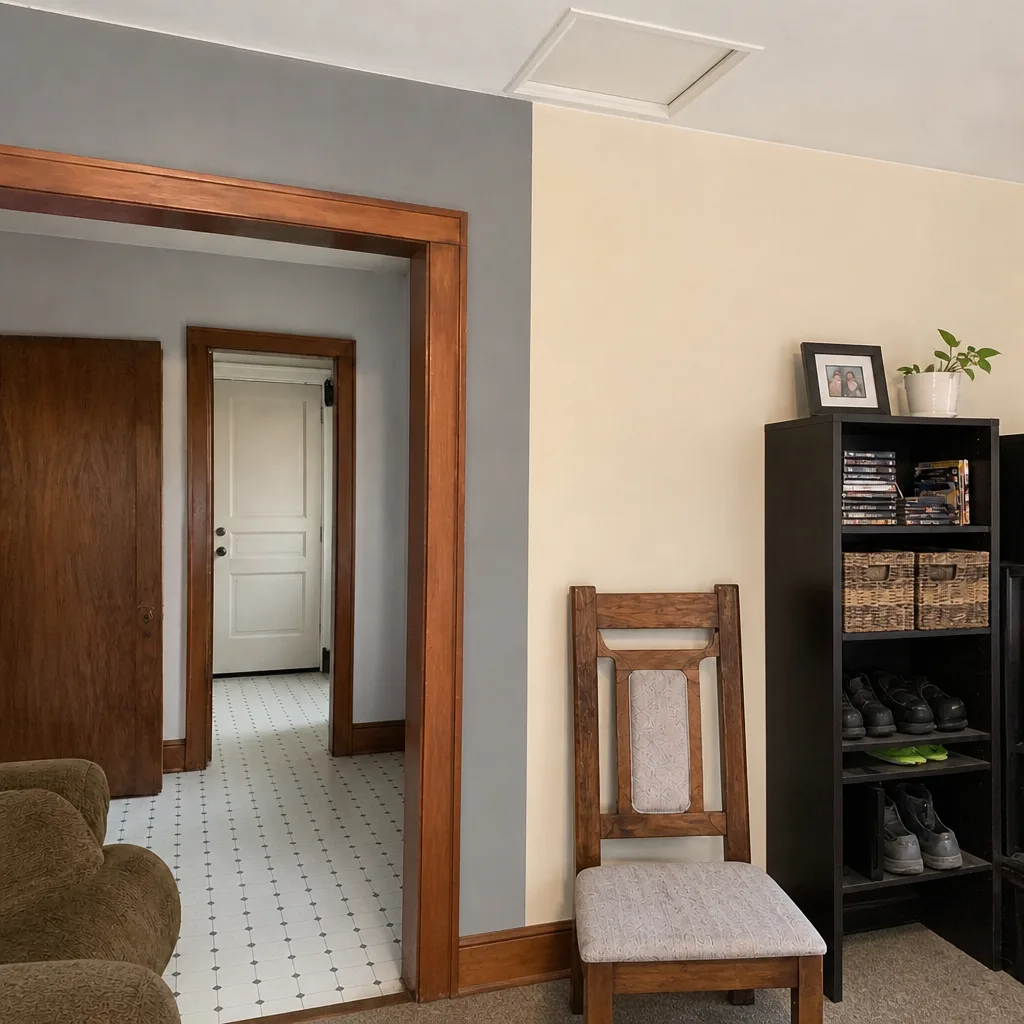 After
Common Mistakes to Avoid
These are the DIY and hiring mistakes we see South Bend homeowners run into most often.
- Treating register cleaning as duct cleaning. Hand-cleaning the grille and the first 18 inches feels productive but doesn’t touch the trunk lines, coils, or air handler. Most of the contamination in a South Bend system is beyond the register face, and cleaning only the visible part leaves the problem in place.
- Running the blower during cleaning. Dust that’s disturbed while the system is running cycles straight back into the living space. Turn the system off before any agitation, DIY or professional.
- Using a rigid brush on flex duct. Flex duct liners tear, and a tear is a permanent problem that reduces performance and leaks air. Homeowners in older South Bend homes with retrofitted flex branch runs run into this constantly.
- Choosing a cleaner who shows up with a shop vac. Consumer-grade tools can’t hold containment or reach most of the system. If the equipment isn’t Rotobrush, Nikro, or Abatement Technologies-class, ask what they’re actually using before they start.
- Ignoring deteriorating ductwork. Cleaning without addressing loose joints, failing liner, or crushed flex is a temporary fix. Repair capability means the same visit handles both; a cleaning-only provider will refer the problem out.
- Skipping a filter check before cleaning. A dirty filter will re-dirty the system faster than it can be cleaned. Replace the filter as part of the job.
- Assuming premium filtration compensates for dirty ducts. Honeywell and Aprilaire systems pick up where the duct system ends. Contaminated ducts upstream limit what even good filtration can deliver.
When to Call a Professional
If your ducts haven’t been cleaned in years, if you’ve just moved into an older South Bend home, if anyone in the house has allergy or respiratory concerns, or if the system has any sign of deteriorating ductwork, that’s a professional job. DIY reach ends around 2% of the system’s interior surface, and getting the remaining 98% takes flexible rotary agitation and HEPA-rated vacuum equipment with real containment. When debris gets disturbed without capture, a DIY attempt can push air quality in the wrong direction. We answer 24/7, and fast dispatch from 7am to 7pm means we can schedule a visit that fits your week. Duct Cleaning South Bend offers free estimates in South Bend; call (855) 905-0868 to get one.
Frequently Asked Questions
You can clean the register faces and the first 12 to 18 inches of duct behind each register, which is roughly 2% of your system’s interior surface. A shop vac can’t reach trunk lines, branch runs, coils, or the air handler, and it can’t hold the system under the negative pressure needed to capture disturbed debris. For register-level upkeep, a shop vac is useful. For a full clean, it isn’t.
Typical estimates for a South Bend home depend on system size, the number of registers, and whether repair work is needed; a written estimate agreed before the job starts is the only number that matters. We price per system, not per vent, and the price doesn’t change once work is underway. Call (855) 905-0868 for an exact quote; estimates are free.
Cheap quotes usually skip the equipment that makes cleaning real: flexible rotary agitation and HEPA-rated vacuum with containment. Operators using a shop vac and a hand brush can charge less because they’re delivering less: reach limited to the first foot or two of each run, no capture of disturbed debris, and no capability to fix what they find. Ask every provider what equipment they use before booking.
Before-and-after photos of your own ducts are the simplest test. Professional cleaning should also come with containment in place during the job and a clear rundown of what was found, including any repair issues. If a provider can’t show you photos and can’t explain what they did, don’t book them again.
Most homes do well with a professional cleaning every few years, sooner if there are pets, allergy concerns, recent renovations, or a move into an older house. Between cleanings, register-level DIY maintenance helps keep the visible surfaces clean. If you’re in South Bend’s older housing stock, your system’s retrofit routing and mixed duct materials are worth a professional look before deciding on a schedule. Call (855) 905-0868 for a free estimate.
It can reduce the amount of settled dust, dander, and debris circulating through your home, which is one of the inputs to indoor air quality. We don’t promise medical outcomes, and no honest contractor should. Homeowners who track symptoms before and after a cleaning often find a useful before-and-after comparison. Call (855) 905-0868 for a free estimate and we can talk through what a cleaning would actually address in your home.
The Bottom Line
DIY air duct cleaning works for register-level maintenance between professional cleanings. It doesn’t work for the trunk lines, branch runs, coils, and air handler where most debris settles, and in South Bend’s older housing stock, the mix of sheet metal mains and flex branch runs makes DIY even less effective than it is in newer homes. The professional approach is containment-first, with equipment that can reach the whole system and capture what it disturbs. Our technicians have up to experience working on systems like yours, and repair capability means the same visit can fix deteriorating ductwork, not just clean it. Call (855) 905-0868 for a free estimate, and if you want the full picture of what duct cleaning in South Bend involves, we’re happy to walk through it with you.
Written by the team at Duct Cleaning South Bend.