
Last updated November 16, 2026
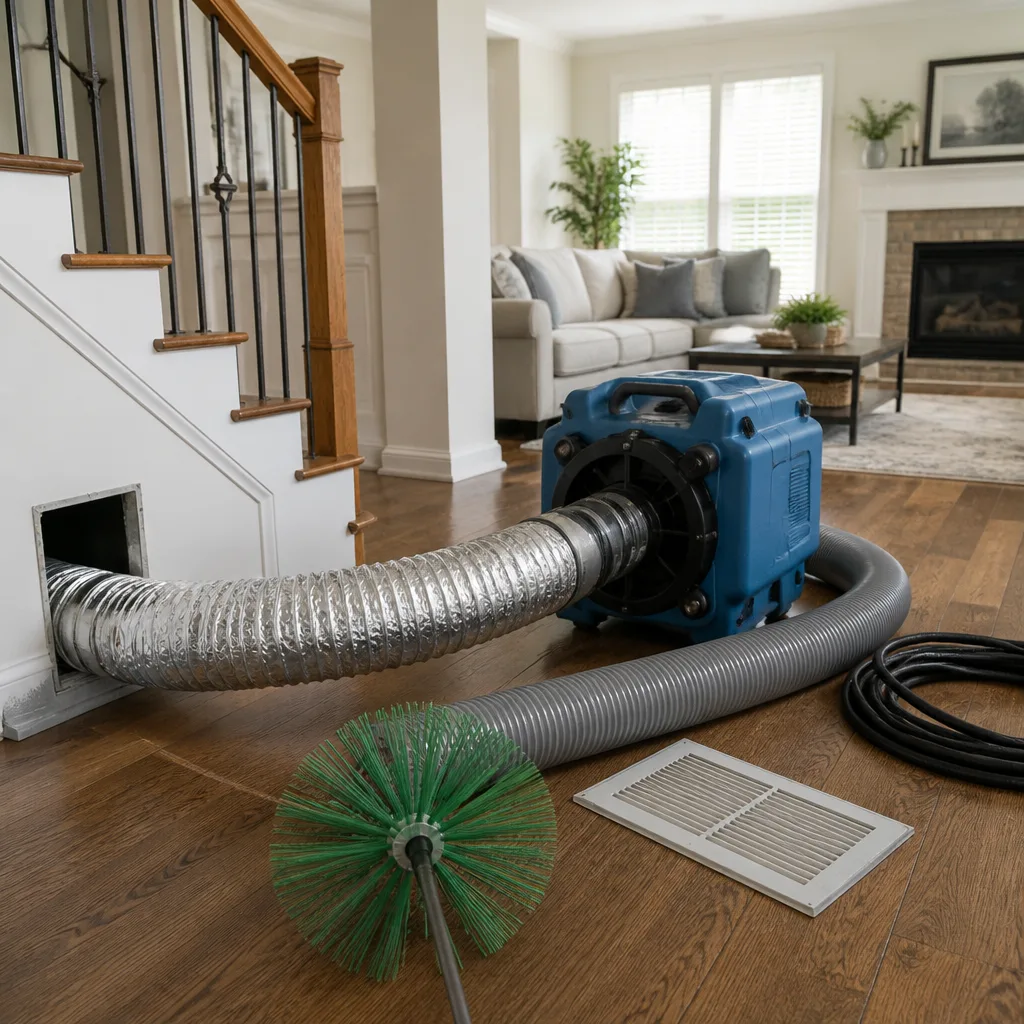 Whole-home duct cleaning
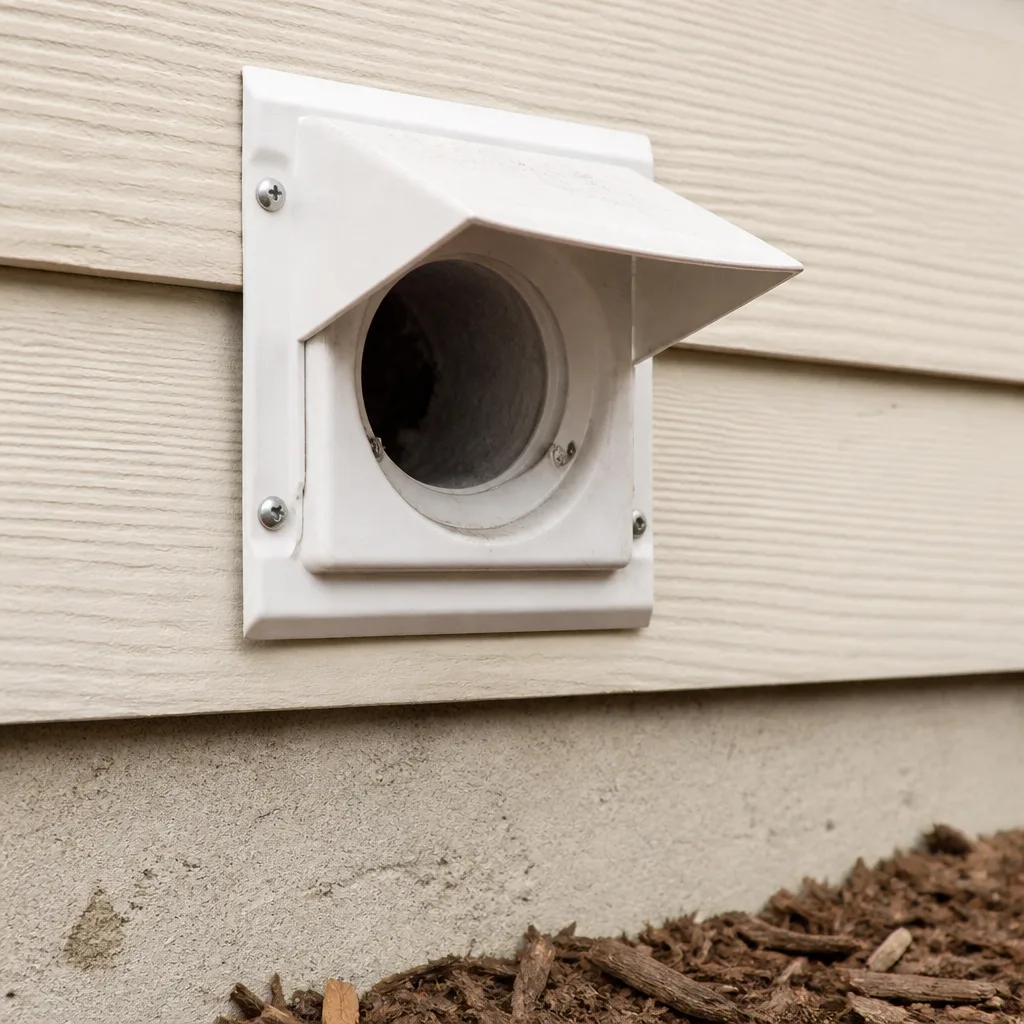 Dryer vent cleaning
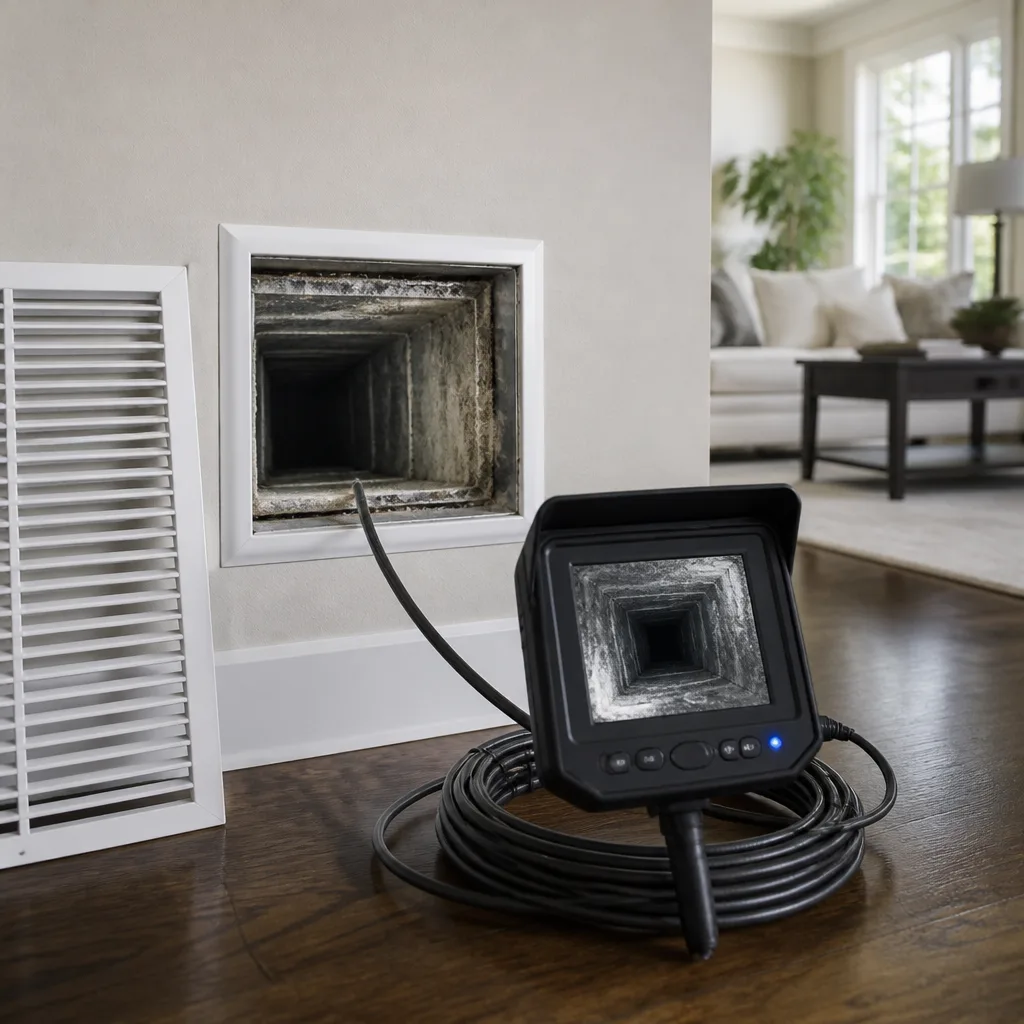 Camera inspection
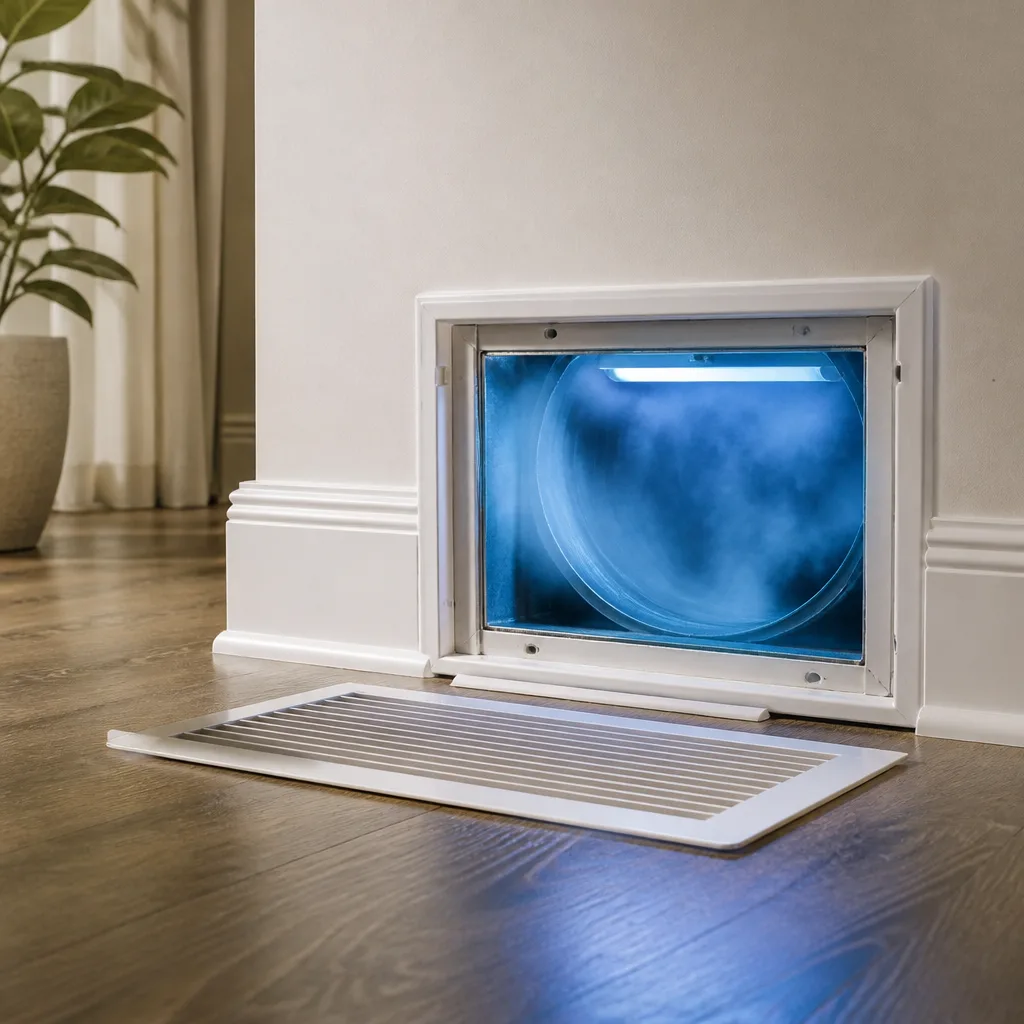 Sanitizing & deodorizing
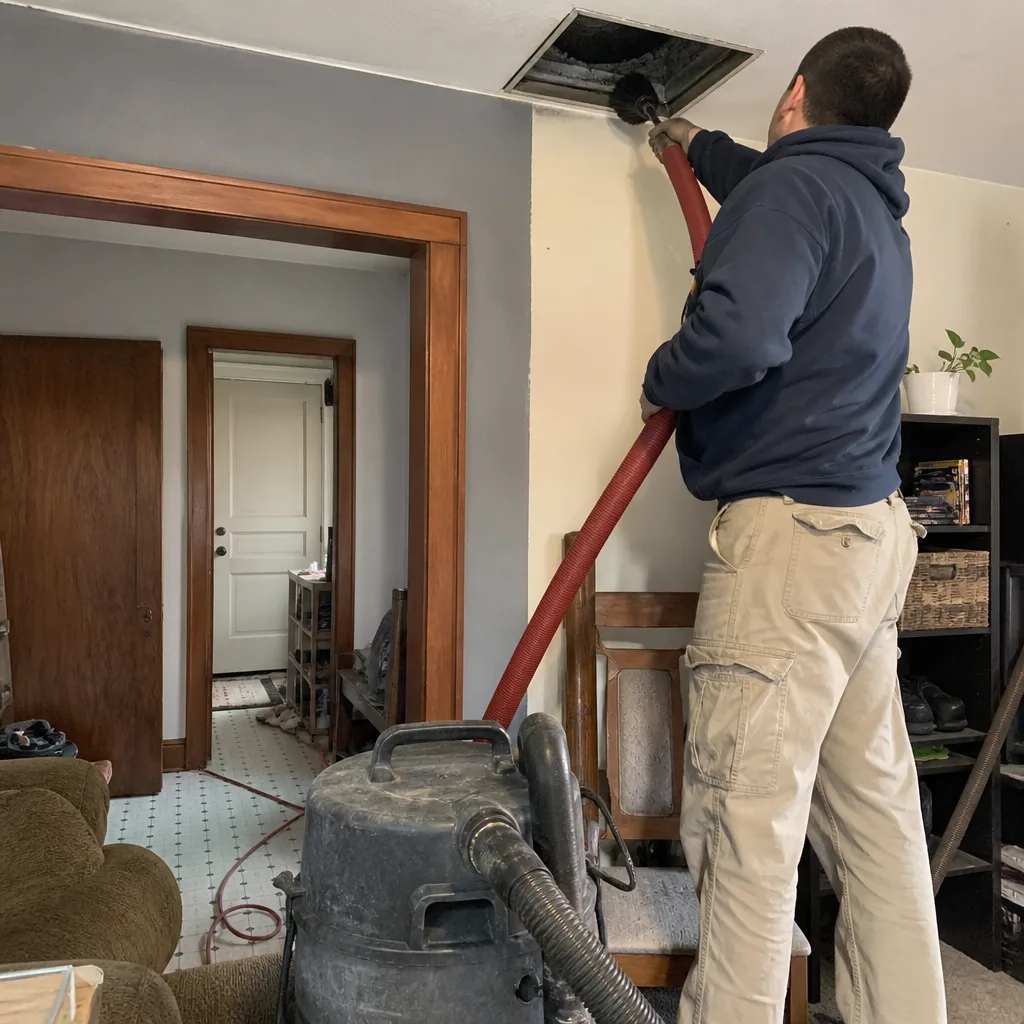
Whole-system duct and dryer vent check with before-and-after photos - you see exactly what came out of your vents
That "$99 whole-house special" is a bait ad - the real number appears once they are in your hallway, or the "clean" is a shop-vac at the register. We photograph the inside of your ducts before and after instead.
Air Duct Cleaning Emergency Preparedness Guide for South Bend Homes
After a basement flood or a kitchen fire, the standard advice is to call a restoration company. That advice is incomplete. If the furnace or air conditioner runs before anyone assesses the ductwork, whatever contaminant entered the system gets delivered to every room in the house within a single heating cycle. Smoke residue, mold spores, silt from river water, fiberglass from a torn return: all of it rides the same air path that’s supposed to keep your family comfortable. Most emergency checklists stop at “shut off the gas” and “call insurance” and never mention the ducts at all. This guide covers the duct-specific steps that get left out, from South Bend’s river-adjacent neighborhoods to ice-dam damage in older homes. You’ll learn when to shut the system down, what an emergency assessment actually looks like, and how to document the work for an insurance claim.
Quick Answer
Shut the HVAC system off before you run it after any smoke, flood, or mold event, get the ducts assessed by a professional before restarting, and document conditions with photos and a written scope. Waiting matters: every hour the system runs with contaminated ductwork pushes particles deeper into the supply and return network, and into the living space. In South Bend, the extra variables are river-area flooding, ice-dam intrusion into soffit-mounted returns, and post-storm debris that finds its way into exterior intakes.
Styles & brands we work with
- Whole-home duct cleaning
- Dryer vent cleaning
- Camera inspection
- Sanitizing & deodorizing
Table of Contents
- Why Ductwork Gets Overlooked After an Emergency
- When to Shut Off the HVAC: The Sequence That Matters
- South Bend Emergency Scenarios and What They Do to Your Ducts
- Smoke Contamination vs. Settled Particulate: Two Different Problems
- What an Emergency Duct Assessment Involves
- Documenting Duct Damage for Insurance
- When Duct Repair Comes Before Cleaning
- Building a Duct Preparedness Plan Before the Next Event
Why Ductwork Gets Overlooked After an Emergency
Restoration contractors, insurance adjusters, and homeowners all tend to focus on what’s visible. Drywall gets cut out. Carpet gets pulled. Contents get inventoried. The duct system sits behind drywall chases and above ceilings where nobody looks during the first 48 hours, and by the time someone thinks about it, the system has usually been running for days.
The problem is that a duct system is the only building assembly that touches every room. A supply trunk and branch layout in a typical South Bend home carries conditioned air into kitchens, bedrooms, bathrooms, and basements through the same unsealed pathways. When contaminants enter that network, they don’t stay where the damage started. Porous duct liner absorbs odor compounds. Flex duct with any tear becomes a collection point for dust, debris, and moisture. And once the blower spins up, everything loose in the system gets pushed into rooms that were never damaged at all.
We’ve seen this play out in the field for years: a homeowner handles the restoration on the visible side of the house beautifully, moves back in, and then can’t figure out why the smell never went away or why a family member’s allergies got worse after a water event. The answer is almost always in the ducts.
There’s a second reason ducts get missed: most emergency checklists online are written for general property damage and never mention HVAC. They cover water extraction, structural drying, and contents cleaning, all of which matter. But air duct cleaning after an emergency is a distinct trade with its own tools and sequencing, and a restoration company that doesn’t do ducts will often just tell you to “run the system and see.” That’s the wrong advice.
The rest of this guide is about doing this properly, from shutdown through restart. In our experience, the difference between a duct system that recovers cleanly and one that stays compromised comes down to three things: timing, assessment scope, and repair. The city itself plays a role too, since South Bend has its own pattern of weather and housing stock that shapes how these emergencies actually unfold.
When to Shut Off the HVAC: The Sequence That Matters
Shut the system off immediately after any fire, flood, or confirmed mold event, and leave it off until the ductwork has been assessed. This is the single most important step in the entire process, and it’s also the one most people skip. The instinct after a flood is to run the system to dry the house out. That’s the opposite of what you want.
Timing matters because of how a blower works. Every minute of runtime pulls air from the return grilles, pushes it through the filter and across the heat exchanger or evaporator coil, and delivers it to the supply registers. If the return grilles in a flooded basement are pulling humid air across a cooling coil, or if the supply branches are moving smoke odor through the house, you’re multiplying the contamination footprint with every cycle.
Here’s the sequence we recommend:
- Shut off the system at the thermostat first. Switch the mode to OFF. Don’t rely on setting the temperature higher; some systems have a fan-only setting that still moves air.
- Cut power at the air handler or furnace switch. Most units have a dedicated disconnect nearby. This prevents a schedule or thermostat override from restarting the blower.
- Close the supply registers where possible. This is a partial barrier at best, but it limits loose debris from drifting back into rooms during other work.
- Photograph everything before anyone touches it. Return grilles, supply registers, coil access, the filter, and any water line or soot line inside duct openings you can safely see.
- Schedule a duct assessment before the system is restarted. Restoration work on walls, floors, and contents can proceed in parallel; the HVAC restart should wait.
One more point about timing. If the event happened while the system was actively running, treat the contamination as already distributed. That doesn’t mean the house is ruined; it means the cleaning scope is larger than just the ducts near the damage. In a home where smoke entered while the blower was on, every supply branch that fed a room during that cycle is part of the assessment footprint.
Don’t dismiss the filter either. A filter that pulled smoke or water vapor for hours is saturated with whatever the air carried, and running a fresh system on a contaminated filter just reintroduces it. Replace the filter as part of the restart process, and consider upgrading to a higher-MERV media filter if the home has a Honeywell or Aprilaire cabinet, since those systems are designed for deeper filtration than a standard slot filter.
South Bend Emergency Scenarios and What They Do to Your Ducts
South Bend’s emergency patterns aren’t the same as a coastal city or a desert market. The mix of river proximity, older housing stock, and hard winters creates a few consistent scenarios, and each one interacts with ductwork differently.
Basement flooding in St. Joseph River area homes
Homes near the St. Joseph River and its tributaries see saturated ground during spring snowmelt and heavy rain events. When a basement floods, the furnace and air handler are often the first equipment affected, and the returns sitting low in the basement or on the first floor become a path for humid air to enter the duct system. Any duct with a seam, joint, or porous liner becomes a breeding ground for mold if the interior stays damp. The ducts don’t have to be submerged; high humidity in a flooded basement is enough. Flood-adjacent ductwork should always be assessed for moisture before restart, and any section that stayed wet needs to be inspected closely for deterioration. Debris from silt and groundwater is a real concern too; if water reached the cold-air returns, particulate gets deposited where a normal cleaning wouldn’t expect it.
Ice dam water intrusion into soffit-mounted returns
Older South Bend homes often have HVAC returns routed through soffit chases and exterior wall cavities. When ice dams form on the roof edge, meltwater backs up under the shingles and can track down into that soffit space. A wet return chase is a quiet problem, because the water doesn’t necessarily show up inside the living space. What shows up instead is rust on the inside of the ductwork, saturated insulation, or mold growth on duct board. If you’ve had ice dam issues, ask for a look at the returns near the affected exterior wall, not just at the main trunk.
Post-storm debris infiltration
South Bend occasionally gets severe straight-line wind events and tornado warnings, and exterior air intakes, fresh-air ventilation, and outdoor units can pick up leaves, grit, and fine debris. If a storm damages an exterior vent or intake, that debris can find its way into the return side. Screens and rain caps are your first defense; a quick exterior check after any significant storm tells you whether the intake side has been compromised. If it has, the system should stay off until it’s been assessed.
Kitchen and chimney fires
Smoke from a kitchen fire or a chimney problem moves through the house quickly, and it doesn’t need a visible flame to reach the ducts. Even a contained stove fire can push smoke into the return system if the range hood was running or if the HVAC cycled during the event. Smoke contamination is different from water and debris; we’ll cover that next.
Smoke Contamination vs. Settled Particulate: Two Different Problems
Smoke damage inside a duct system is a fundamentally different problem from ordinary dust, and treating them the same way is the most common reason a home smells wrong months after a fire. Settled particulate sits on top of surfaces and comes off with mechanical agitation. Smoke compounds soak into materials.
Here’s the distinction that matters:
- Settled particulate is dust, soot, silt, and debris that has accumulated on duct surfaces or collected at a register, a filter, or a coil face. It responds well to mechanical cleaning with a system like Rotobrush agitation followed by HEPA-filtration vacuum extraction. Once removed, it’s gone.
- Smoke compounds are gases and fine particles that absorb into porous materials. Duct board, fiberglass liner, and internal insulation all absorb these compounds, and the odor can come back every time the system runs warm air or turns on a blower after a period of rest. It’s the difference between a surface that looks dirty and a surface that keeps releasing odor.
The practical consequence is that a smoke event often calls for more than a surface cleaning. Duct liner and duct board sections that have absorbed odor deeply may need replacement rather than cleaning, and any combustion byproducts that got into the return system from a fire need to be addressed with containment, not just wiping. This is where Abatement Technologies-style containment equipment matters: a job done with containment captures the material being removed rather than pushing it back into the home, and that’s a big deal in a smoke-damaged house where airborne residue has already been a problem.
In our experience, the number one complaint after a fire is odor recurrence, not visible soot. Odor recurrence almost always traces back to a cleaning that addressed surfaces but not absorbed contamination. If you’re weighing a standard cleaning against an emergency-scope cleaning after a smoke event, be clear with yourself about what you’re solving for. The standard scope is designed for routine dust, not fire residue.
If a home had a fire and you’re wondering whether the ducts need a full assessment, the answer is usually yes. Smoke travels on air paths, and the return system is the path of least resistance.
What an Emergency Duct Assessment Involves
An emergency duct assessment is a scoped inspection with a written report, not a standard cleaning scheduled at a convenient time. The purpose is to define the work, identify damage, and give the homeowner and the insurance adjuster a clear picture of what’s involved before anyone commits to a scope. If you have an active emergency and want to understand where to start, the parent service is described on the Duct Cleaning South Bend page; the emergency assessment is a distinct scope layered on top of a normal cleaning.
Here’s how a professional emergency assessment usually goes:
- Intake and return inspection. Every return grille is checked for debris, moisture, and liner damage. Returns near water-damaged areas get extra attention.
- Trunk and branch camera work where feasible. The main trunk and the branches closest to the affected area are documented, with photos of what the camera sees.
- Coil and air handler check. If the coil or the blower wheel picked up contaminants, that changes the scope. Coil cleaning and blower cleaning are sometimes separate line items and shouldn’t be missed.
- Moisture reading on duct surfaces. Any duct section showing elevated moisture gets flagged as a replacement candidate rather than a cleaning candidate.
- Flex duct condition check. Flex duct that got wet or physically damaged often can’t be cleaned back to a safe condition and has to be replaced before the system restarts.
- Written scope and photo record. The assessment ends with a documented scope: what needs cleaning, what needs repair, what needs replacement, and what sequencing makes sense relative to the restoration work in progress.
The difference between an assessment and a standard cleaning comes down to two things: documentation and sequencing. A standard cleaning is about getting the system back to its baseline. An assessment is about telling you whether cleaning gets you there, or whether some portion of the system has to come out. In our experience, that distinction saves homeowners from the most expensive version of this problem: cleaning ducts that should have been replaced.
Certification on the equipment side matters here too. If your home has premium filtration or ventilation components from Honeywell or Aprilaire, the technician assessing the system should be certified to work on and around those components. A standard vacuum-and-brush job isn’t set up for that.
Documenting Duct Damage for Insurance
Insurance claims turn on documentation, and duct damage is one of the easiest things to under-document because it’s mostly out of sight. The work you do in the first day or two after an event, in the way of photos, notes, and saved materials, often determines how much of the ductwork portion of the claim gets approved.
What to capture:
- Before photos of every return and supply register visible in any affected area, with a reference item (a ruler or a hand) for scale.
- Photos of the water line, soot line, or smoke residue line inside any accessible duct opening.
- The filter you were running at the time of the event. Save it, bag it, and don’t discard it until the claim is resolved. It’s physical evidence of what the system was moving.
- Photos of the air handler, coil, and blower before anyone cleans them.
- Notes on system status, including whether the system was running when the event happened, when it was shut off, and by whom.
- The written scope and assessment report once you have one. Adjusters respond to documentation, not to verbal explanations of what “looked bad.”
Timing matters for insurance too. The sooner the assessment is in writing, the fewer arguments there are later about whether the duct contamination pre-dated the event. A photo record taken within the first few days establishes a before-state that’s much harder to dispute.
On the restoration side, coordinate with your other trades. The duct assessment should happen before the drywall goes back in on any wall that contains a duct chase, since access during that window is much easier. Sequencing duct repair and duct cleaning with the rest of the job is one of the most useful things a duct professional can contribute to the overall restoration schedule.
When Duct Repair Comes Before Cleaning
There’s an order of operations question that gets missed constantly in emergency work: sometimes the ducts need repair before they can be cleaned. If a section of flex duct was submerged, torn open by debris, or collapsed by water weight, cleaning it isn’t the answer. Running a cleaning tool through ductwork that’s structurally compromised just pushes more material into the space it’s now connected to.
Common cases where repair comes first:
- Flex duct sections that took on water. Water-saturated flex is essentially a filter that’s been used and can’t be dried back to a clean state. Replacing it before restart is standard practice.
- Duct board with mold growth or deep odor absorption. Duct board that has absorbed smoke or sustained mold growth is usually a replacement rather than a cleaning target.
- Sections with disconnected or crushed joints. Storm debris or water pressure can disconnect a joint, which means the system is pulling air from a wall cavity or crawlspace rather than from where it’s supposed to.
- Registers and boots that pulled loose. A boot that’s separated from the subfloor is pulling attic or crawlspace air into the supply, which is exactly what you don’t want after a water event.
The advantage of working with a company that handles both air duct cleaning and duct repair is that this gets resolved in one visit. If a repair scope comes up during the assessment, it doesn’t need a second contractor and a second schedule. The ducts get repaired, then cleaned, then the system restarts. That order is what a proper emergency scope looks like.
Don’t skip the dryer vent either if the event involved the laundry area. A dryer vent that took on water or debris is a fire risk in a different way, and it’s part of the overall ventilation health of the house. We cover it as a dedicated service because it’s a fire-safety item, not a cosmetic add-on.
Building a Duct Preparedness Plan Before the Next Event
Most of the advice above is for the moment of an emergency. A bit of prep before the next one makes all of it easier.
- Know where your HVAC disconnect is. Walk the house and find the switch or breaker that kills the air handler. If you can’t find it in 60 seconds, neither can a family member in a hurry.
- Keep a photo of your filter size and model. Store it in your phone’s notes app. After an emergency, you’ll want a replacement on hand quickly, and a lot of South Bend homes run less-common filter sizes that are easiest ordered by model number.
- Note any premium air quality equipment you own. If your home has a Honeywell or Aprilaire filter cabinet, humidifier, or ventilator, write down the model numbers. That information saves a step at assessment time.
- Keep a small emergency kit with a flashlight, gloves, a camera or charged phone, and a marker. The marker is for labeling saved components like the filter; the camera is for the photo record described earlier.
- Get on a routine cleaning schedule if your ducts haven’t been cleaned in a long time. A system that’s clean going into an emergency can be brought back faster. A system that’s already loaded with dust has more material to work with when contamination is added.
- Check exterior vents and intakes after every major storm. A damaged rain cap or missing screen is a small fix that prevents a larger one.
If your home has premium air quality components from Honeywell or Aprilaire, that equipment is worth protecting with the same care you gave it when you had it installed. Your filtration system is only as good as the ducts behind it, and any contamination event upstream of the filter undermines the whole design.
Common Mistakes to Avoid
- Running the HVAC to “dry out” a flooded house. A flooded system pushes humid air and debris into every room. Leave the system off and let mechanical drying equipment do the drying.
- Assuming the ducts are fine because the registers look clean. Most contamination sits inside the trunk and branches where you can’t see it. Visual inspection of the register face tells you almost nothing.
- Skipping the assessment and going straight to a cleaning. In South Bend homes with older duct board or soffit-mounted returns, a cleaning without an assessment can leave structural problems invisible and unresolved.
- Discarding the filter before the claim is settled. It’s evidence, and it’s one of the few physical records of what the system was moving during the event.
- Restarting the system before duct repair is complete. If a joint is disconnected or a flex section is torn, restarting pulls air from cavities instead of from rooms, which is a hidden air-quality issue.
- Using a shop vac and brush to “clean” ducts after a smoke event. That approach loosens material without containment. In a home where airborne residue has already been a problem, loose material becomes the next problem.
- Waiting weeks to schedule the assessment. Restoration schedules usually have a small window when duct access is still easy. After drywall goes back, that window closes.
See the difference
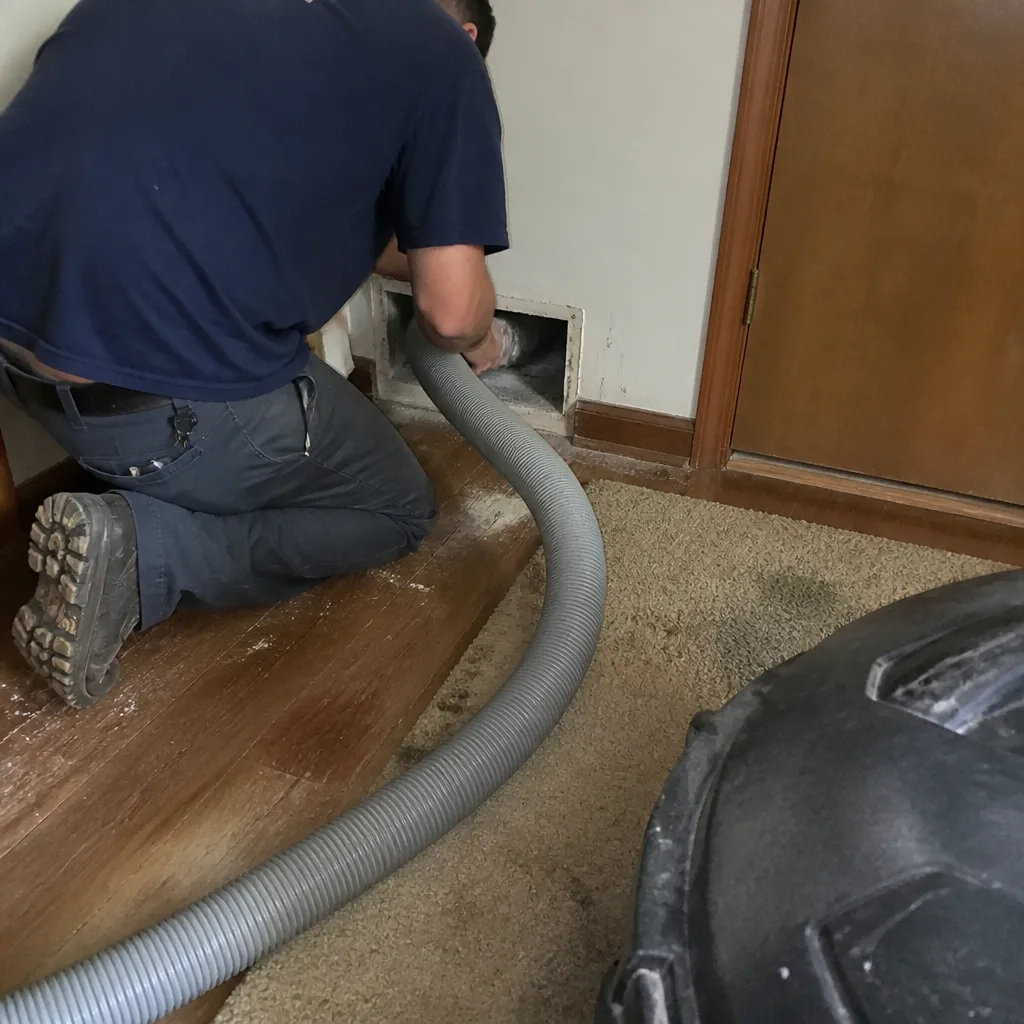 Before
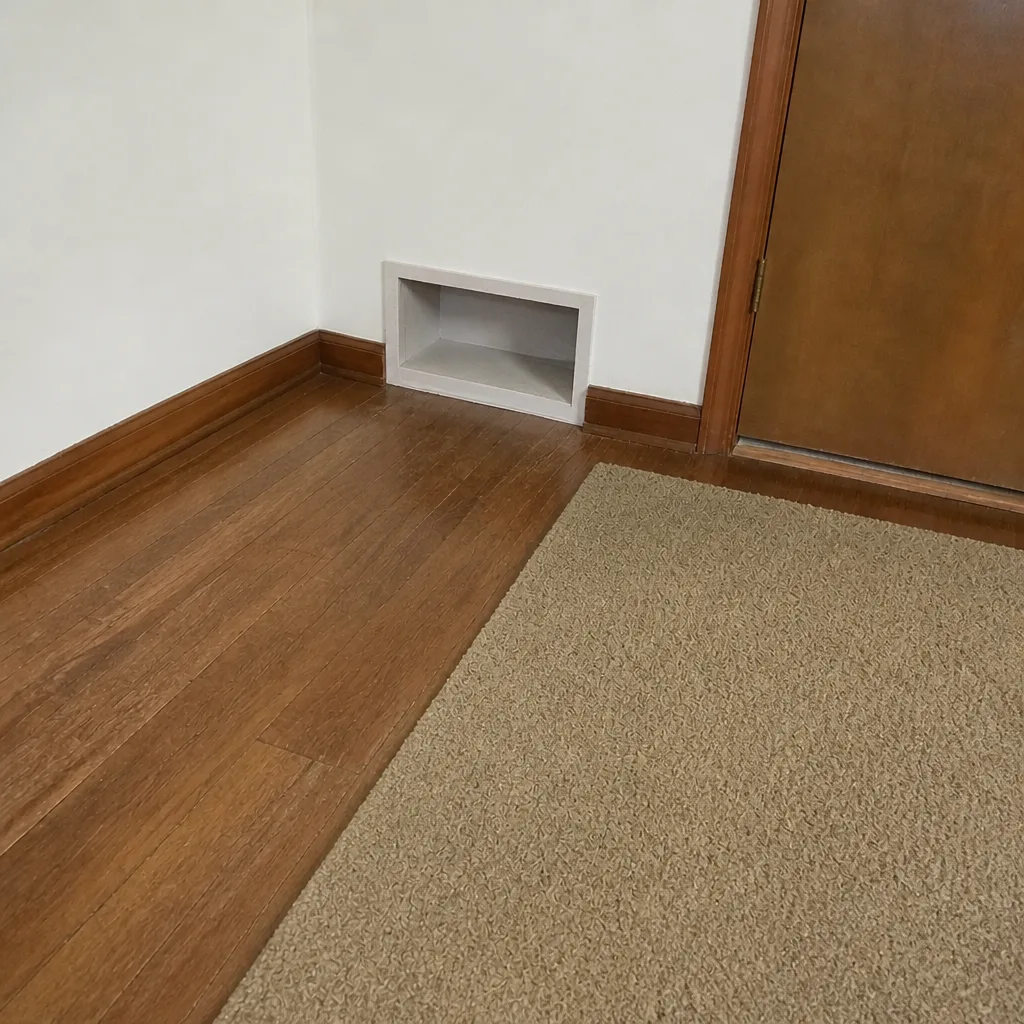 After
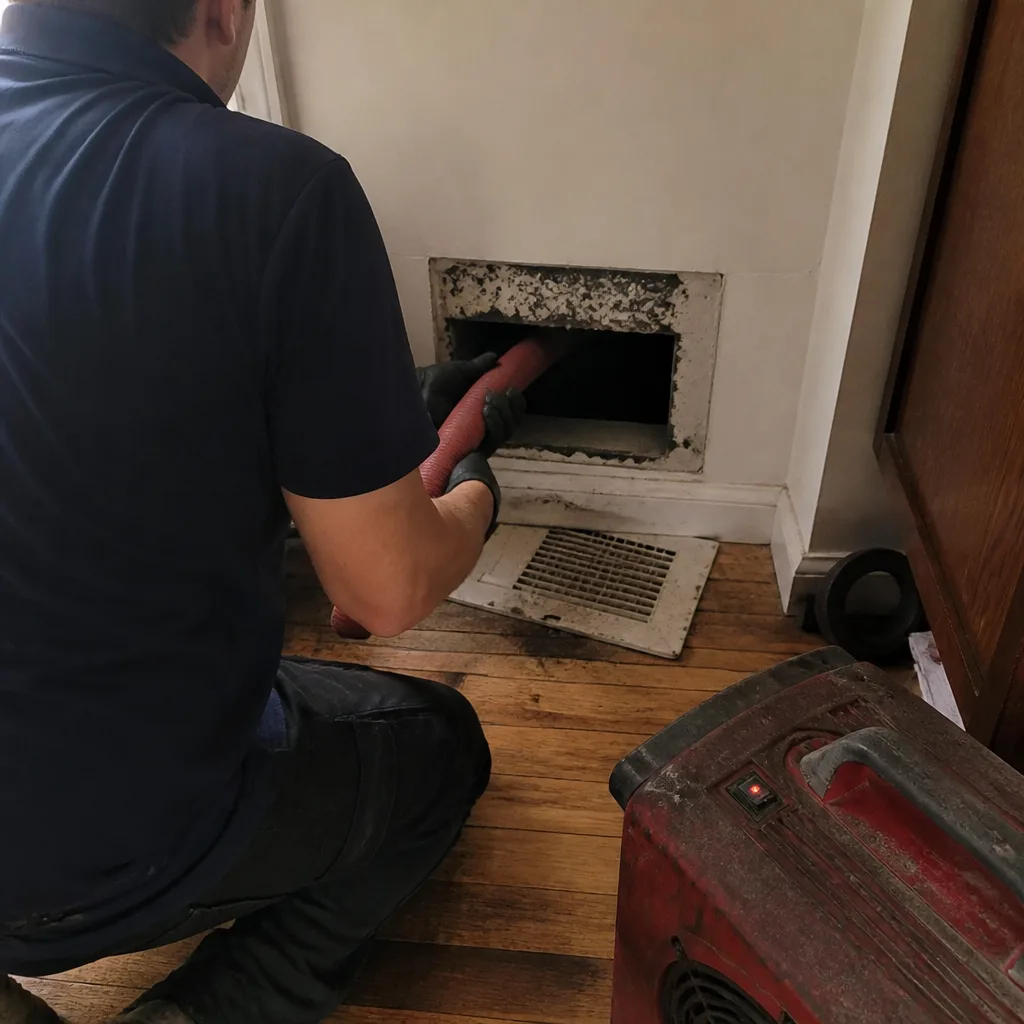 Before
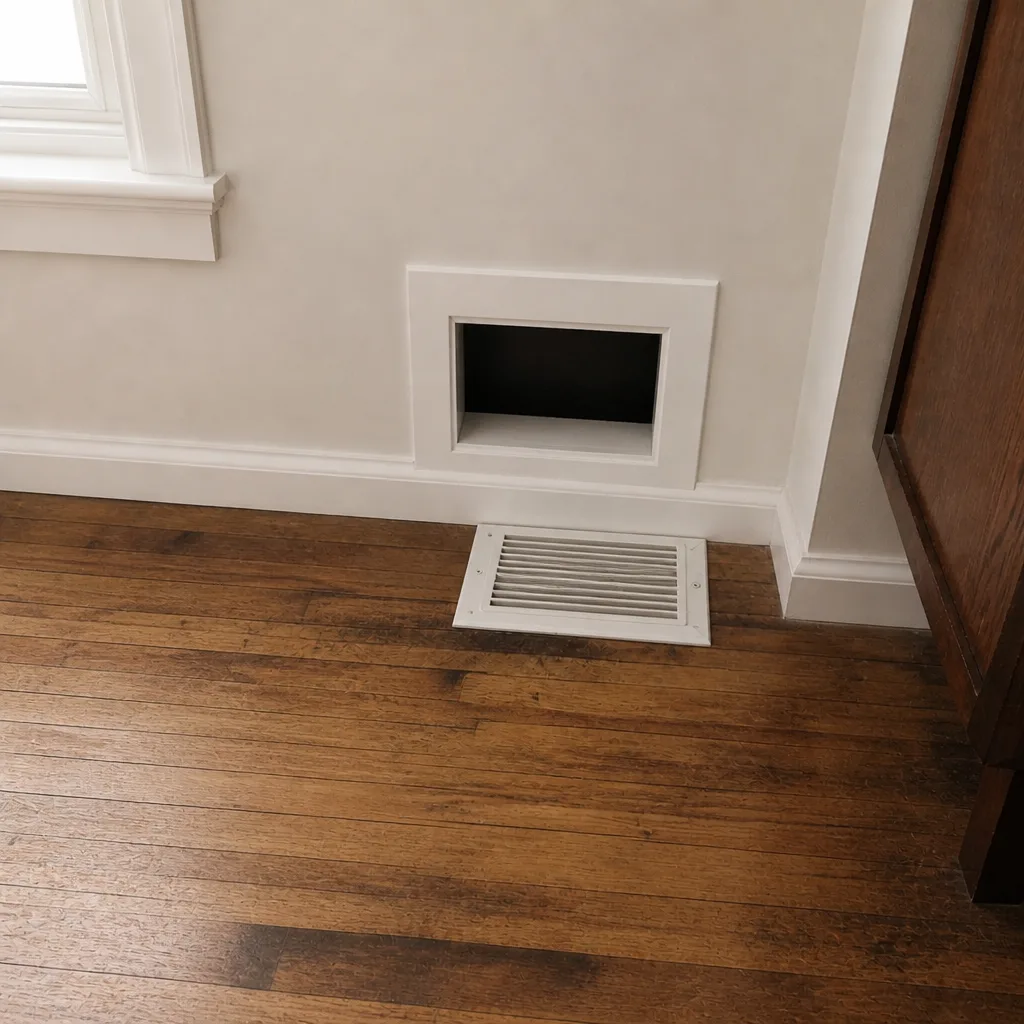 After
 Before
 After
When to Call a Professional
Call a professional duct service if any of the following apply: the HVAC ran during or after a fire, flood, or mold event; you can smell smoke, dampness, or mustiness when the system runs; you see water damage or soot near a return or supply register; your home had ice dam issues and the returns run near exterior walls; or your insurance adjuster has asked for a duct assessment. If you’re not sure whether your situation qualifies, an assessment is the low-cost way to find out, and it gives you documentation either way. Duct Cleaning South Bend offers free estimates in South Bend. Call (855) 905-0868. We answer 24/7, with fast dispatch from 7am to 7pm, Sunday through Friday.
Frequently Asked Questions
No. Running the system after a fire pushes smoke residue deeper into the duct network and into rooms that weren’t damaged. Shut the system off, close supply registers where you can, and get an assessment before restart. If the system was running during the event, treat the contamination as already distributed and have every supply branch assessed.
As soon as the water is out and the assessment is complete, usually within the first several days after the event. In South Bend homes near the St. Joseph River, the humid air from a flooded basement puts ducts at risk of mold growth quickly, so the assessment should happen before structural drying is finished so the two scopes can be sequenced together.
Often it does when the ductwork is part of the covered damage and the work is documented. The strongest claims have photos, a written scope, and the original filter saved as evidence. Have your adjuster confirm coverage specifics for your policy, and get the assessment in writing before cleanup begins so the pre-existing state is documented.
Consumer-grade vacuums and brush kits loosen residue without capturing it, which spreads contamination into the living space. Smoke compounds that have absorbed into duct liner or duct board usually can’t be removed with any cleaning method and require replacement. Professional equipment like Rotobrush agitation combined with Nikro HEPA vacuum and containment is a different class of tool.
An assessment is a scoped inspection with photos, moisture readings, and a written report defining what needs cleaning, repair, or replacement. A regular cleaning is the execution of the work. In an emergency, the assessment comes first because it determines whether cleaning alone will get the system back to a safe condition.
Storm-driven wind events can force debris or moisture into exterior intakes and vent caps, and smoke or odor can travel through a return system without visible water damage. If the smell is new after a storm, check the exterior vents and intakes first, then have the return side of the system evaluated. Don’t dismiss a recurring odor; it usually has a specific source.
The Bottom Line
Emergency duct response comes down to a simple sequence: shut the system off, get the ducts assessed, repair what can’t be cleaned, then clean and restart. Everything else is detail. The detail matters in South Bend because river-area flooding, ice-dam intrusion into soffit returns, and post-storm debris all hit ductwork harder than a routine dust cycle, and because some of that damage isn’t visible from any register. Containment-first equipment and a company that handles both cleaning and repair closes the loop in a single visit. If you’re in the middle of this right now, don’t restart the system until you’ve had a look. Call (855) 905-0868 for a free estimate. We answer 24/7, with fast dispatch from 7am to 7pm, Sunday through Friday. Our technicians have up to 15 years of experience, and we can work with your insurer on documentation.
Written by the team at Duct Cleaning South Bend.