
Last updated November 16, 2026
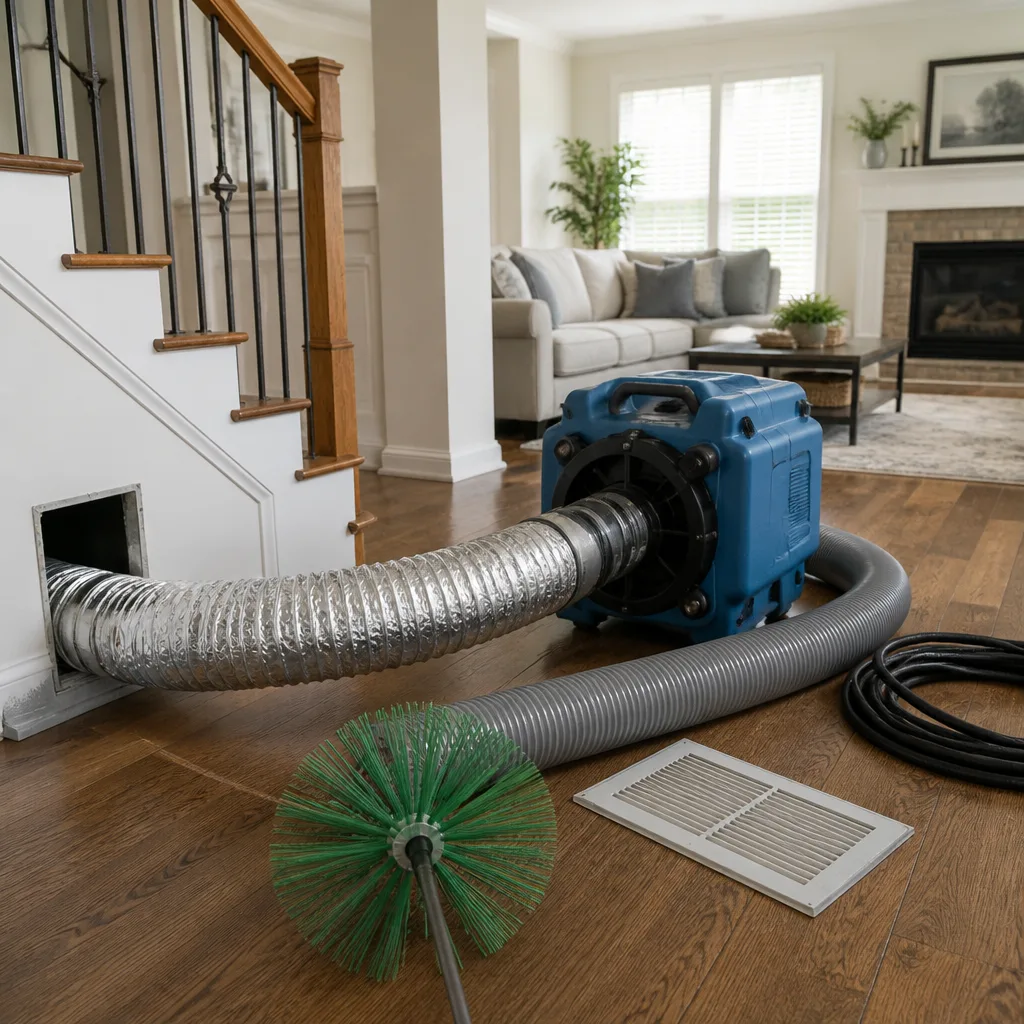 Whole-home duct cleaning
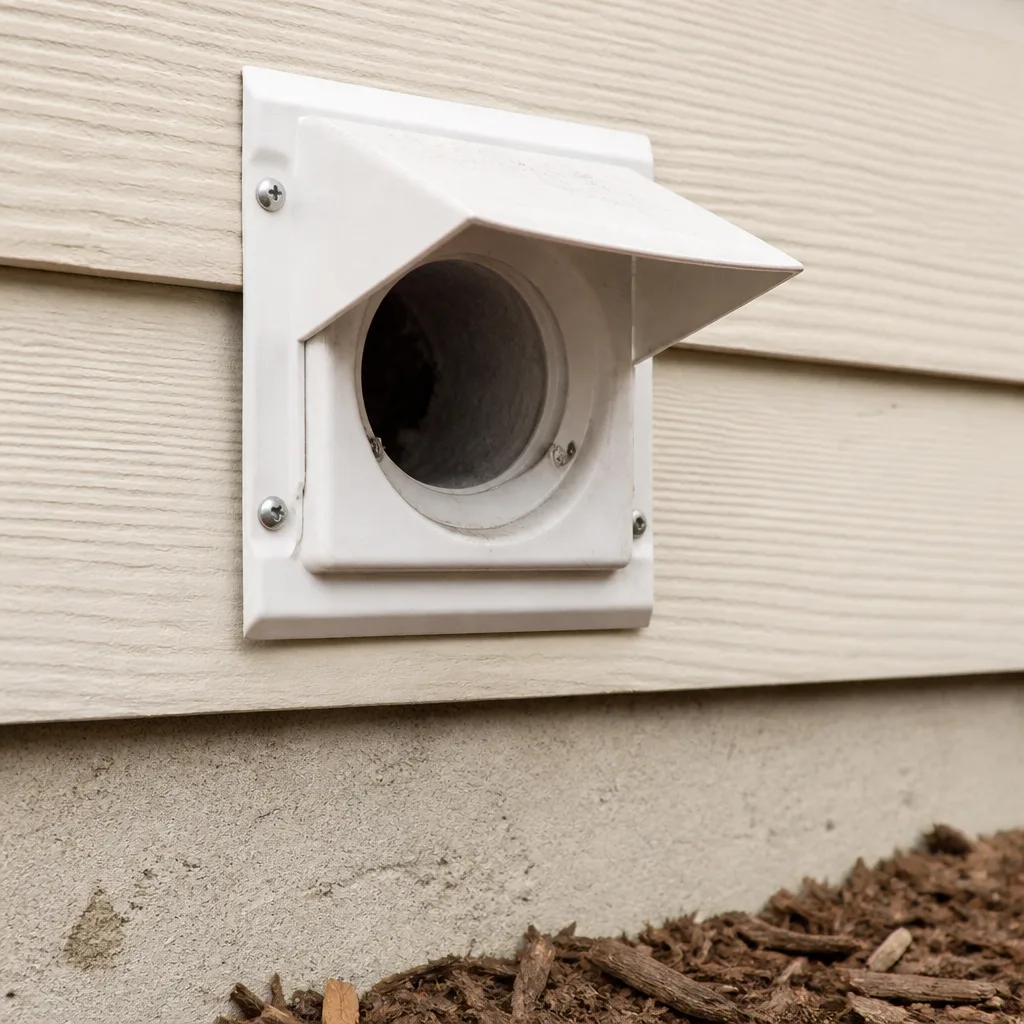 Dryer vent cleaning
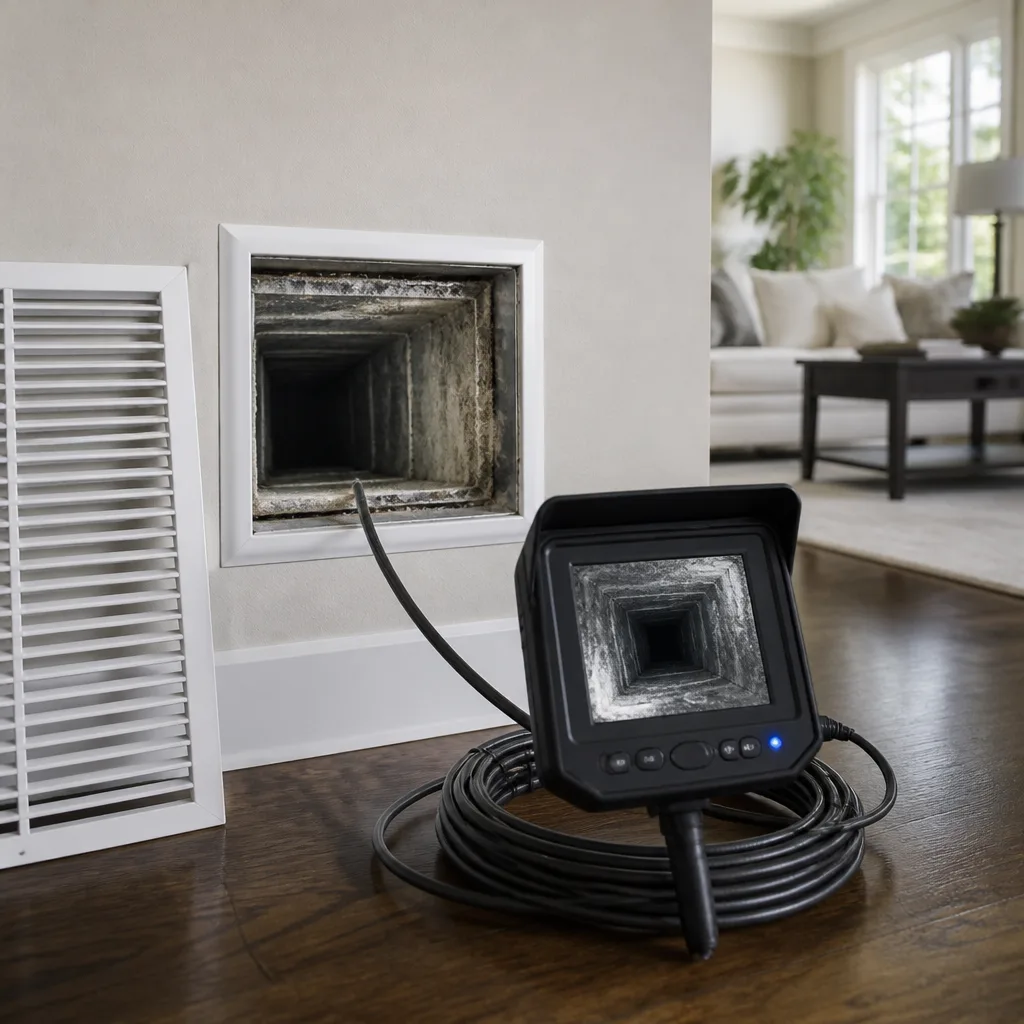 Camera inspection
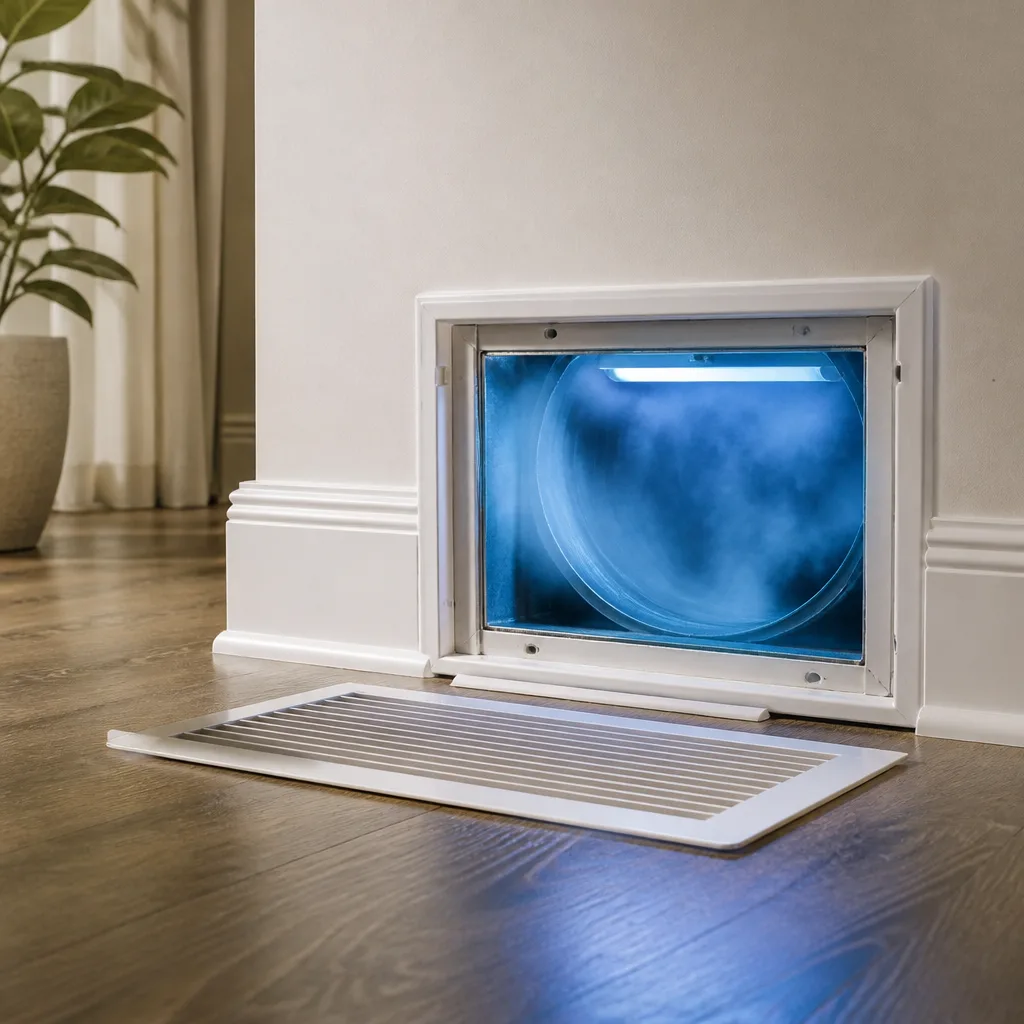 Sanitizing & deodorizing
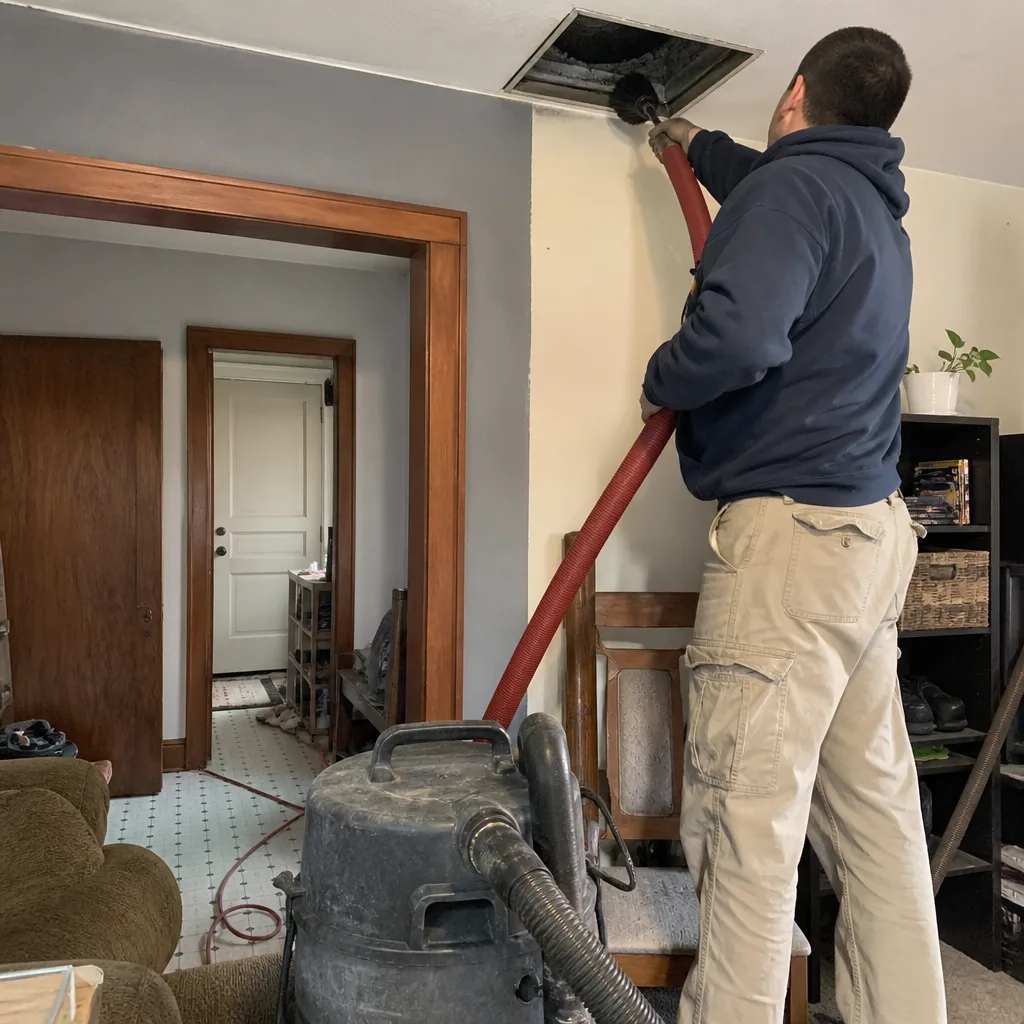
Whole-system duct and dryer vent check with before-and-after photos - you see exactly what came out of your vents
That "$99 whole-house special" is a bait ad - the real number appears once they are in your hallway, or the "clean" is a shop-vac at the register. We photograph the inside of your ducts before and after instead.
Air Duct Cleaning Maintenance Checklist for South Bend Homeowners
The “3-5 year” cleaning interval you’ve seen everywhere was not engineered for a South Bend home with a humidifier, a dog, and a basement air handler. It was written for a hypothetical average house that doesn’t exist. Real homes in this city carry specific conditions: lake-influenced humidity, long heating seasons, older housing stock with original sheet metal, and renovation dust from the constant turnover of properties near the universities. A checklist built around what your home actually does beats a calendar reminder every time. What follows is a working checklist built around observable signals, room by room, with the trigger points that tell you it’s time to act more often than the generic recommendation suggests. You’ll learn how to inspect your own registers, log filter behavior, document a baseline, and recognize when duct repair belongs on the list next to cleaning.
Quick Answer
A duct maintenance checklist for a South Bend home should track four things: register airflow and visible debris room by room, filter loading rate over time, humidity events in basement and crawl space systems, and signs of joint separation or insulation failure. Check these quarterly and after any renovation or humid season. Clean when the signals stack up, not when a generic three-to-five-year clock says so.
Styles & brands we work with
- Whole-home duct cleaning
- Dryer vent cleaning
- Camera inspection
- Sanitizing & deodorizing
Table of Contents
- Why Generic Intervals Fail in South Bend
- The Room-by-Room Inspection Checklist
- How to Log Filter Condition as a Contamination Proxy
- South Bend-Specific Triggers: Humidity, Renovation Dust, Post-Winter Checks
- What to Document Before and After a Cleaning Visit
- When Duct Repair Belongs on the Checklist
- The Dryer Vent: A Parallel Maintenance Track
- If You Own a Honeywell or Aprilaire System
Why Generic Intervals Fail in South Bend
The three-to-five-year number assumes an average house with average occupancy, average filtration, and average climate. No home meets all three criteria at once, and South Bend homes miss them in specific ways. The heating season here runs long enough that a furnace moves a large volume of air through the same ducts for months without a break. Humidity swings between summer and winter are wide enough that condensation forms on cold duct surfaces in basements and crawl spaces. And the housing stock includes a lot of homes built before modern duct sealing standards, which means leaky joints and disconnected runs are common discoveries rather than exceptions.
Consider what changes the math. A single dog in the house roughly doubles the volume of hair and dander entering the return. A humidifier running through the winter adds moisture that makes dust stick to duct walls instead of passing through. A basement air handler pulls from the dampest part of the house. A kitchen renovation pushes drywall dust through the entire system for weeks. None of these appear in the generic recommendation, and each one shortens the honest interval.
In our experience, the homes that need service most often share three characteristics: pets, a humidifier or dehumidifier in the loop, and ductwork that runs through unconditioned space. If yours has all three, treat the three-to-five-year figure as a ceiling, not a target. The checklist below exists so you can make that call from evidence in your own home rather than from a schedule someone else wrote for a house that doesn’t resemble yours.
The Room-by-Room Inspection Checklist
You can run most of this inspection with a flashlight, a step stool, and twenty minutes. Do it before you call anyone, because what you find will tell a technician where to focus and will protect you from a quote that ignores the actual problem. air duct cleaning starts with knowing where the debris is concentrated.
- Remove each register cover and look inside with a flashlight. Shine the light down the boot and along the visible run. A thin film of dust is normal. A visible mat of debris, hair, or construction grit on the duct floor means the system is carrying material that belongs in a filter.
- Hold a tissue or a piece of light paper against each supply register while the system runs. It should flutter strongly and consistently. A register that barely moves air, or one that moves noticeably less than its neighbors, points to a disconnected run, a crushed flex duct, or a damper stuck closed.
- Compare airflow across rooms. The bedroom closest to the furnace should not be the weakest register in the house. Asymmetry like that often means a branch is leaking into a wall cavity or a joint has separated.
- Check return registers for staining. Dark streaks around the grille or on the ceiling near it suggest air is pulling through a gap rather than through the filter.
- Look at exposed ductwork in the basement or crawl space. Run your hand along joints. If you feel air escaping at a seam while the system runs, that’s a leak. Disconnected sections and sagging runs are common in older South Bend homes.
- Note any musty smell at a specific register. A smell that shows up in one room and not others points to moisture in that branch, not to the whole system.
- Photograph everything you find, register by register. Label the photos by room. This becomes your baseline and your comparison point for next time.
What you’re building is a map of where the system is struggling. A technician with professional-grade equipment can clean the whole system, but knowing which branches showed symptoms helps you verify that the work addressed them.
How to Log Filter Condition as a Contamination Proxy
Your filter is the cheapest diagnostic tool in the house. How fast it loads tells you how much particulate the return is pulling in, and that rate is a reasonable proxy for how fast the ducts themselves are accumulating material. A filter that’s visibly gray at thirty days is telling you something a filter that lasts six months is not.
Here’s how to log it without turning it into a project:
- Write the install date on the filter frame with a marker. That single habit solves most of the guesswork.
- Check it at thirty days by pulling it and holding it up to a light. Note in a phone memo how much light passes through compared to a new one.
- Record the date it hits “change now” condition for your own threshold. If that’s under sixty days, your system is moving a heavy load of particulate.
- Track it across seasons. A filter that lasts ninety days in summer but only forty-five in winter, when the furnace runs constantly and the house is closed up, is giving you a real signal about winter duct loading.
- Note whether the filter is the correct MERV rating for the system. A filter rated too high for the blower restricts airflow and can make the system look dirtier than it is by reducing efficiency.
Two consecutive short filter cycles, meaning you’re changing it noticeably more often than the manufacturer suggests for your household, justify moving duct cleaning up the list regardless of what the calendar says. That’s the point of the log: it converts a vague feeling that the air is dirty into a dated record.
South Bend-Specific Triggers: Humidity, Renovation Dust, Post-Winter Checks
Local conditions create trigger events the generic checklist doesn’t account for. Three matter most here.
Basement and crawl space humidity events. South Bend summers bring stretches of high humidity, and basement air handlers sit in the dampest part of the house. When outdoor humidity runs high for a sustained stretch, condensation can form on cold duct surfaces and on the air handler cabinet. That moisture turns dust into a sticky film that captures more dust and, over time, supports biological growth. Check basement ducts after any extended humid period. If you see condensation or a musty smell near the air handler, that’s a trigger regardless of when the system was last cleaned.
Construction and renovation dust. Renovation dust is heavier and more abrasive than household dust. Drywall sanding dust, sawdust, and insulation fibers pulled into a return during a remodel coat the entire system. If any part of your home has been under construction, add a duct inspection to the punch list before the project closes out, not months later. Running the system during sanding without sealing registers is the most common way a clean duct system becomes a dirty one in a single week.
Post-winter mold season checks. The first warm weeks after a long heating season are when moisture problems surface. Winter condensation inside ducts and on cold surfaces, combined with the system sitting idle more often as temperatures rise, creates conditions where musty odors appear. Do a smell-and-flashlight check at every register in early spring. If a register smells musty, the branch behind it needs attention before summer humidity arrives.
One more local factor: the age of the housing stock. Homes built decades ago often have original sheet metal ducts with taped joints that have since failed. That’s not a cleaning issue. It’s a repair issue, and it belongs on the checklist. You can read more about how we approach service across South Bend if you want the local picture.
What to Document Before and After a Cleaning Visit
The single most useful thing you can do for your next service interval is document this one. A before-and-after record lets you compare conditions accurately instead of relying on memory. It also gives you a way to verify that the work actually happened the way it was described.
Before the visit, collect:
- Photos of each register with the cover off, showing the visible duct interior
- A short video of tissue flutter at the weakest register
- The dates of your last three filter changes from your log
- A note on any room with a musty smell or airflow complaint
- The date and description of any recent renovation
After the visit, ask for and keep:
- Before-and-after photos of your own ducts, not stock images. Any professional operation should be able to show you the actual system they worked on.
- The scope of work in writing: which branches were cleaned, what equipment was used, and whether any deficiencies were found.
- A note on any duct repair performed or recommended, including the specific location and the reason.
- The date of service, so your next interval has a real starting point.
Before-and-after photos of your own ducts are the clearest proof the work was done, and they’re also the best diagnostic tool for the next visit. If the photos from this year and the photos from three years from now look the same, your interval is right. If the second set is noticeably worse, you have evidence for tightening the schedule. A professional duct cleaning in South Bend should have no trouble providing this documentation, and a company that balks at it is telling you something.
When Duct Repair Belongs on the Checklist
Cleaning removes debris. It does not fix a duct that has come apart, collapsed, or lost its insulation. Several conditions belong on the repair list rather than the cleaning list, and recognizing them keeps you from paying for a cleaning that can’t solve the problem.
Watch for these signs:
- Joint separation. If you can see a visible gap where two duct sections meet, or feel air escaping at a seam while the system runs, the run needs to be sealed and reconnected. Cleaning a disconnected duct leaves the leak in place.
- Insulation failure. Torn or missing duct insulation on runs through unconditioned space causes condensation, energy loss, and moisture problems. The insulation needs replacing, not just cleaning.
- Crushed or sagging flex duct. Flex duct that has collapsed restricts airflow to the rooms it serves. A cleaning can’t restore its shape.
- Asymmetric airflow that persists after cleaning. If one room still underperforms after a full cleaning, the cause is a physical duct problem, not debris.
- Visible mold growth on duct surfaces. Cleaning can remove surface growth, but the moisture source behind it needs to be corrected or the problem returns.
This is where our approach differs from a cleaning-only operation. We clean it, and if it’s broken, we fix it. Finding a separated joint during a cleaning and correcting it in the same visit saves you from hiring a second contractor, and it means the system you paid to clean stays sealed. If your inspection turns up any of the signs above, mention them when you book so the visit is scoped for repair from the start.
The Dryer Vent: A Parallel Maintenance Track
Your dryer vent is a separate system from your HVAC ducts, and it deserves its own line on the checklist. The reason is fire safety, not cosmetics. Lint is highly flammable, and a vent that has accumulated lint restricts airflow, which raises operating temperature and shortens the life of the appliance. Framing dryer vent cleaning as fire prevention rather than an add-on changes how often you schedule it.
Add these checks to your quarterly walkthrough:
- Check the outside vent flap while the dryer runs. It should open freely and close when the dryer stops. A flap that stays closed or barely moves suggests a restriction.
- Feel the outside exhaust for strong airflow. Weak airflow on a running dryer is a warning sign.
- Look for lint accumulation around the vent hood and inside the flap opening.
- Note drying times. Clothes that take noticeably longer than they used to are telling you the vent is restricted.
- Check the flexible transition duct behind the dryer for crushing or kinks that trap lint.
Clean the dryer vent on a schedule tied to lint buildup, not to a fixed calendar. A household that runs several loads a week accumulates lint faster than one that runs two. If you’ve never had the vent cleaned and don’t know its condition, have it inspected and start your baseline from there.
If You Own a Honeywell or Aprilaire System
Homes with premium air quality equipment carry a higher standard for duct condition, and the reason is straightforward: your Honeywell or Aprilaire system is only as good as the ducts behind it. A high-end filtration or ventilation unit pushing air through contaminated ductwork delivers filtered air into a dirty channel. The equipment does its job; the ducts undo it.
If your home has a Honeywell or Aprilaire system, adjust the checklist in three ways:
- Check the filtration unit’s own filter on its manufacturer schedule and log it alongside your return filter. Two filters, two logs.
- Inspect duct interiors more carefully because the system is designed to move cleaner air. Any visible debris or staining at a register is a stronger signal than it would be in a standard system.
- Confirm the technician is certified to work on and around your equipment. Premium systems deserve a technician who knows them. We work on and around both Honeywell and Aprilaire equipment, which means the visit is scoped for the system you actually have.
The same logic applies to the equipment used on the job. Professional-grade tools, not improvised substitutes, are what a premium system deserves. We use Rotobrush agitation systems and Nikro HEPA-rated vacuum equipment, the same class of tools used in commercial and industrial settings, and we deploy Abatement Technologies containment equipment so debris is captured and controlled during the job rather than loosened and redistributed. Our technicians have up to 15 years of experience, and that experience includes working on systems where the filtration is the point, not an afterthought.
Common Mistakes to Avoid
- Cleaning on a calendar instead of on signals. The three-to-five-year figure is a starting point, not a rule. A South Bend home with a humidifier, a pet, and a basement air handler often needs service sooner. Check the signals before you book.
- Ignoring the filter log. If you’ve never tracked how fast your filter loads, you have no baseline for how fast your ducts are accumulating debris. Start logging today; it takes thirty seconds per change.
- Skipping the basement and crawl space. The dampest part of the house holds the air handler. It’s also the part most homeowners never inspect. Walk it every season.
- Running the system during renovation sanding. Drywall dust pulled into a return coats the whole system in a single project. Seal registers or shut the system down during heavy sanding.
- Accepting stock before-and-after photos. Stock images prove nothing. Ask for photos of your own ducts, before and after.
- Treating duct repair as a separate future project. A separated joint found during a cleaning should be fixed in the same visit. Cleaning a leaking duct leaves the leak in place.
- Forgetting the dryer vent entirely. It’s a fire-safety system, not an appliance accessory. Put it on the checklist next to the HVAC ducts.
See the difference
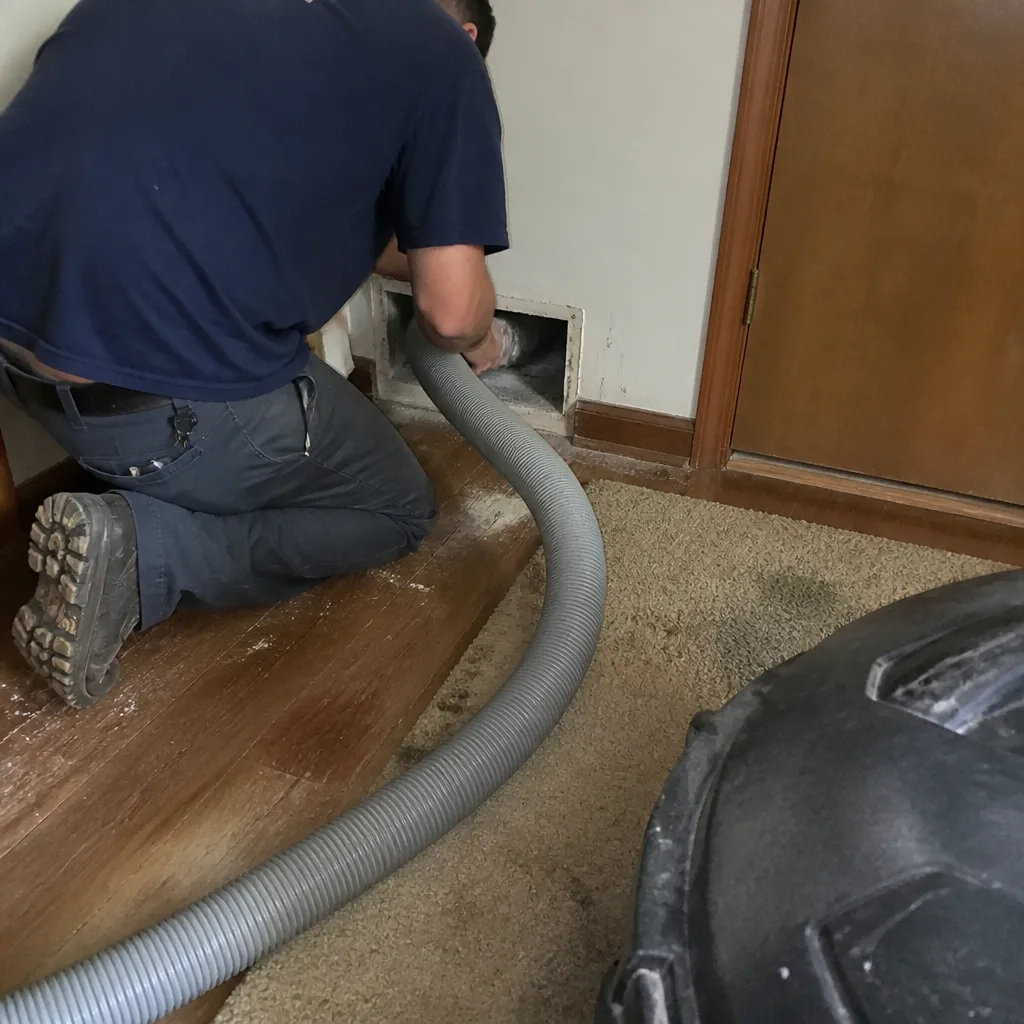 Before
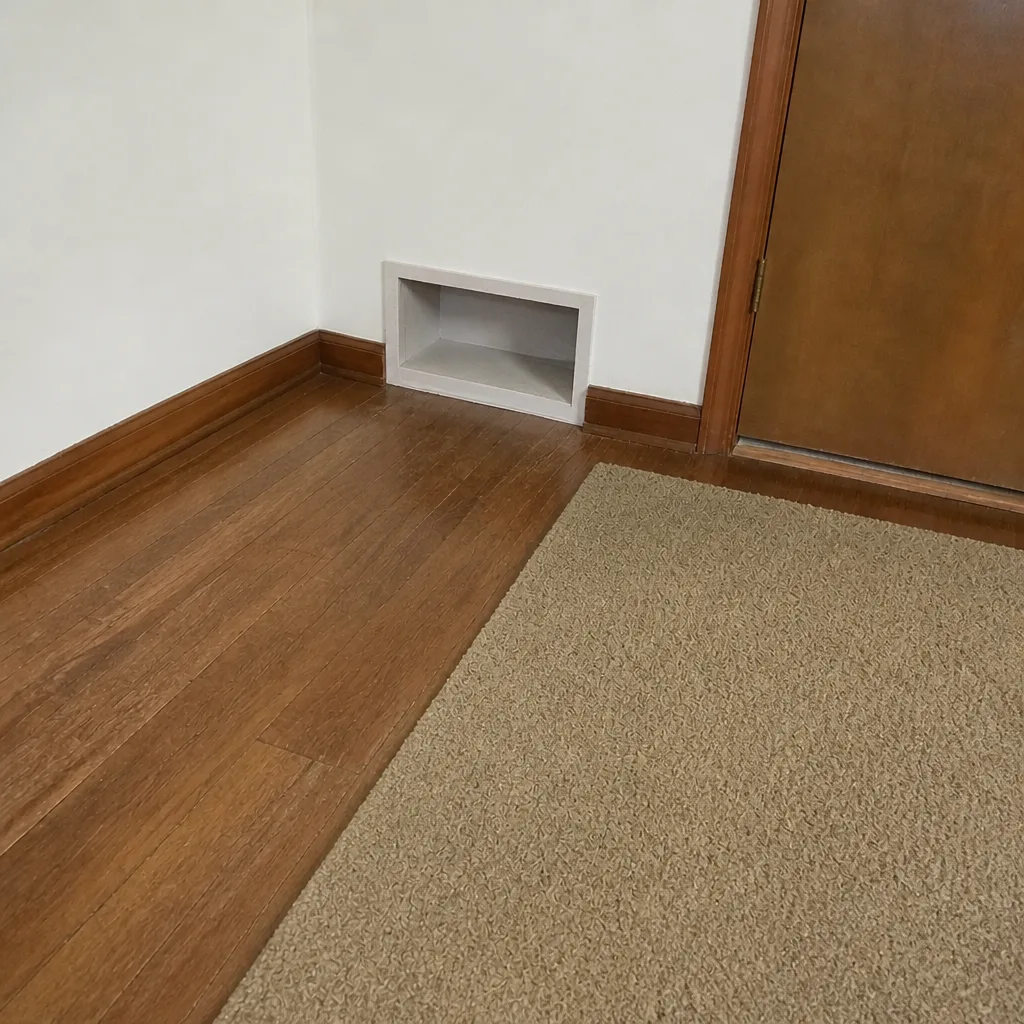 After
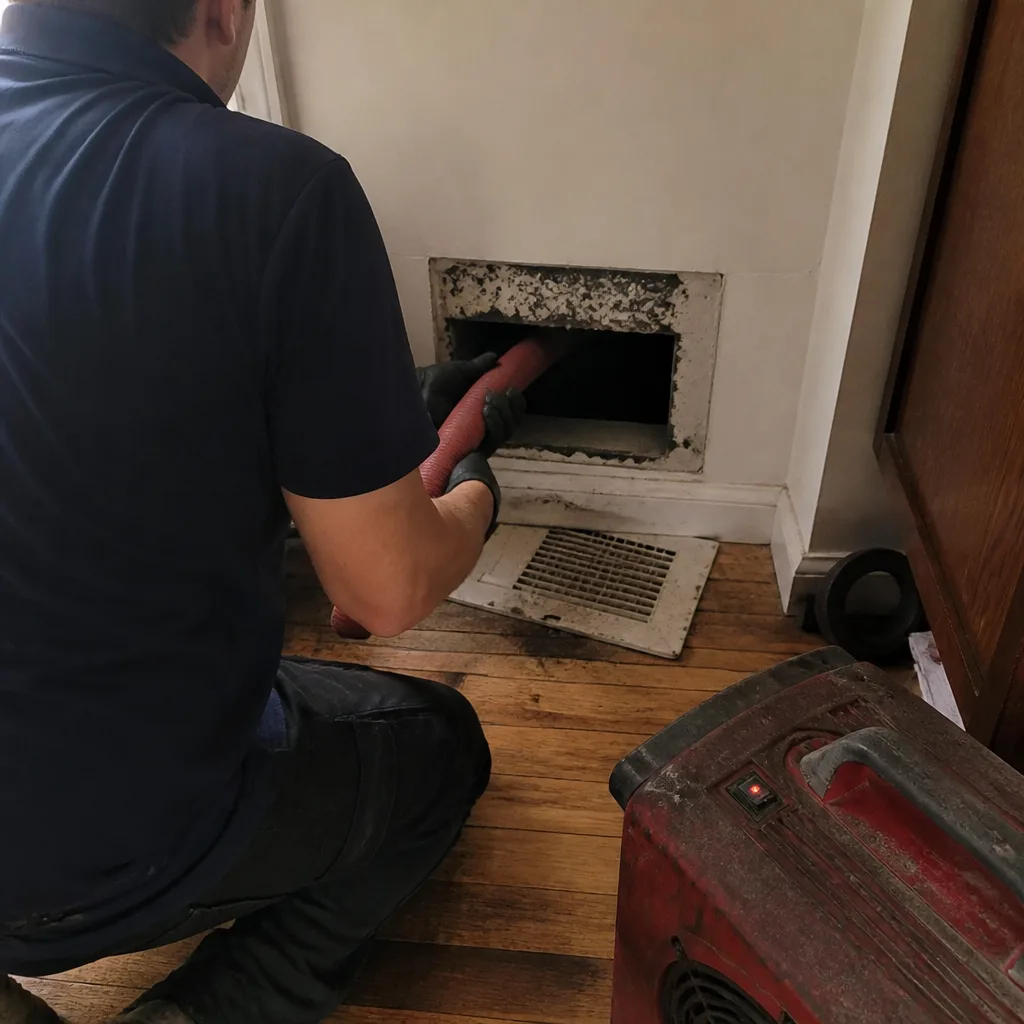 Before
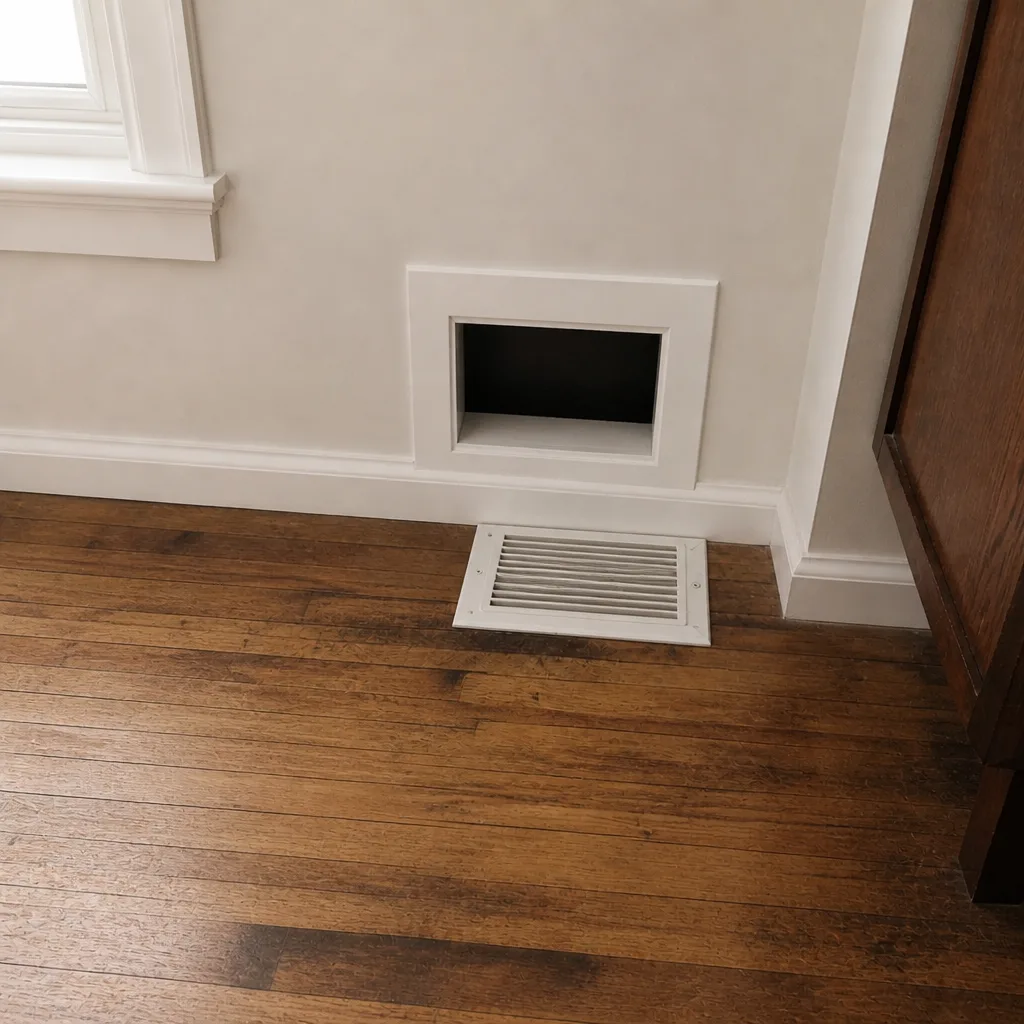 After
 Before
 After
When to Call a Professional
Call when your inspection turns up visible debris mats in a register, persistent airflow asymmetry between rooms, musty odors at a specific register, or condensation around a basement air handler. Call if your filter log shows short cycles for two changes in a row. Call after any renovation that ran the system during sanding. Call if you see joint separation, torn insulation, or crushed flex duct, because those are repair items a cleaning alone won’t fix. Call if you’ve never had the system inspected and don’t know its condition, especially in an older home. And call if the dryer vent hasn’t been checked and drying times are creeping up. Duct Cleaning South Bend offers free estimates in South Bend by written estimate, so the price you agree to is the price you pay. Reach us at (855) 905-0868. We answer 24/7. Fast dispatch from 7am to 7pm, Sunday through Friday.
Frequently Asked Questions
Most South Bend homes should be inspected every two years and cleaned when the checklist signals appear, which for homes with pets, a humidifier, and a basement air handler often means every three to five years or sooner. The generic three-to-five-year figure is a ceiling, not a target. Homes with recent renovations or persistent humidity problems may need cleaning more often. Call (855) 905-0868 for an exact quote; estimates are free.
Air duct cleaning in South Bend is priced per whole system by written estimate, not per vent, so the exact figure depends on the size and layout of your system and whether repair items are involved. We give you one flat price per system agreed before work starts, and the written estimate sets the final price. Ask for before-and-after photos of your own ducts as part of the quote. Call (855) 905-0868 for an exact quote; estimates are free.
Low quotes often reflect a shop vac and a brush kit rather than professional-grade equipment, or a teaser price that grows once the technician is on site. We use Rotobrush agitation systems and Nikro HEPA-rated vacuum equipment with Abatement Technologies containment, and we agree one flat price per system before any work begins. The number you agree to is the number on the invoice. Call (855) 905-0868 for an exact quote; estimates are free.
Ask for before-and-after photos of your own ducts, not stock images, plus a written scope of work listing which branches were cleaned and what equipment was used. A professional operation provides both without being pushed. Keep the photos as your baseline for the next service interval. Call (855) 905-0868 for an exact quote; estimates are free.
We can fix them in the same visit. Duct repair is one of our three core services alongside air duct cleaning and dryer vent cleaning, so separated joints, failed insulation, and crushed runs found during a cleaning are corrected immediately rather than referred out. One call covers it. Call (855) 905-0868 for an exact quote; estimates are free.
No, and the reason is that premium air quality equipment demands cleaner ducts to do its job. Your Honeywell or Aprilaire system is only as good as the ducts behind it, so inspect more carefully and treat any visible debris or staining as a stronger signal. We’re certified to work on and around both brands. Call (855) 905-0868 for an exact quote; estimates are free.
The Bottom Line
A duct maintenance checklist for a South Bend home works from observable signals, not a calendar. Inspect each register for debris and airflow asymmetry. Log how fast your filter loads and treat two short cycles in a row as a trigger. Check basement and crawl space ducts after humid stretches and after every renovation. Do a post-winter smell check at every register in early spring. Document before and after every visit with photos of your own ducts. Put duct repair on the checklist whenever you see joint separation, torn insulation, or crushed flex duct, and remember the dryer vent is a fire-safety system with its own schedule. When the signals stack up, call (855) 905-0868. We answer 24/7. Fast dispatch from 7am to 7pm, Sunday through Friday, and the estimate is free.
Written by the team at Duct Cleaning South Bend.