
Last updated November 16, 2026
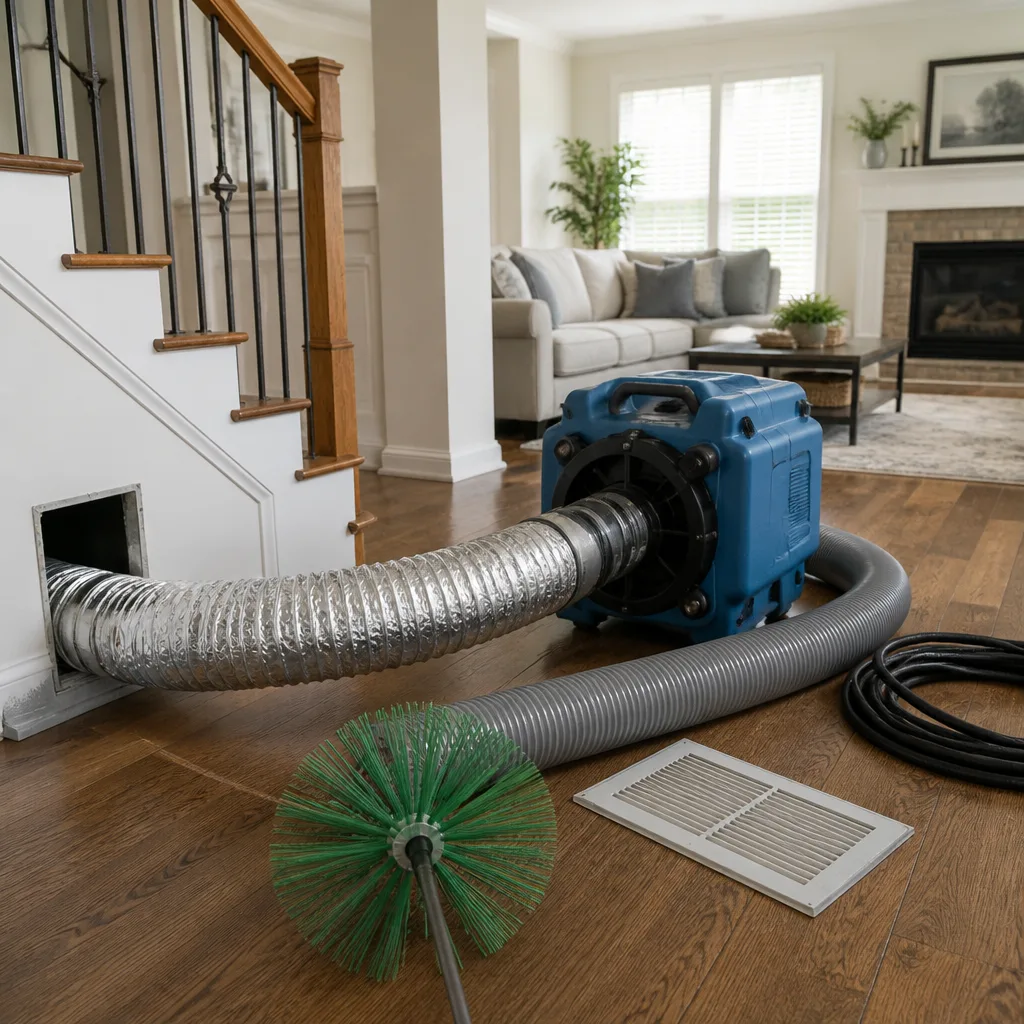 Whole-home duct cleaning
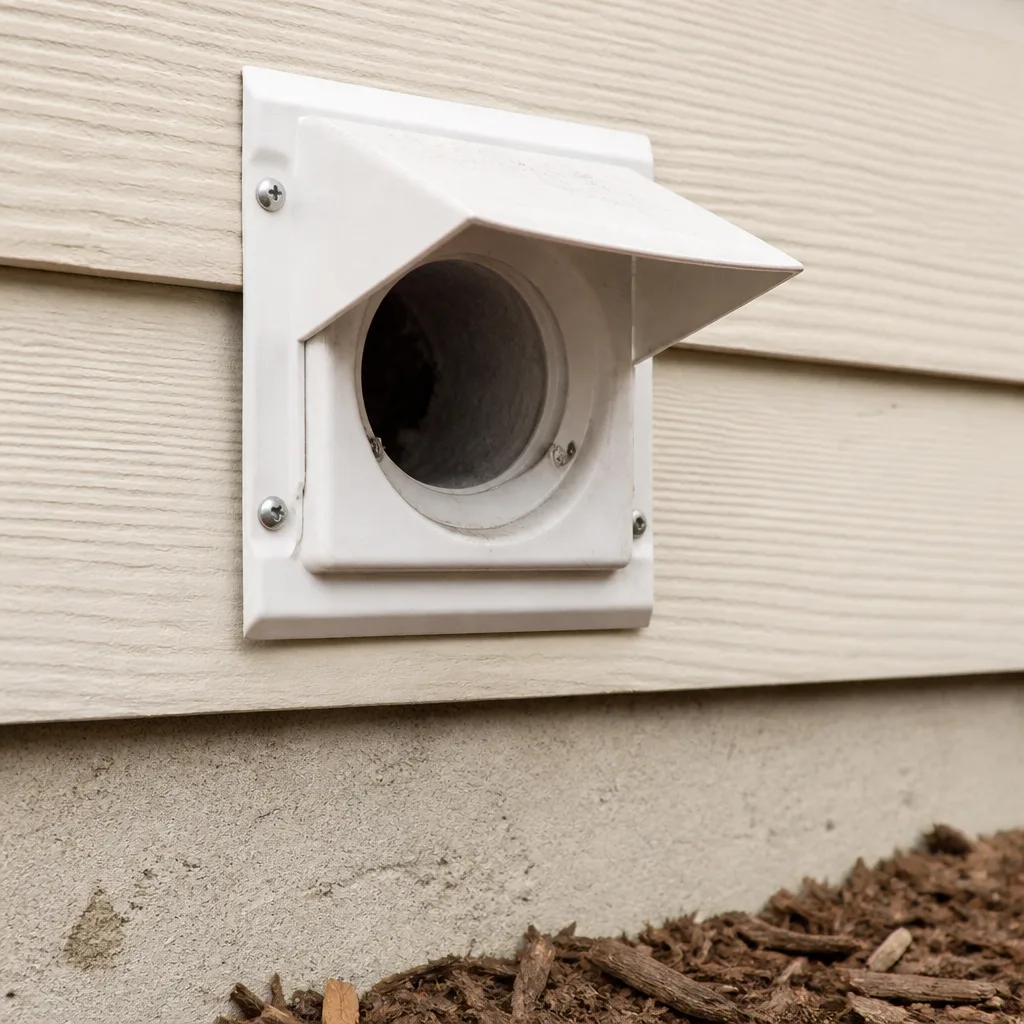 Dryer vent cleaning
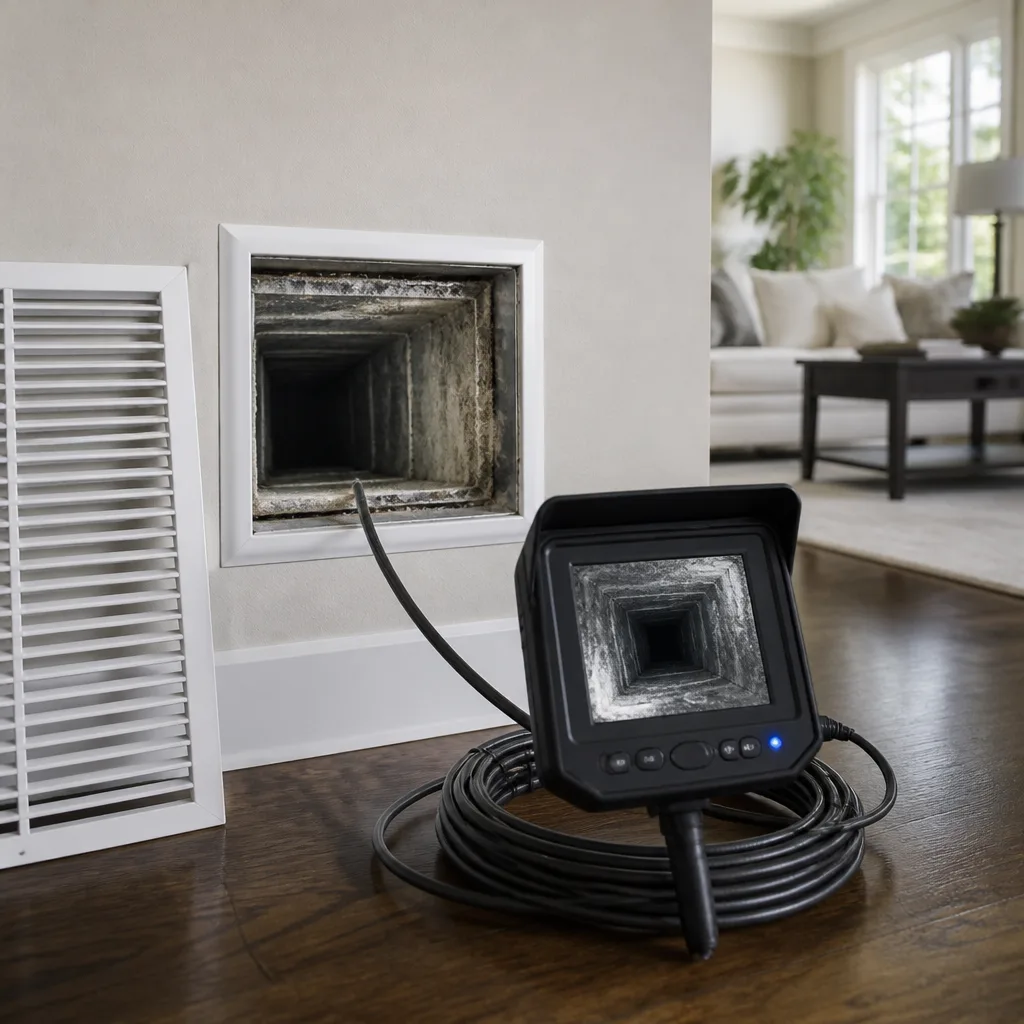 Camera inspection
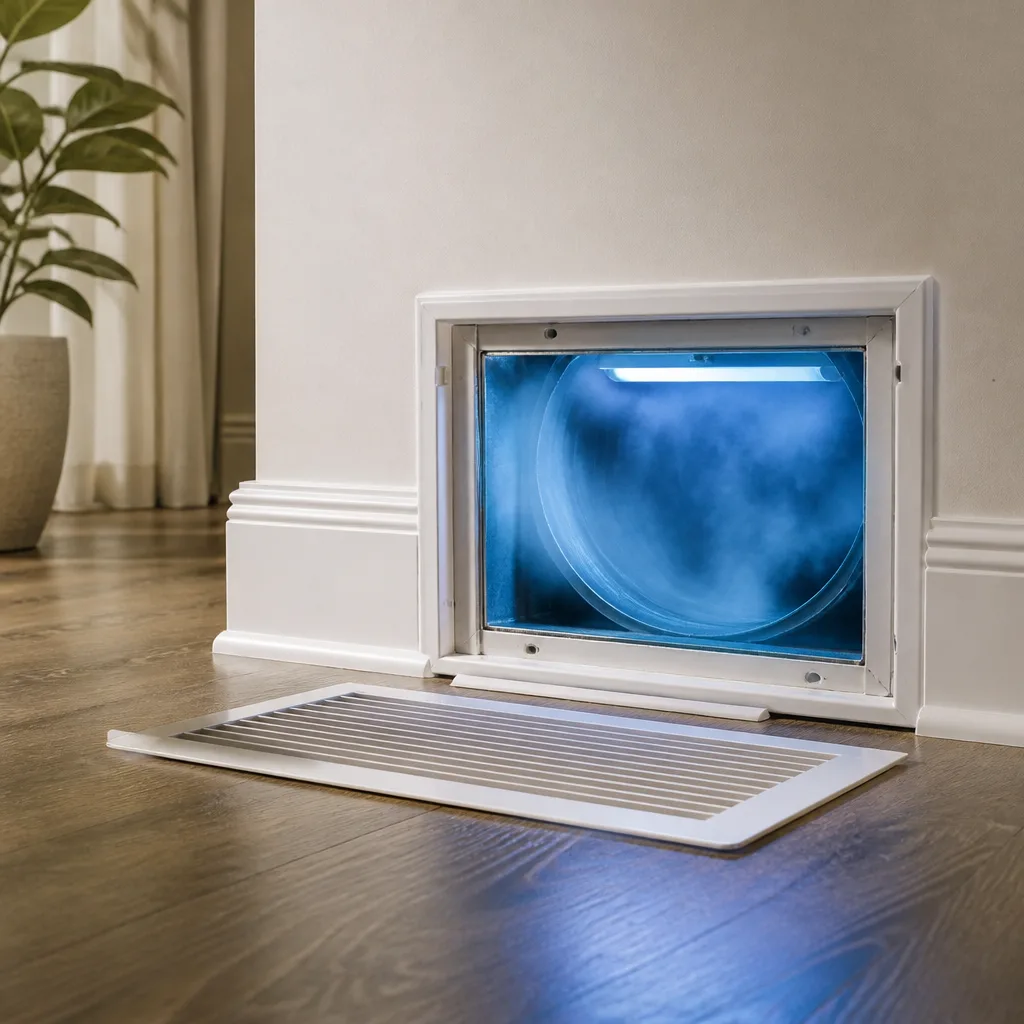 Sanitizing & deodorizing
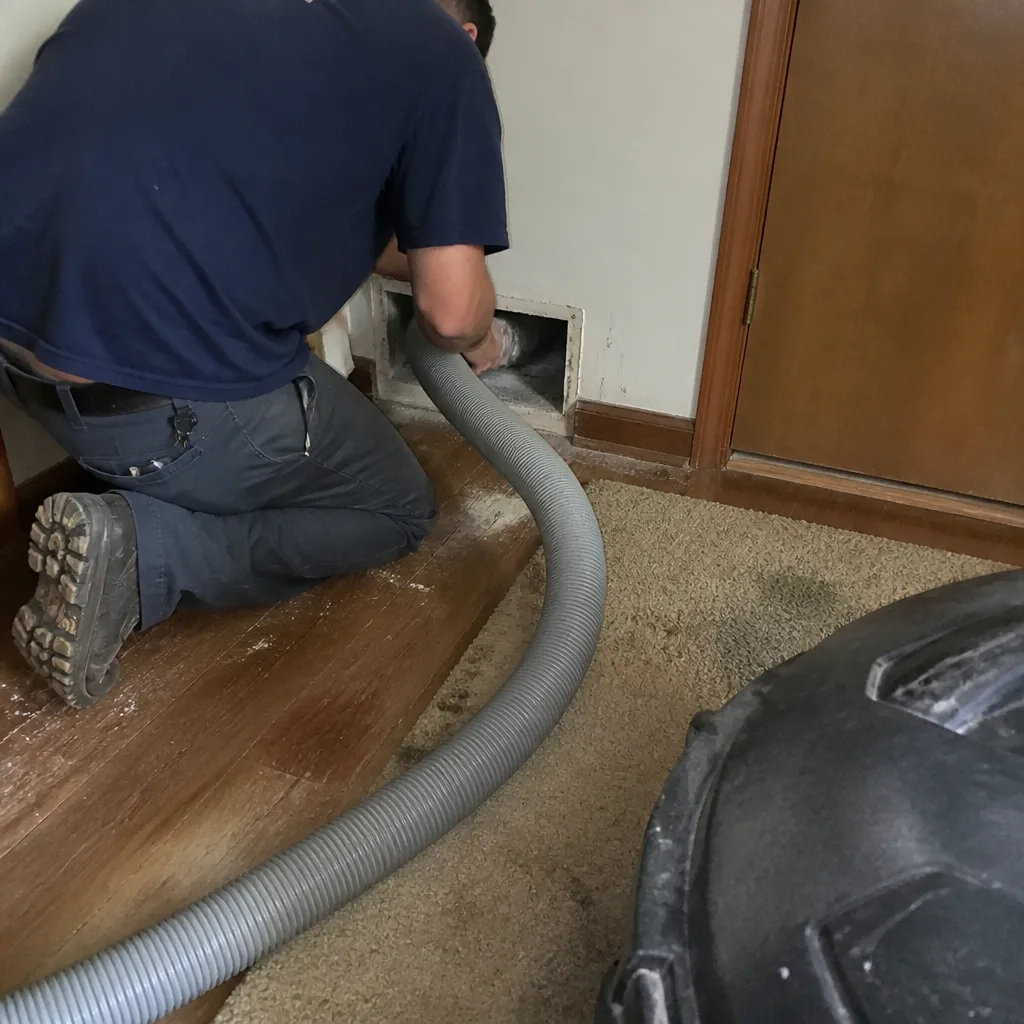
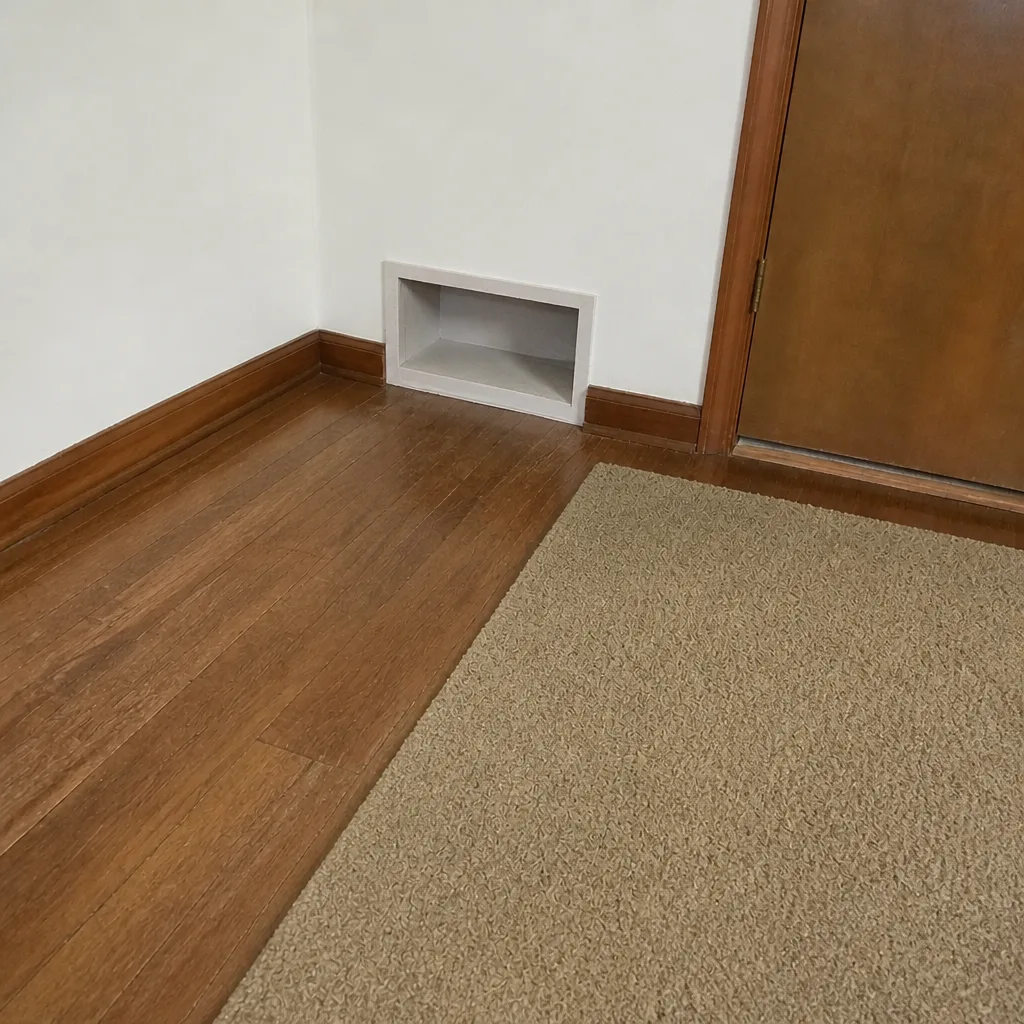
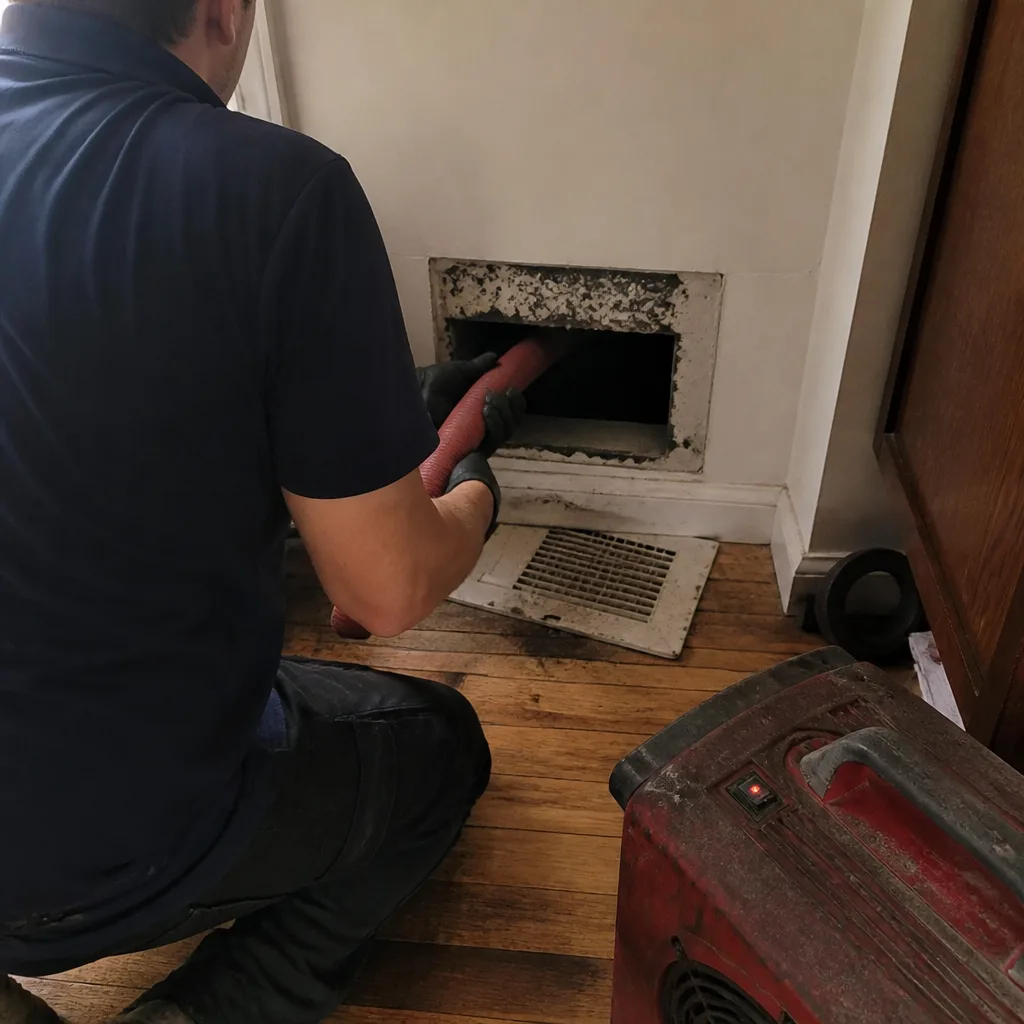
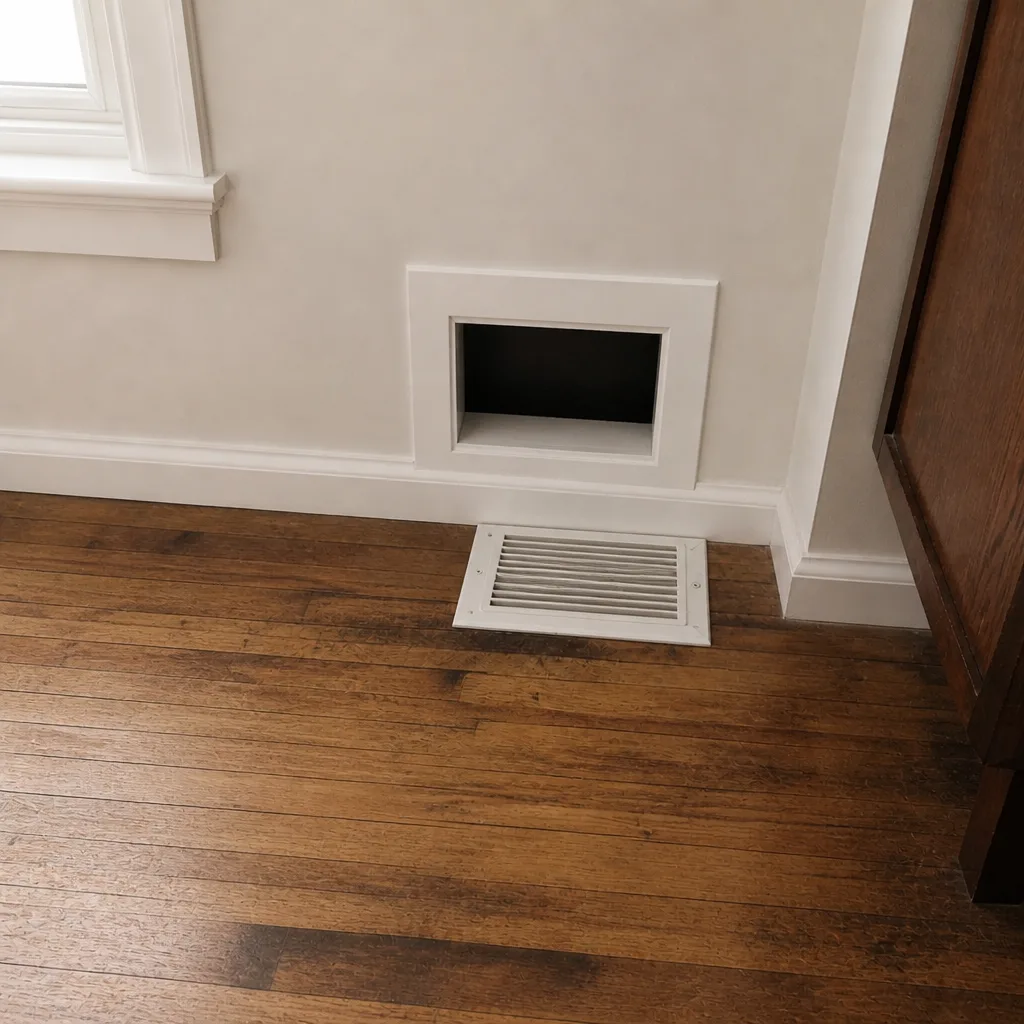
Whole-system duct and dryer vent check with before-and-after photos - you see exactly what came out of your vents
That "$99 whole-house special" is a bait ad - the real number appears once they are in your hallway, or the "clean" is a shop-vac at the register. We photograph the inside of your ducts before and after instead.
Seasonal Air Duct Cleaning Care for South Bend: Year-Round Homeowner’s Guide
Most homeowners treat duct cleaning as a checkbox – something you do once every few years and then forget. That assumes your duct system lives in a static environment. It doesn’t. In South Bend, your ducts run through four genuinely different seasonal stress conditions every single year, and each one leaves a different kind of load behind. Winter pulls moisture through humidifier bypass lines and condenses it in cold metal. Spring floods the return side with pollen and mold spores. Summer loads the system with continuous AC operation and whatever the drain pan is doing. Fall sends leaf debris and grit toward exterior intakes. Cleaning on a flat calendar ignores all of this. This guide walks through what each season actually does to your ducts in South Bend and gives you a month-by-month action plan so the system gets serviced when it needs it, not when a reminder happens to fire.
Quick Answer
Seasonal air duct cleaning care in South Bend means matching service to what each season deposits in the system: schedule a professional cleaning as HVAC switches from heating to cooling (late spring or early summer) for maximum benefit, stay on filter changes through fall leaf season and winter humidifier operation, and add a post-renovation cleaning whenever drywall or insulation work disturbs the ducts. The goal is to clean when the load is heaviest and the switchover makes access easiest, not on a fixed multi-year cycle.
Styles & brands we work with
- Whole-home duct cleaning
- Dryer vent cleaning
- Camera inspection
- Sanitizing & deodorizing
Table of Contents
- Why South Bend’s Four Seasons Stress Your Ducts Differently
- Winter: Humidifier Output and Condensation Risk
- Spring: Pollen, Mold Spores, and the Return Side
- Summer: AC Operation, Drain Pans, and Post-Renovation Loads
- Fall: Leaf Debris and Exterior Intake Infiltration
- How to Time a Professional Cleaning Around HVAC Switchover
- Your Season-by-Season Homeowner Action Calendar
- Common Mistakes to Avoid
- When to Call a Professional
Why South Bend’s Four Seasons Stress Your Ducts Differently
A duct system doesn’t see a generic Midwest climate. It sees the specific cycles that repeat every 12 months in this part of northern Indiana, and those cycles leave measurably different deposits depending on the month. South Bend sits in a Great Lakes humidity corridor and averages 62 inches of snowfall per year, which shapes what your ducts deal with far more than a national average would suggest.
Think about what changes season to season inside the system. In heating season, warm air moves through ductwork that runs through cold chases and unconditioned spaces. Humidifier output adds moisture to that air. In cooling season, the same ducts carry cold air while the return side pulls in whatever is airborne outside. In between, you get the shoulder seasons – the furnace off, the AC not yet running – when stagnant air sits in the system and settled debris has nothing pushing it along.
That rhythm matters because the type of contamination changes with it. Winter loads are moisture-driven. Spring and summer loads are particulate-driven. Fall loads are coarse debris. A cleaning six months after a heavy spring pollen season removes a different material than one done in November after leaf fall. Neither is wasted, but the timing determines what you actually catch.
We’ve seen this play out across South Bend homes both old and new. The older housing stock downtown and in the near-north neighborhoods tends to have duct runs that pass through more unconditioned space, which makes the winter condensation question more pressing. Newer construction in the outer neighborhoods tends toward tighter envelopes, which shifts the problem to filter loading and humidifier bypass contamination. Same climate, different failure points.
This is the core argument for treating seasonal duct care as a rhythm rather than an event. If you want the full picture of what a cleaning service actually involves, the Duct Cleaning South Bend page lays out the process step by step.
Winter: Humidifier Output and Condensation Risk
Winter is when the least obvious contamination forms. A whole-house humidifier dumps moisture into the airstream to keep indoor humidity livable during a South Bend January, and a portion of that moisture travels through a bypass duct tied into the system. That bypass duct is short, rarely inspected, and almost never cleaned. Over a winter it accumulates mineral scale, dust, and biological growth that then feeds directly into your supply air every time the humidifier runs.
Owners of premium systems already know this risk. If your home runs a Honeywell or Aprilaire humidifier, your air quality system is only as good as the ducts behind it. The humidifier can be functioning exactly as designed and still be delivering moisture through a contaminated bypass.
Condensation is the second winter concern. Any duct run passing through cold attic or unconditioned basement space will sweat when warm, moist air moves through it. Sweating metal supports mold growth on the duct interior, and that growth becomes airborne the moment the system kicks on. You won’t see it from the register. You’ll notice a musty edge to the air in the first minutes of a heating cycle.
What to check in winter:
- Inspect the humidifier bypass duct if you can reach it – look for scale or dark growth on the interior walls.
- Watch for condensation on visible duct runs in cold spaces during very cold snaps.
- Change the furnace filter more often through heating season, because the system runs longer and loads faster.
- Listen for a musty odor at the supply registers within the first few minutes of startup.
If any of these show up, a professional inspection is the right next step. A containment-first process with HEPA-rated vacuum equipment is what prevents loosened material from being redistributed into the living space during the inspection and cleaning.
Spring: Pollen, Mold Spores, and the Return Side
Spring is the heaviest particulate season for a South Bend duct system. The return side draws air from the living space, and the living space has windows open more often through April and May. Pollen loads climb quickly. Mold spores come in with the moisture that follows. The return ducts and the air handler cabinet take the brunt of it.
The filter is your first line, and spring is when filter discipline matters most. A filter that’s already loaded with winter dust can’t capture a spring pollen surge, so particles pass straight into the return plenum and settle in the duct runs. Once settled, they sit until airflow lifts them again – which is why a spring cleaning done right before cooling season catches the biggest accumulated load of the year.
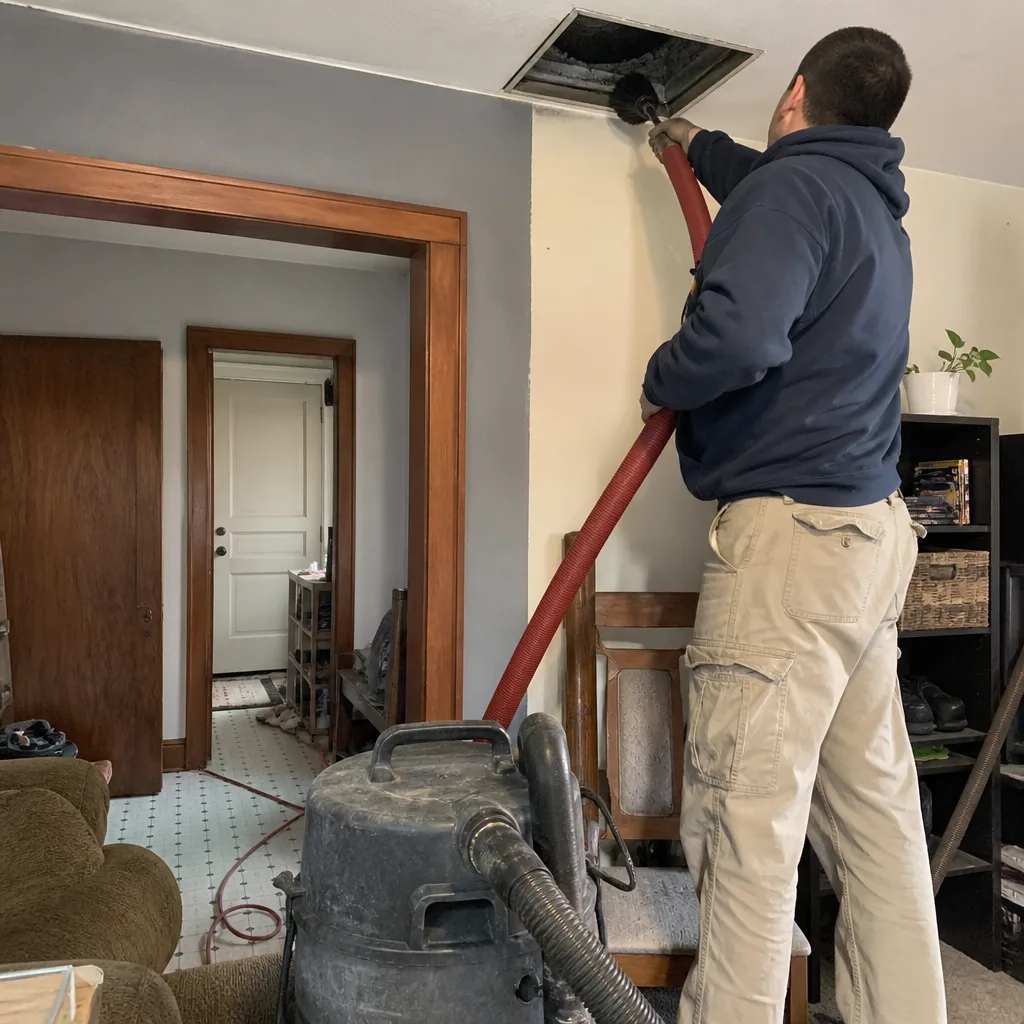
The professional equipment question is real here. A shop vac and a brush kit will loosen settled pollen and spore material without capturing it, and some of that material ends up in the air. A Rotobrush agitation system combined with Nikro HEPA-rated vacuum equipment captures what’s loosened at the source. The difference isn’t cosmetic – it’s whether the debris leaves the system or just gets moved around inside it.
Spring is also when you want to think about the duct interior itself rather than just the volume of dust. Mold growth from winter condensation has had a month or two to establish. Cleaning in late spring means the biological load is removed before the AC starts running constantly and circulating it all summer.
For the broader service picture, take a look at air duct cleaning and what a full system cleaning covers.
Summer: AC Operation, Drain Pans, and Post-Renovation Loads
Summer in South Bend means the AC runs almost continuously through the hot stretches, and that changes where contamination concentrates. The evaporator coil sits wet through cooling season, and the drain pan underneath it collects condensate plus whatever dust and biological material the return air carries in. A pan that doesn’t drain freely becomes a standing-water problem that feeds contamination directly into the supply airstream.
This is the seasonal window where a look inside the air handler matters most – specifically the coil and the drain pan, not just the duct runs. A system that runs all summer with a compromised pan can spread moisture and growth through the entire supply side before fall arrives.
Summer also brings a second, very South Bend-specific problem: renovation debris. Older housing stock sees frequent projects – a kitchen refresh, a bathroom remodel, attic insulation replacement, window replacement. Every one of those disturbs drywall dust or insulation fibers, and the HVAC system is usually running during the work. That material gets pulled into the returns and deposited in the ducts.
Post-renovation cleaning is its own category. The sequence that works:
- Complete the renovation and get all dust-generating work finished.
- Do a final construction cleanup of the living space.
- Change the filter (it will almost certainly be loaded).
- Schedule a professional duct cleaning to remove what got past the filter and settled in the runs.
- Confirm the air handler and returns are part of the cleaning scope, not just the supply side.
If the project disturbed any ductwork itself, this is also when a repair capability matters. Cleaning alone doesn’t fix a disconnected run or a crushed flex duct. We clean it, and if something’s broken we fix it in the same visit rather than sending you to a second contractor. For the repair side specifically, see the South Bend service overview.
Fall: Leaf Debris and Exterior Intake Infiltration
Fall deposits a different kind of load. South Bend’s tree canopy is heavy, and leaf litter around the foundation, in window wells, and near any exterior intake grille becomes a source of coarse debris that finds its way into the system. Fresh-air intakes, combustion air runs, and any exterior venting can pull in grit and organic material through the fall.
The exterior intakes are the ones most homeowners never check. A fresh-air intake grille that’s buried under leaves or covered by a dense mat of debris isn’t just blocked – it can pull that material into the duct run behind it. Fall is the right time to clear the exterior side before heating season starts and the system begins running long cycles again.
Fall is also the ideal window to schedule a professional cleaning for a different reason: the heating-to-cooling switchover has already happened, and the cooling-to-heating switchover is about to. Cleaning in October or early November means the system goes into heating season with a fresh interior, and any contamination from the summer load is out before the furnace starts moving it all winter.
What to inspect in fall:
- Clear leaves and debris from around every exterior intake and exhaust grille.
- Check that intake screens are intact and not crushed or missing.
- Change the filter heading into heating season.
- Note any musty smell or visible dust at the registers during the first few heating cycles.
- Look for evidence of rodent activity near exterior intakes – fall is when small animals look for warmth.
If any of those turn up signs of intrusion or damage, that’s repair territory, not just cleaning.
How to Time a Professional Cleaning Around HVAC Switchover
The single best timing window for a professional duct cleaning in South Bend is the late-spring switchover from heating to cooling. There are practical reasons for this beyond airflow.
First, switchover is when the system has just finished a full heating season, meaning the winter load – humidifier bypass scale, condensation-related growth, heating-season dust – is fully accumulated and hasn’t yet started circulating through a cooling cycle. Cleaning at that point removes the maximum accumulated material.
Second, switchover is when the system goes through its annual service window anyway. Getting the ducts cleaned at the same time the HVAC is being inspected means the whole system is checked and cleaned in one pass rather than piecemeal.
Third, cleaning before cooling season starts means the AC runs all summer with a clean system, so the summer particulate load doesn’t compound on top of leftover winter material.
Autumn is the strong second choice. Cleaning in October or early November catches the summer and fall loads before heating season, and sets the system up to run clean through winter. If you can only do one professional cleaning per year, late spring is the higher-value timing because it also catches the heaviest particulate season.
The worst timing is mid-winter, not because a cleaning in January is harmful, but because the winter-specific contamination – humidifier bypass, condensation – is still actively forming. You’d be cleaning something that’s still accumulating. Better to address it in spring when the load is complete.
For dryer vent timing, the calculation is different because the load is continuous rather than seasonal. Lint accumulates year-round, and the fire-safety case for regular dryer vent cleaning doesn’t follow the HVAC seasonal rhythm. Schedule it independently on its own interval.
Your Season-by-Season Homeowner Action Calendar
Here’s the calendar that actually maps to what a South Bend duct system goes through, organized by month and season. It’s not exhaustive, but it covers the items that make a measurable difference.
Winter (December – February)
- Change the furnace filter at the start of winter and again mid-season, since the system runs long cycles.
- Inspect the humidifier bypass duct for scale or dark growth once during the season.
- Watch visible duct runs in cold spaces for condensation during very cold snaps.
- Note any musty odor at the registers in the first minutes of heating startup.
- Avoid closing too many supply registers – reduced airflow in one part of the system forces more volume through the rest and can load the returns faster.
Spring (March – May)
- Change the filter before the pollen surge hits.
- Clear winter debris from exterior intake and exhaust grilles.
- Schedule the annual professional cleaning for late spring, just before cooling season starts.
- Have the air handler, coil, and drain pan checked as part of the same visit.
- If any duct runs show damage or disconnection, handle the repair in the same call.
Summer (June – August)
- Check the AC drain pan for standing water every few weeks during cooling season.
- If a renovation project is happening, plan for a post-renovation cleaning once the dust-generating work is finished.
- Change the filter more often during heavy AC operation.
- Watch for musty odors in the first minutes of a cooling cycle, which can indicate a drain pan problem.
Fall (September – November)
- Clear leaves and debris from around exterior intakes and exhausts.
- Change the filter heading into heating season.
- Check intake screens for damage or rodent activity.
- If only one professional cleaning per year, consider scheduling for October or early November.
- Get the dryer vent on its own maintenance schedule and keep it there.
The calendar isn’t a rigid rulebook. Warmer or colder than usual seasons shift the timing. But the structure – winter check, spring clean, summer monitor, fall reset – is what the South Bend climate actually rewards.
Common Mistakes to Avoid
- Treating duct cleaning as a once-every-few-years box. The seasonal rhythm means contamination forms in waves, not at a steady rate. Cleaning on the wrong cycle means you’re always playing catch-up on the previous season’s load. Match the timing to switchover, not to a calendar alarm.
- Ignoring the humidifier bypass duct. This short run behind the humidifier is one of the most overlooked contamination sources in a South Bend winter. It’s also the one that feeds moisture most directly into the supply airstream. Ask for it to be included in the cleaning scope.
- Skipping the post-renovation cleaning because the drywall dust “looks like it settled.” Drywall dust settles in the living space, yes, but the fraction that got into the returns doesn’t stay put once airflow resumes. South Bend’s older housing stock means renovation dust is a frequent event, so this isn’t a rare exception – it’s the normal pattern.
- Changing the filter only when it visibly looks dirty. Visually clean filters can already be too loaded to capture a spring pollen surge. Change on a schedule, not a look-and-see basis, especially during pollen and heating season.
- Hiring a cleaner without checking equipment. A shop vac and brush kit loosens contamination without capturing it, and some of it ends up redistributed into the living space. Ask what equipment is used and whether it’s HEPA-rated and supported by containment. Rotobrush agitation plus Nikro HEPA-rated vacuum plus Abatement Technologies containment is a fundamentally different process from a brush and vac.
- Cleaning without inspecting for damage. A duct run that’s crushed, disconnected, or deteriorated will keep re-contaminating itself no matter how well it’s cleaned. Cleaning without checking for repair needs is a wasted job.
- Ignoring the exterior intake grilles entirely. Fall leaf debris around intakes is easy to clear and easy to miss. A buried intake grille can pull debris straight into the duct behind it, and winter season is when that debris gets moved all the way through the system.
When to Call a Professional
Some seasonal care is homeowner-appropriate: filter changes, exterior grille clearing, and visual inspection of accessible duct runs. Other things should go to a professional every time. A musty odor that appears consistently at heating or cooling startup is a sign of internal growth that needs professional cleaning. Visible condensation on duct runs in cold spaces, scale or dark growth on a humidifier bypass, standing water in an AC drain pan, or any sign of damage or disconnection in the duct system all point to a job that needs the right equipment and the eye of someone who does this daily.
Professional duct cleaning is a whole-system job. It shouldn’t be quoted per vent – per-vent pricing is how the industry’s cheapest-looking quote becomes a far larger invoice once the technician is on site. A single flat price per system, agreed before work starts, with before-and-after photos of the ducts, is what to expect. That’s the model we work from, and it’s the honest one.
Duct Cleaning South Bend offers free estimates in South Bend. Call (855) 905-0868. We answer 24/7. Fast dispatch from 7am to 7pm, Sunday through Friday. Our technicians have up to experience, and our equipment includes Rotobrush, Nikro, Abatement Technologies, and Guardsman, with Honeywell and Aprilaire system compatibility.
See the difference
 Before
 After
 Before
 After
 Before
 After
Frequently Asked Questions
For most South Bend homes, a professional cleaning once every two to three years, timed to the late-spring switchover from heating to cooling, catches the biggest seasonal load. Homes with indoor pets, allergy sufferers, or recent renovations may need cleaning more often, and homes that haven’t been cleaned in many years should start with one cleaning and then assess. The right interval depends on how the system is used and what its seasonal load looks like, not on a fixed national average.
Yes, indirectly. Heavy snowfall and a cold winter mean the furnace and humidifier run long cycles, which raises indoor moisture and puts more condensation stress on duct runs that pass through cold spaces. The humidifier bypass duct in particular accumulates more scale and growth in a long, cold winter. Cleaning in late spring catches that winter load.
The bypass duct is short, rarely inspected, and carries humidifier moisture directly into the airstream. It accumulates mineral scale and biological growth over a heating season that then enters the supply air every time the humidifier runs. Owners of Honeywell or Aprilaire systems should confirm that the bypass is included in the cleaning scope.
Yes, especially in South Bend’s older housing stock, where renovations are frequent and duct systems were often installed decades ago. Any drywall or insulation work while the HVAC is running pulls material into the system. A post-renovation cleaning once the dust-generating work is finished catches what got past the filter and settled in the runs.
Professional-grade equipment: an agitation system for loosening settled material, a HEPA-rated vacuum for capturing it, and containment equipment for controlling it during the job. Rotobrush, Nikro, and Abatement Technologies are the names to look for. A shop vac and brush kit loosens contamination without capturing it, which means some of it ends up redistributed into the room rather than removed from the system.
No, dryer vent cleaning follows its own schedule because lint accumulates year-round rather than seasonally. It’s a separate service with its own fire-safety case, and the interval is based on laundry volume and dryer design rather than HVAC switchover. It’s a good idea to address it independently of the HVAC calendar.
The Bottom Line
South Bend’s four seasons leave different deposits in your ducts every year, and treating cleaning as a once-every-few-years task means missing the timing that actually matters. The system needs a winter check for humidifier bypass contamination and condensation, a spring cleaning timed to the heating-to-cooling switchover for maximum benefit, summer attention to drain pans and post-renovation loads, and fall attention to exterior intakes and the transition to heating season. The single highest-value move is a professional cleaning in late spring with a full inspection of the air handler, coil, drain pan, and duct runs. If something’s damaged, repair it in the same pass. Containment-first cleaning with professional-grade equipment means the debris leaves the system rather than getting redistributed into your home.
Call (855) 905-0868 for a free estimate. No per-vent pricing, no surprises after the technician arrives – one flat price per system, agreed before work starts, with before-and-after photos of your own ducts. And that goes for repair as well as cleaning. We clean it. If it’s broken, we fix it. Same call, same visit.
Written by the team at Duct Cleaning South Bend.