
Last updated November 16, 2026
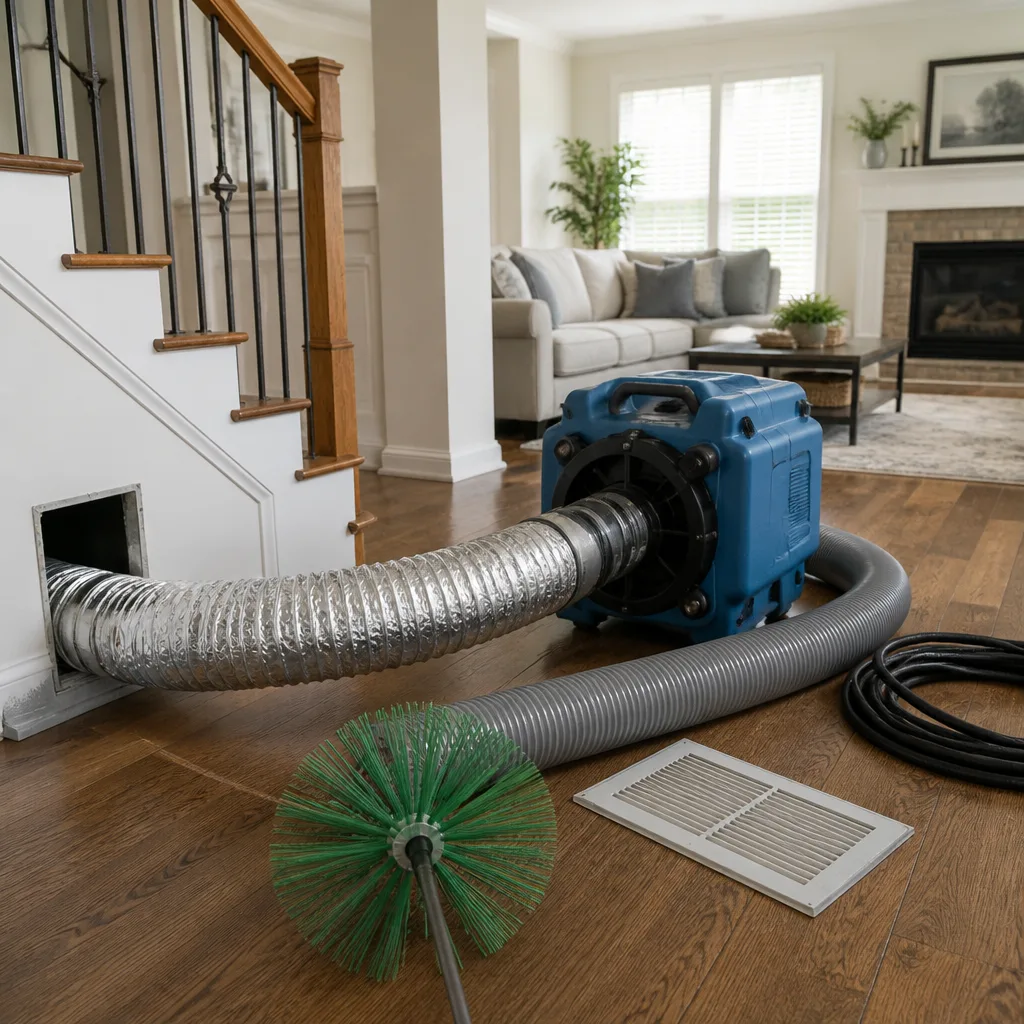 Whole-home duct cleaning
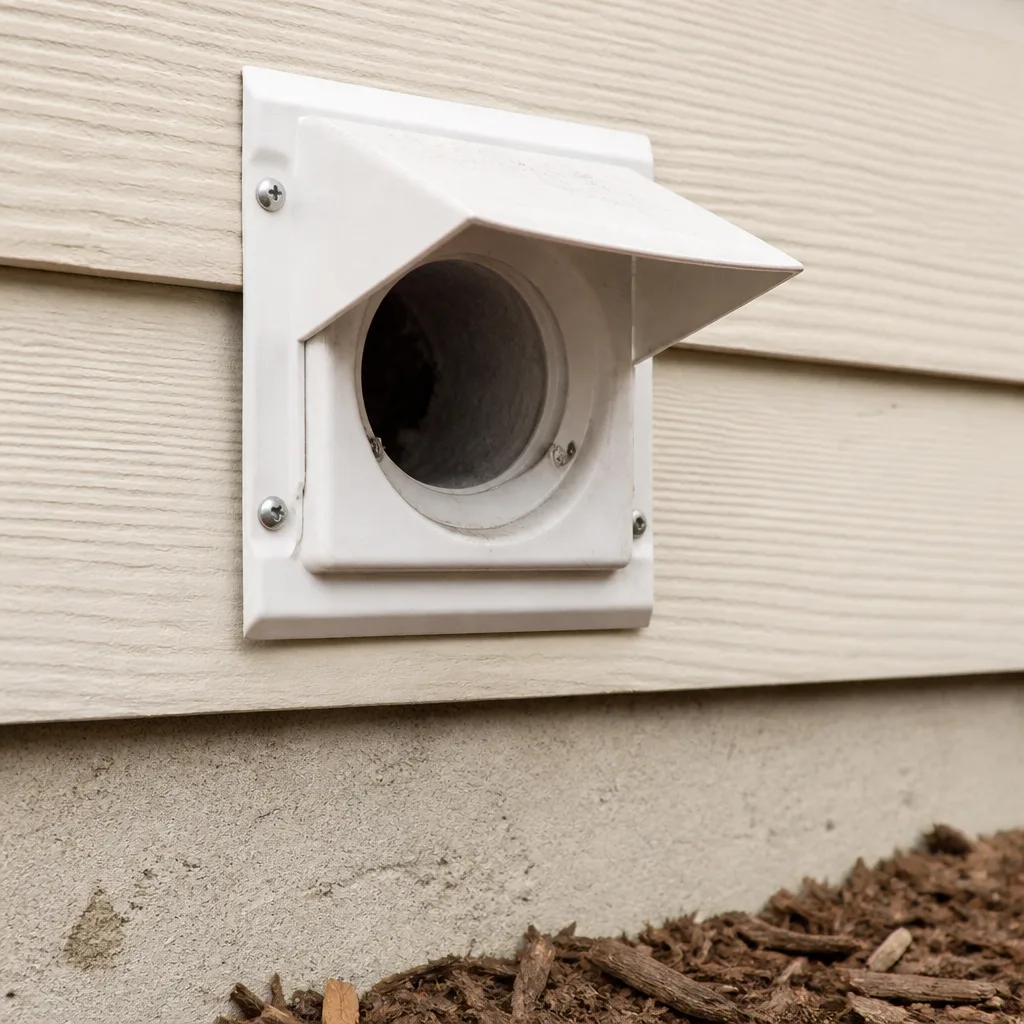 Dryer vent cleaning
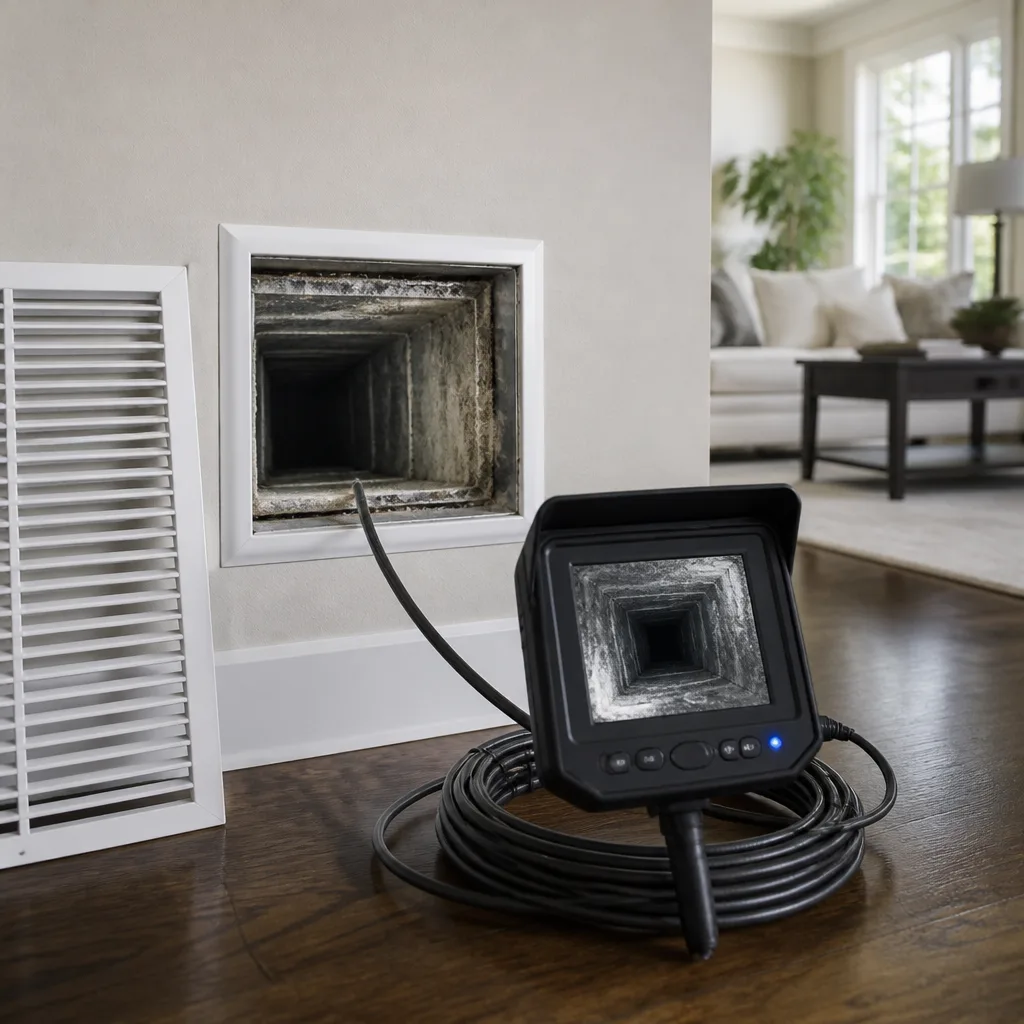 Camera inspection
 Sanitizing & deodorizing
Whole-system duct and dryer vent check with before-and-after photos - you see exactly what came out of your vents
That "$99 whole-house special" is a bait ad - the real number appears once they are in your hallway, or the "clean" is a shop-vac at the register. We photograph the inside of your ducts before and after instead.
Air Duct Cleaning Cost Breakdown: The South Bend Homeowner’s Reference for 2026
A $199 duct cleaning quote and a $650 duct cleaning quote in South Bend can both be fair prices. They can also both be rip-offs. The difference comes down to three things most quotes never spell out: what equipment shows up, how long the job actually runs, and whether repair work is folded into the price or tacked on once the technician is already in your basement. Most homeowners compare the bottom-line number and assume they’re shopping the same service. They usually aren’t. This guide breaks down the real variables behind duct cleaning in South Bend pricing so your next three quotes are finally comparable.
Quick Answer
Air duct cleaning in South Bend typically runs $300-$700 for an average single-story home in 2026, with whole-house jobs on larger or two-story homes landing in the $550-$1,100 range and smaller apartments or condos closer to $250-$400. The price depends on square footage, register count, duct material and whether repair is needed. A written, per-job estimate that names the equipment and scope is the only number worth comparing.
Styles & brands we work with
- Whole-home duct cleaning
- Dryer vent cleaning
- Camera inspection
- Sanitizing & deodorizing
Table of Contents
- Why Duct Cleaning Quotes in South Bend Vary So Widely
- The Four Cost Drivers Behind Every Duct Cleaning Estimate
- Professional Equipment vs. a Shop Vac: Why the Price Gap Exists
- South Bend Market Pricing Benchmarks for 2026
- How Duct Repair Is Scoped and Quoted
- Add-Ons Worth Paying For vs. Upsells That Rarely Deliver
- How to Compare Three Duct Cleaning Quotes Line by Line
- Why Timing Your Cleaning Around South Bend’s Seasons Matters
Why Duct Cleaning Quotes in South Bend Vary So Widely
The gap between duct cleaning quotes in South Bend comes almost entirely from how the contractor structures the price. Four common models are in use, and each one hides or exposes different costs.
- Per-vent pricing: A flat fee for each supply and return register, often with a teaser base price. It sounds transparent, but it punishes homes with many registers and rarely accounts for duct length or accessibility.
- Per-square-foot pricing: A rate tied to finished square footage. This is closer to fair but ignores the difference between a sprawling ranch with long trunk lines and a compact two-story with tight runs.
- Flat rate: A single price for the whole system, usually with a size cap. Fine for predictable homes, risky when a contractor walks in, sees a complicated layout, and renegotiates on the spot.
- Scope-based pricing: The estimate names the equipment, the number of registers, the duct material, and whether any repair items are visible. The number reflects the actual work. This is the model worth comparing against.
South Bend homes built between the 1920s and the 1980s often have duct systems that were retrofitted into older floor plans, which produces odd runs, tight returns, and the occasional unsealed connection in a crawlspace. Two homes on the same block can have very different duct layouts. A contractor who prices by vent count alone has no way to tell them apart, and the homeowner has no way to know which quote reflects the real job. When you compare estimates, ask which model produced the number. If the answer isn’t scope-based, you’re comparing pricing structures, not services.
The Four Cost Drivers Behind Every Duct Cleaning Estimate
Every honest duct cleaning estimate in South Bend comes down to four variables. If a quote doesn’t reference them, ask directly.
- Square footage and register count. A 1,200 square foot ranch with eight supplies and two returns is a different job than a 2,600 square foot two-story with eighteen supplies and three returns. Register count drives time more than square footage does, because every register adds a connection, an inspection, and a route through the system.
- Duct material. Sheet metal ductwork responds well to rotary agitation and vacuums clean. Flexible duct runs need lower-pressure techniques to avoid damaging the liner. Fiberboard duct, common in older South Bend homes and additions, absorbs contaminants and can delaminate if treated aggressively, which sometimes means repair work follows cleaning rather than the other way around.
- System age and configuration. Older systems were often installed with fewer returns than a modern design recommends, which concentrates airflow and accelerates buildup. Attic and crawlspace runs are common in this region, and they slow the job down because the technician has to set up access at each point.
- Accessibility. A basement system with full-length trunk lines is quick. An attic system with a low slope, or a crawlspace with six inches of clearance, takes noticeably longer. Access is the most common reason two quotes on the same home differ by a few hundred dollars.
Add them up and you can predict the range before anyone arrives. A modest single-story home with sheet metal ducts and accessible basement runs is on the lower end. A two-story with a mix of flex and fiberboard, an attic air handler, and registers buried behind furniture is on the higher end. When a contractor gives you a number before asking about any of these four things, that number isn’t an estimate. It’s a guess dressed up as one.
Professional Equipment vs. a Shop Vac: Why the Price Gap Exists
Professional duct cleaning in South Bend is priced around equipment that does two jobs at once: it loosens debris and it captures it. A residential shop vac does neither well enough to matter at scale.
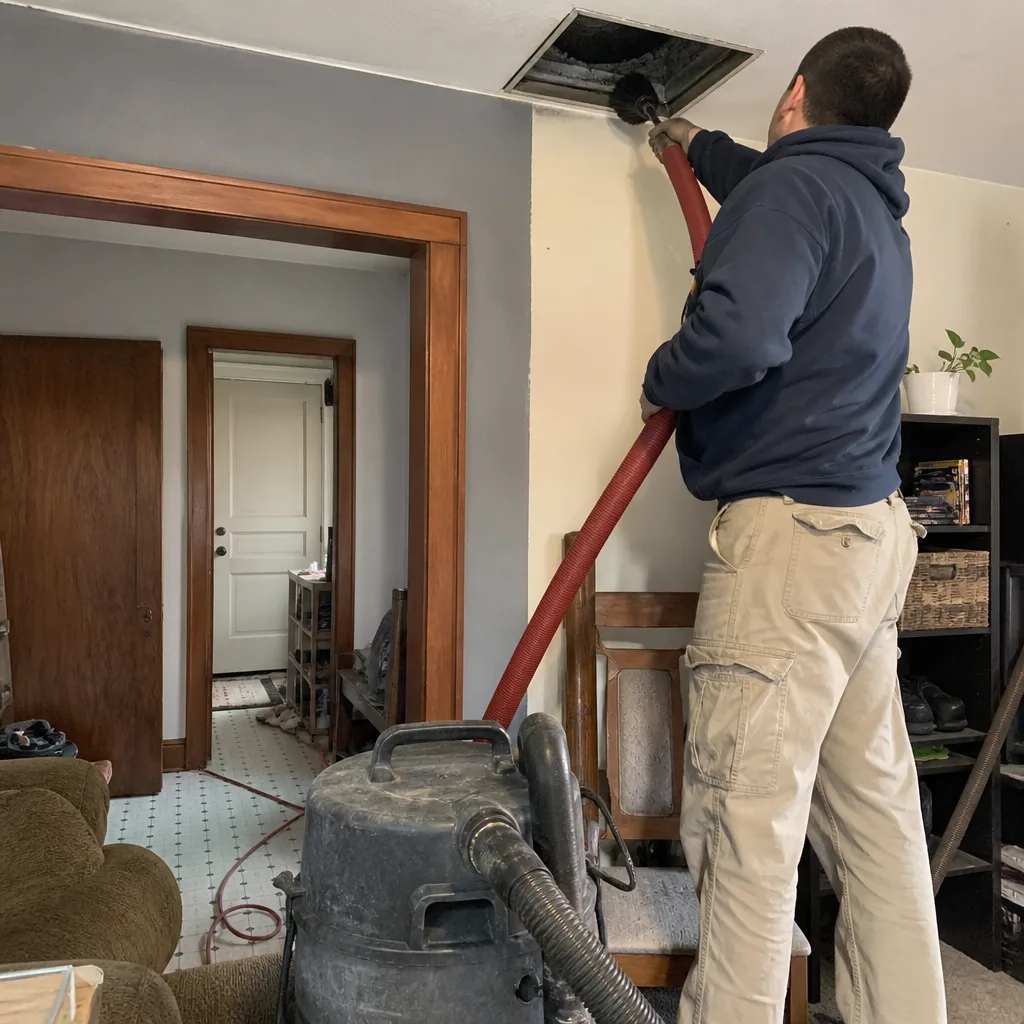
The equipment stack we use on eligible jobs illustrates the gap. A Rotobrush agitation system runs a rotating brush head through each duct run to break contaminants off the walls, connected to a high-powered vacuum that pulls the loosened material out of the system rather than letting it settle back. Nikro HEPA-rated vacuum equipment handles the air volume and filtration needed to hold a large home under negative pressure for the duration of the job. Abatement Technologies containment equipment captures and controls debris at the work area, so contaminants are contained rather than redistributed through the house while the ducts are open.
Compare that to a shop vac and a hand brush. The shop vac has enough suction to move visible dust at the register but not enough air volume to pull settled debris from thirty feet of trunk line. The brush loosens material, and without proper containment or negative pressure, some of it ends up in the living space. The result looks cleaner at the register and leaves the duct system largely unchanged. That’s why a $199 quote is possible: the setup cost is a few hundred dollars, not a professional equipment stack, and the labor is short because the work is short.
You don’t need to know the equipment names to make a good decision, but you should ask one question on every quote call: “What equipment will be on site, and is it connected to a HEPA-rated vacuum?” A contractor who can answer that in specific terms is running a professional setup. One who says “industrial vacuum” and moves on is telling you something too.
South Bend Market Pricing Benchmarks for 2026
These are typical ranges for the South Bend market in 2026, based on residential scopes of work with professional-grade equipment. Every job gets its own written estimate, and that estimate sets the final price. Treat these as a planning guide, not a quote.
| Home Type | Typical Register Count | Estimated Cost Range |
|---|---|---|
| Apartment or condo, single level | 4-8 supplies, 1-2 returns | $250-$400 |
| Single-story home, 1,000-1,600 sq ft | 8-12 supplies, 2-3 returns | $300-$550 |
| Single-story home, 1,600-2,400 sq ft | 12-16 supplies, 3-4 returns | $450-$750 |
| Two-story home | 16-22 supplies, 3-4 returns | $550-$1,100 |
| Large or multi-zone system | 22+ supplies | $800-$1,400 |
A few things to know about these numbers. Fiberboard or heavily damaged flex duct adds to the upper end of any range. So does an attic air handler. A home with a Honeywell or Aprilaire filtration system installed is often quoted at the higher end of its size category because the ducts and the in-line components need careful handling, and the work has to be done without upsetting the filtration setup. Owners who invested in premium air quality equipment generally want that protection respected in the cleaning, not bypassed for speed.
A word on the low end. Any quote under $200 for a whole-house duct cleaning in South Bend is a teaser price, and it almost always expands once the technician is on site. The homeowner then faces a choice between paying the new number under pressure or calling someone else. The cleaner path is to get a scope-based estimate first, compare it to the benchmarks above, and settle the price in writing before the job starts. One flat price per system, agreed before work begins.
How Duct Repair Is Scoped and Quoted
Duct cleaning and duct repair are different jobs with different pricing structures, and this is where most South Bend homeowners get surprised. Cleaning is priced per system. Repair is priced per item, and the item count isn’t visible until the technician has run the system.
Common repair items found during a cleaning include disconnected joints at flex-to-metal transitions, crushed flex runs behind walls or in crawlspaces, failing sealant at trunk-to-branch connections, torn flex liner, and deteriorated fiberboard sections. Repair quotes are usually built from three components:
- By component: Replacing a flex run, resealing a joint, or replacing a fiberboard section is priced per piece of work.
- By access point: Work in an unconditioned attic or a tight crawlspace costs more because setup and reach take longer.
- By linear foot: Larger runs of replacement duct, particularly in a full re-run, are sometimes priced by length.
The cleanest way to handle this is to ask for the cleaning estimate and any visible repair items in the same document, with the cleaning and the repair quoted separately. If the technician finds additional repair items during the job, they should stop, explain what they found, and give you a revised number before doing the work. That’s the difference between an estimate and an invoice surprise.
Repair capability matters when you’re choosing a contractor because many duct cleaning providers clean only. If they find a crushed run or a detached joint, they refer it out, which means a second contractor, a second visit, and a second estimate. Having repair in the same scope means the deficiency gets corrected in the same job. We clean it. If it’s broken, we fix it. For a homeowner in a 1930s-era South Bend home with a mix of original and added duct runs, that single-visit capability is often the difference between a fully sealed system and an ongoing air quality problem. You can read more about the cleaning side on our air duct cleaning page.
Add-Ons Worth Paying For vs. Upsells That Rarely Deliver
Add-on services are where duct cleaning quotes become hard to read. Some deliver real value; others exist to pad the invoice after the technician arrives.
Worth paying for
- Coil cleaning: The evaporator coil sits directly in the airstream and collects dust and biological growth that duct cleaning never reaches. Cleaning the coil alongside the ducts is genuinely useful because the system stays clean once it’s all clean.
- Dryer vent cleaning bundled with duct cleaning: This is the add-on we recommend most often. A clogged dryer vent is a genuine fire hazard and the appliance runs longer and hotter than it should until it’s cleared. Bundling is convenient because the technician is already on site with the equipment, and our dryer vent cleaning work is treated as its own service, not an afterthought.
- Blower compartment cleaning: Quick to do while the system is open, and it removes debris that would otherwise get pulled into cleaned ducts.
Rarely worth it as a standalone
- Antimicrobial fogging as a standalone add-on: Fogging treats the air within the ducts at the moment of application but doesn’t remove source material. If ducts are properly cleaned with agitation and HEPA filtration, the source is already gone. Fogging is sometimes pitched as protection that keeps working over time; in practice, the cleaning is what does the work.
- UV lights added to a cleaning visit: A UV or PCO system can be a reasonable air quality upgrade for the right home, but it’s a separate conversation about system design, not an impulse add-on to a cleaning estimate.
- Sealant “coatings” sprayed into flex or fiberboard: These can damage the liner and often make a future repair harder. If a technician recommends spraying a coating into flex duct, ask what the coating is rated for and decline if there’s no clear answer.
A good rule: add-ons that clean another part of the system alongside the ducts are usually worth it. Add-ons that add a new category of product to the invoice deserve a second question.
How to Compare Three Duct Cleaning Quotes Line by Line
Getting three quotes is a good instinct. Getting three quotes you can actually compare is the part that matters. Here’s the process we suggest to homeowners in South Bend.
- Ask each contractor what equipment will arrive. Rotobrush or equivalent agitation equipment, a HEPA-rated vacuum, and containment equipment are the professional baseline. Write down the answers side by side.
- Ask whether the quote is per system or per vent. Per-system estimates should include the register count in writing. If the number is per-vent, ask for the whole-house total including returns, not just supplies.
- Ask what repair items are visible before work starts. If a contractor can’t name any, ask them to inspect the accessible runs before quoting. If they won’t, that’s information.
- Ask whether coil cleaning and dryer vent cleaning are packaged or separate. Bundles aren’t automatically good, but the pricing should be transparent either way.
- Ask what happens if repair work is found mid-job. The right answer is a stop-work and a revised estimate before any additional work is done. Any answer involving the technician continuing and settling up afterward is a red flag.
- Confirm the estimate is written and itemized. Before-and-after photos of your own ducts should be part of the job, so you can see what changed.
Three quotes, side by side, with the same questions answered, will usually reveal a clear winner within ten minutes. The quotes that look cheapest up front often dissolve once the same six questions are applied to them.
Why Timing Your Cleaning Around South Bend’s Seasons Matters
South Bend’s climate puts real stress on a duct system. Winters run cold and long, and a furnace working hard for months pulls drier air through the ducts and pushes more dust into circulation. Spring and early summer bring humidity, which is when biological growth takes hold on damp coil surfaces and in fiberboard duct. Heating season starts in October and doesn’t fully release until April. The system is in heavy use for most of the year.
The practical implication is that timing matters more than most homeowners expect. Cleaning in late spring catches the dust load from the heating season before the air conditioning side of the system gets heavy use. Cleaning in fall catches the cooling season load before the furnace starts cycling again. Both are reasonable; what’s worth avoiding is cleaning right before the system will sit idle, because a clean system that isn’t running won’t stay that way as long.
Homes with pets, family members with allergies, or a recent purchase of an older South Bend home warrant a cleaning closer to when the house is occupied full-time. A dirty duct system that gets sealed up behind new flooring and furniture for six months is a worse situation than one that gets cleaned early. If you’ve just bought a house in the River Park or Near Northwest neighborhoods and you don’t know the duct system’s history, schedule the cleaning before the move, not after.
One note on timing and price: pricing is per job by written estimate, so seasonal demand shifts typically don’t change the range as much as some homeowners assume. The variable that matters is scope, not calendar. For a full breakdown of what a South Bend cleaning actually includes, our South Bend page covers the service in detail.
Common Mistakes to Avoid
- Choosing the lowest quote without comparing scope. A $199 quote and a $549 quote from two contractors may describe two entirely different services. Compare equipment, register count, and repair scope before comparing price.
- Accepting a per-vent price without a system total. Per-vent pricing hides the cost of returns and long runs. Ask for the whole-system number in writing.
- Skipping the pre-quote inspection. In South Bend’s older housing stock, hidden repair items are common. A contractor who quotes without looking at the accessible runs is guessing, and you’ll pay the difference later.
- Paying for antimicrobial fogging on a clean system. If the ducts were actually cleaned with agitation and HEPA filtration, there’s no source material left for fogging to treat. Save the money or apply it toward the coil cleaning.
- Ignoring fiberboard duct until it fails. Fiberboard absorbs moisture and delaminates. Cleaning it is safe with the right technique, but a contractor who treats it like sheet metal can leave it worse than they found it.
- Bundling dryer vent cleaning without asking what the technician will actually do. A dryer vent job should involve removing lint from the full length of the run and confirming airflow, not just vacuuming at the exterior cap.
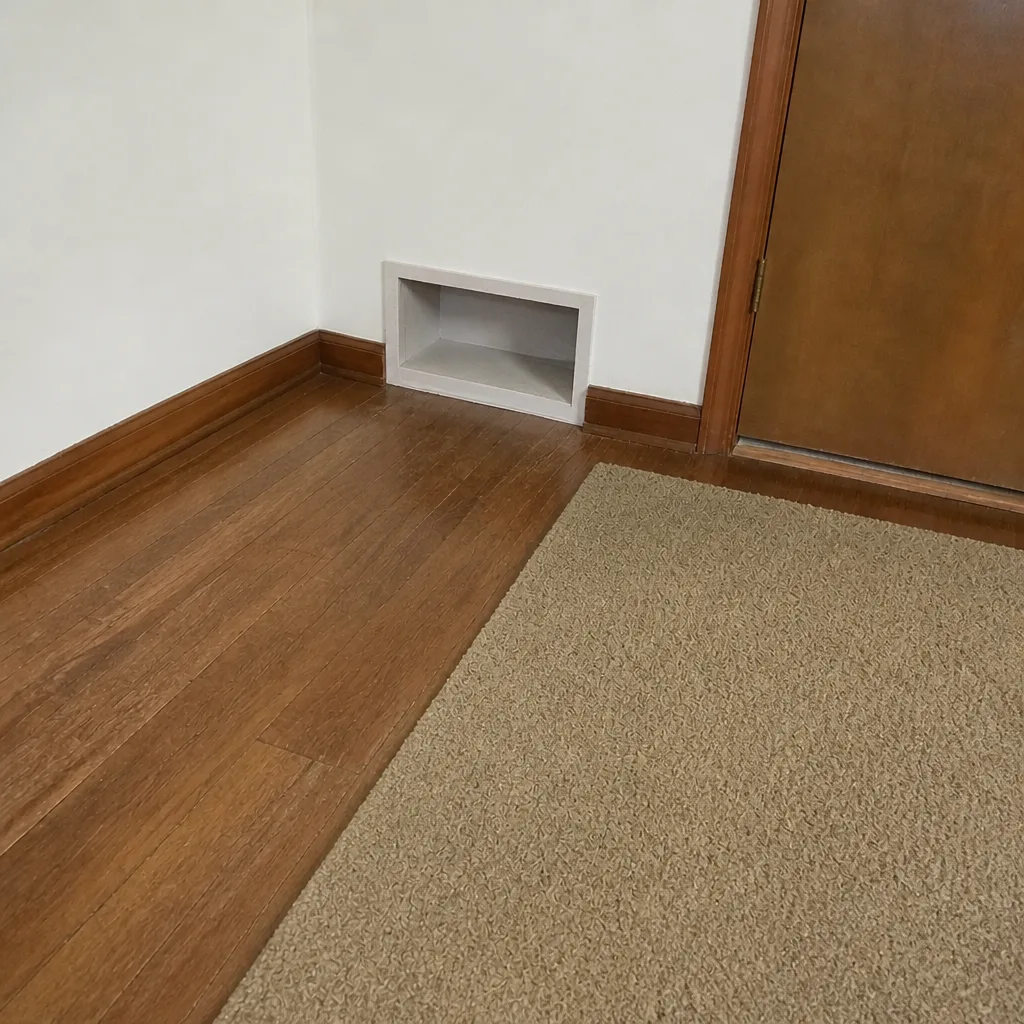
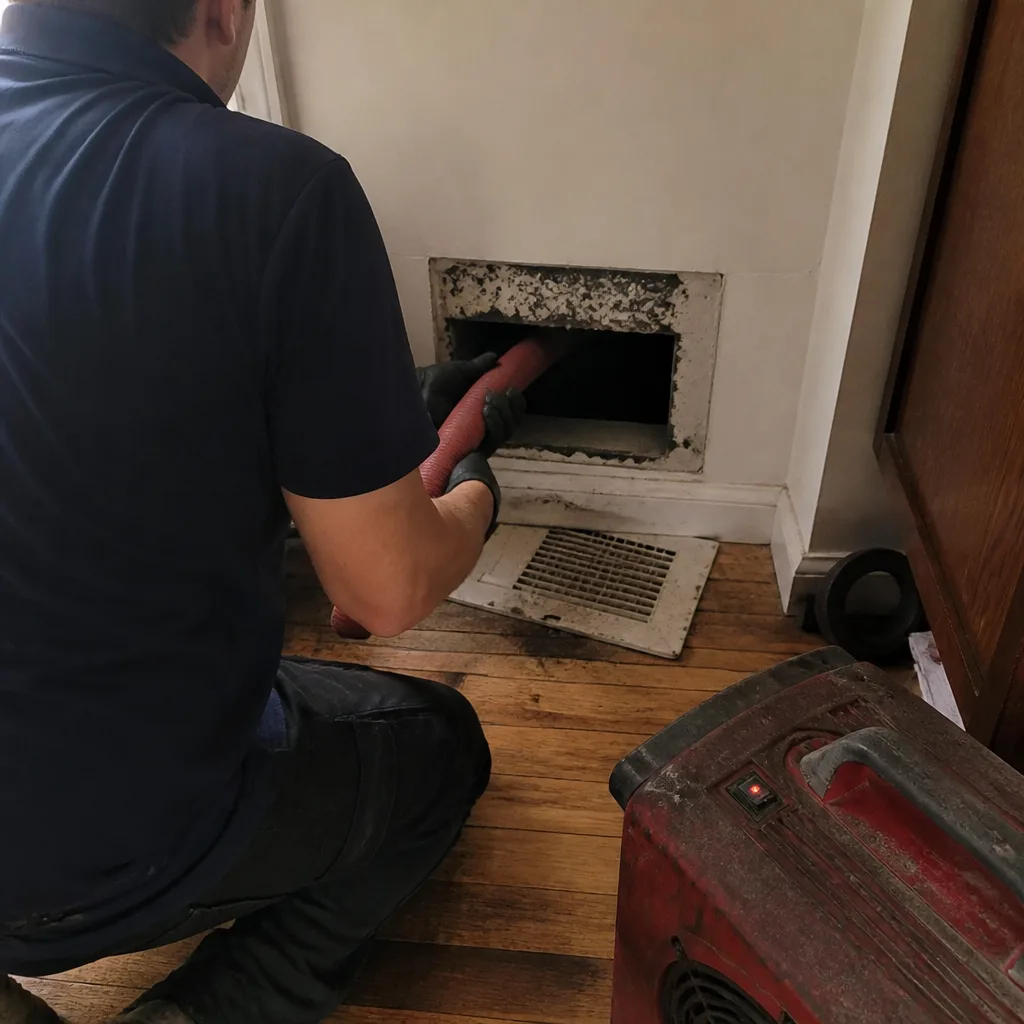
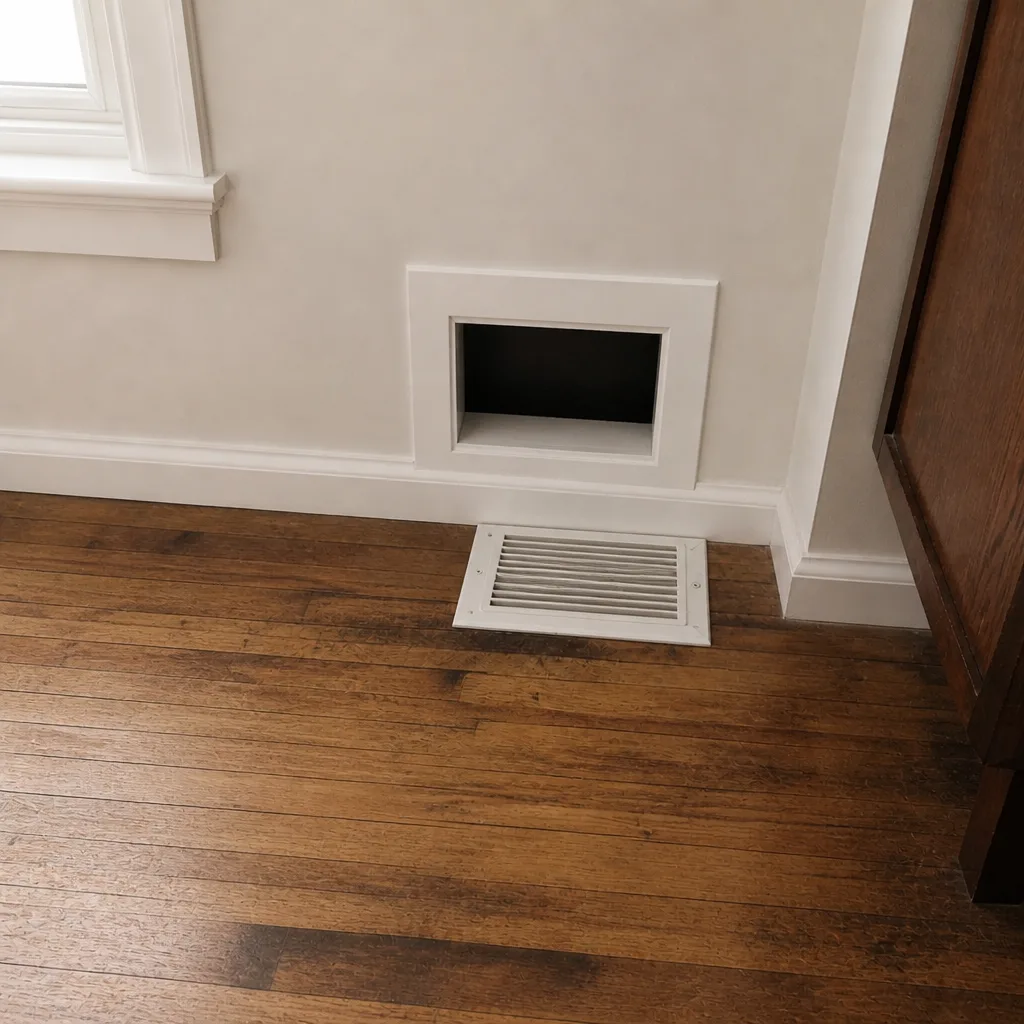
- Never asking for before-and-after photos. Photos of your own ducts, before and after, are the simplest proof that the work happened. If a contractor doesn’t offer them, ask.
See the difference
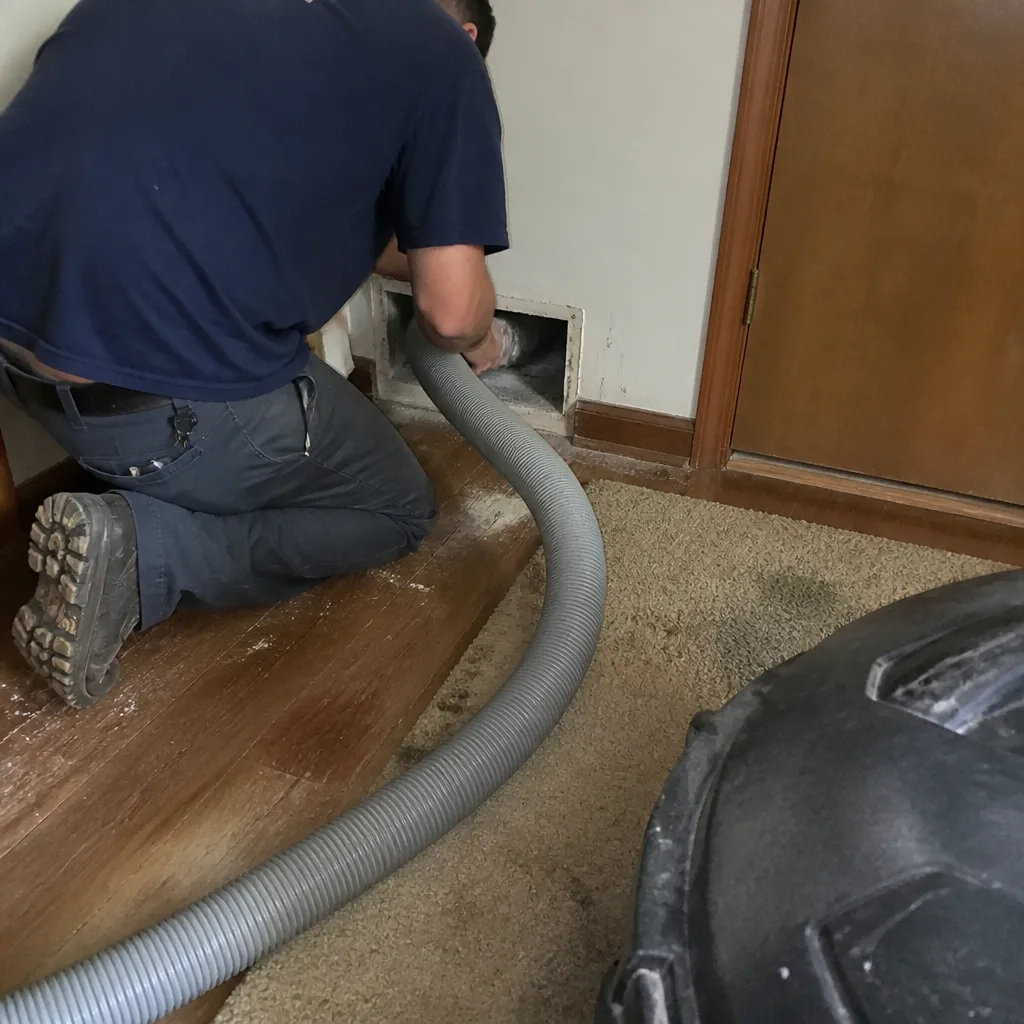 Before
 After
 Before
 After
 Before
 After
When to Call a Professional
Some situations call for a scheduled cleaning; a few really do call for a look now. If you’re seeing visible dust blow out of registers when the furnace or AC starts, that’s a sign of a system problem worth diagnosing, not just cleaning. If anyone in the home has persistent allergy symptoms that seem worse indoors, and the system hasn’t been cleaned in several years, a professional evaluation makes sense. If the house was recently purchased, particularly an older home where you don’t know the duct history, a pre-move cleaning is worth it. Same goes for a dryer vent that hasn’t been cleared in years or one that’s started taking two cycles to dry a load. And if you own a Honeywell or Aprilaire system, your filtration is only as good as the ducts behind it, which makes a professional cleaning part of the maintenance picture, not an optional extra.
Duct Cleaning South Bend offers free estimates in South Bend – call (855) 905-0868. We answer 24/7. Fast dispatch from 7am to 7pm, Sunday through Friday.
Frequently Asked Questions
Typical estimates in South Bend for 2026 run $300-$700 for an average single-story home, $550-$1,100 for a two-story, and $250-$400 for an apartment or condo. Larger or multi-zone systems sit higher. The written estimate for your specific home sets the final price, and we give you that number before work starts. Call (855) 905-0868 for an exact quote – estimates are free.
Cheap quotes usually reflect a smaller equipment investment and a shorter job. A shop vac and a hand brush cost a fraction of a Rotobrush agitation system, a Nikro HEPA vacuum and Abatement Technologies containment equipment, and the labor to run a proper professional setup on a full home is longer. A very low quote often expands once the technician arrives, or it describes work that doesn’t actually remove settled debris. Ask what equipment will be on site before you compare prices.
Before-and-after photos of your own ducts are the simplest proof. A proper job also leaves the system under consistent negative pressure throughout, which you can observe at the registers with a light tissue test if you want to see it. Ask for the photos and walk through the work with the technician at the end of the visit. Call (855) 905-0868 for an exact quote – estimates are free.
For most homes, every three to five years is reasonable. Homes with pets, allergy sufferers, recent remodeling, or a moved-in furnace or duct system often land closer to the three-year end. Homes with a well-maintained Honeywell or Aprilaire system and no pets can stretch toward five. The honest answer for a specific home comes from a look at the accessible runs, not a schedule on a website.
Yes, and it should be. Cleaning is priced per system, repair is priced per item, and the two should appear separately on the written estimate. If a technician finds additional repair items during the job, they should stop and give you a revised number before doing the additional work. That’s what one flat price per system, plus a clearly scoped repair quote, looks like in practice.
Yes. Dryer vent cleaning is a core service, and bundling it with a duct cleaning is convenient because the technician is already on site. The value isn’t cosmetic: a clogged vent is a fire hazard and an appliance running hotter than it should until it’s cleared. Call (855) 905-0868 for an exact quote – estimates are free.
The Bottom Line
The wide range in South Bend duct cleaning quotes isn’t a market flaw, it’s a reflection of different scopes being sold under the same name. The four variables that set your price are square footage, register count, duct material, and accessibility, and every honest estimate addresses all four. Professional equipment (the Rotobrush, Nikro and Abatement Technologies stack) costs more to run than a shop vac, and that cost shows up in a price that reflects the real job. Repair should be quoted separately, add-ons should earn their place, and the written estimate should name what you’re paying for. Compare quotes on scope, not on the total, and ask the six comparison questions before you sign anything.
Call (855) 905-0868 for a free estimate. We answer 24/7. Fast dispatch from 7am to 7pm, Sunday through Friday.
Written by the team at Duct Cleaning South Bend.